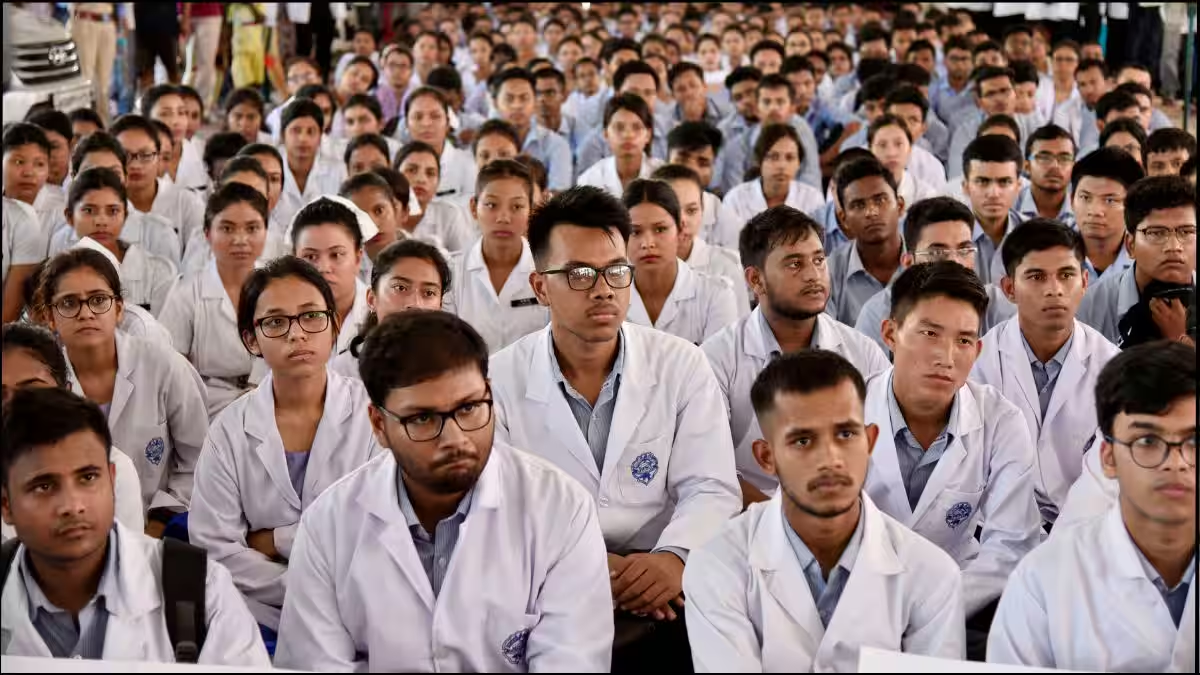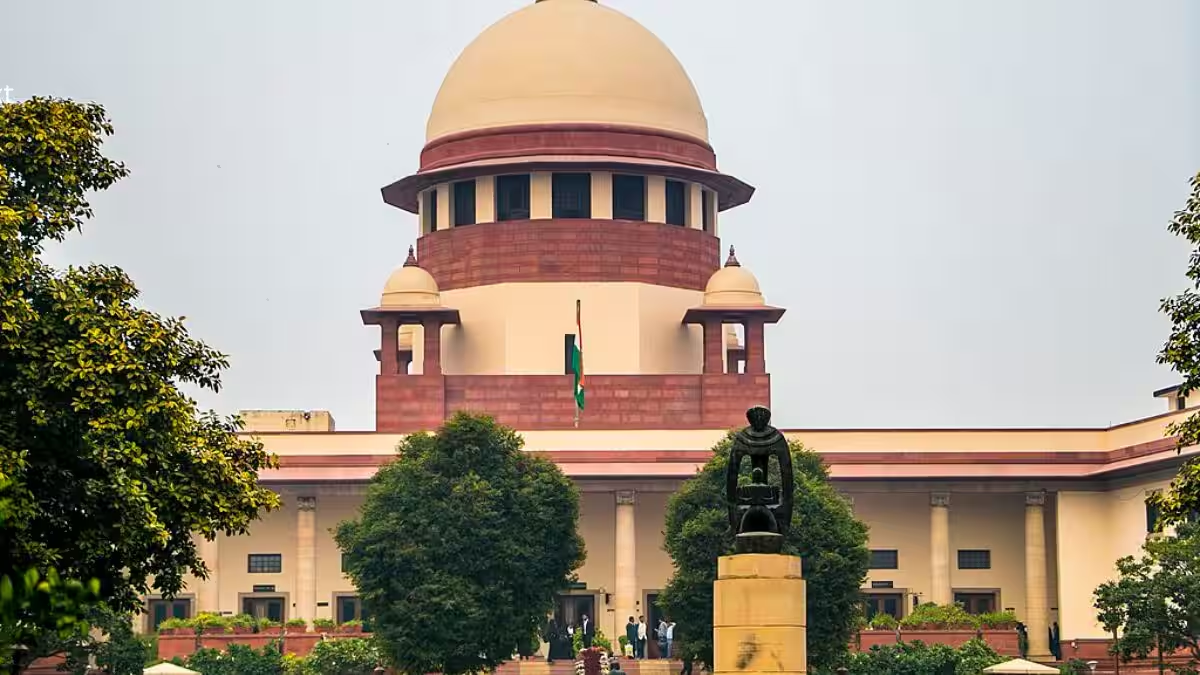
The Supreme Court of India has firmly rejected the Bar Council of India's (BCI) directive that barred 2026 graduates of Hyderabad's NALSAR University of Law from enrolling as advocates. This decision came after students protested against the proposed visit of Chief Justice of India Surya Kant to their campus. The court emphasized that students have a fundamental right to protest peacefully and criticized the BCI's interference in the matter.
Chief Justice Surya Kant expressed his disapproval of the BCI's move, describing it as "totally uncalled for" and highlighting that the issue was a dialogue between him and the students, not the Bar Council. The court swiftly reversed the BCI's order following widespread backlash on social media.
Understanding the Conflict Between NALSAR Students and the Bar Council of India
NALSAR University of Law, one of India's premier legal institutions, had students who opposed the invitation of the Chief Justice as the chief guest for their upcoming convocation. The students communicated their objections to university officials, including the vice chancellor and registrar. In response, the BCI issued a circular instructing all state bar councils to withhold enrollment of the 2026 NALSAR graduates until further notice.
This unprecedented move by the BCI was met with immediate criticism. The Supreme Court intervened, noting that even if the students' protest was misguided, their right to peaceful dissent was protected under the law. The court questioned whether the BCI had convened a formal meeting to pass such a resolution and ultimately stayed any punitive action against the students and faculty.
Key Facts About the Supreme Court's Intervention and BCI's Actions
- The Supreme Court bench was led by Chief Justice Surya Kant, with Justices Joymalya Bagchi and V Mohana also presiding.
- The BCI initially barred enrollment of all 2026 NALSAR graduates following their protest against the CJI's proposed convocation visit.
- The Supreme Court described the BCI's action as "absolutely unnecessary" and emphasized students' right to protest peacefully.
- The court ordered no punitive measures against students or faculty pending further hearings and issued notice to the BCI to respond within two weeks.
- Following public outcry, the BCI withdrew its circular and allowed state bar councils to enroll the affected graduates.
- The BCI acknowledged that most students were innocent and that only a few individuals, including some teachers and outsiders, may have instigated the protests.
- A final decision on the matter is scheduled for August 19, after the BCI reviews all relevant information.
Why the Supreme Court's Decision Matters for Legal Education and Student Rights
This ruling reinforces the principle that students in educational institutions have the right to express their views and dissent without fear of institutional retaliation. The Supreme Court's clear stance against the BCI's punitive approach sends a strong message about protecting democratic freedoms within academic settings.
Chief Justice Surya Kant's acknowledgment of his own involvement in student activities during his youth adds a personal dimension to the court's support for peaceful protest. By directing NALSAR to facilitate the enrollment of its graduates and offering to empanel them for legal aid cases, the court also ensured that the students' professional futures would not be jeopardized by their activism.
The controversy highlights ongoing tensions between regulatory bodies like the BCI and academic institutions, especially regarding governance and student autonomy. It also underscores the importance of dialogue and measured responses when addressing conflicts involving young professionals and educational authorities.
Frequently Asked Questions
Q: Why did the Bar Council of India block NALSAR graduates from enrolling as advocates?
A: The BCI issued the order after some NALSAR students protested against Chief Justice Surya Kant's proposed visit to their convocation, alleging a campaign against his participation.
Q: What was the Supreme Court's response to the BCI's order?
A: The Supreme Court criticized the BCI's action as unnecessary, affirmed students' right to protest peacefully, and stayed any punitive action against the students and faculty.
Q: Will the NALSAR 2026 graduates be able to practice law?
A: Yes, after the Supreme Court's intervention and the BCI's withdrawal of its circular, state bar councils have been allowed to enroll the graduates as advocates.