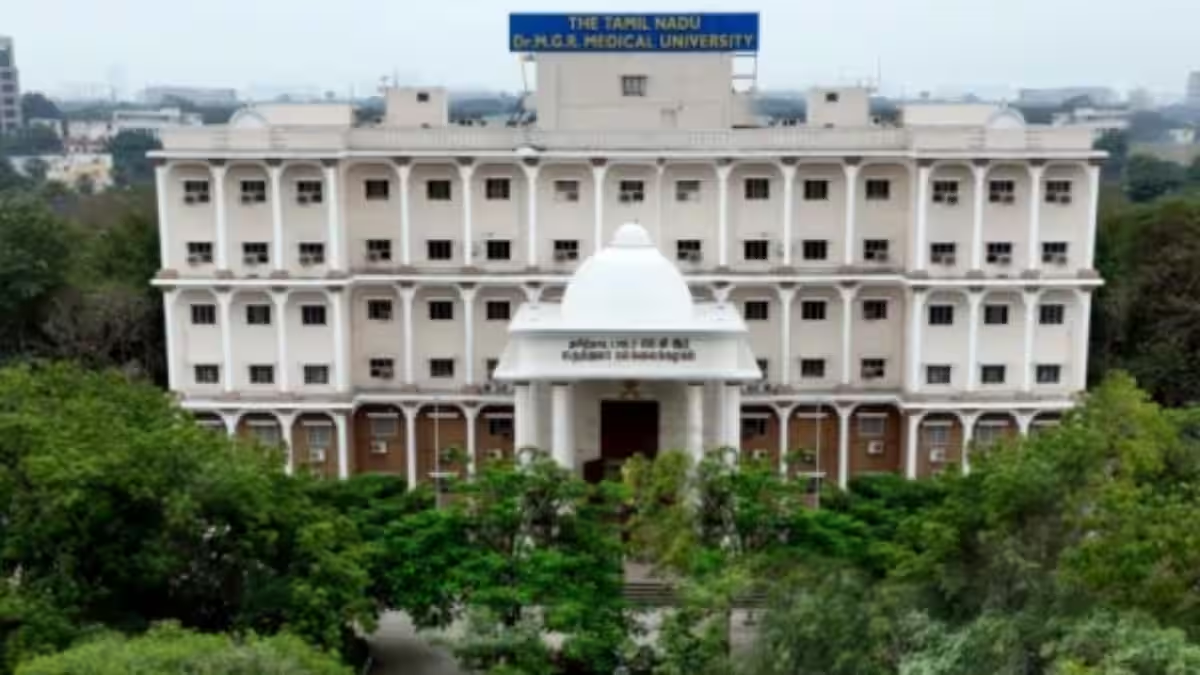
The Tamil Nadu Information Commission has mandated the Tamil Nadu Dr. M.G.R. Medical University to publicly release comprehensive information about the professors working in its affiliated private medical colleges, along with the members of the Affiliation Inspection Committee (AIC). This directive requires the university to upload these details on its official website and respond to related Right to Information (RTI) requests by August 20, 2026.
The order comes after an RTI application filed by the transparency advocacy group Arappor Iyakkam, which sought information on the AIC members who conducted inspections of affiliated colleges during the academic years 2022-23, 2023-24, and 2024-25, as well as details about the faculty employed at these institutions during the same periods. The commission warned that failure to comply with this order could result in penalties under the RTI Act.
Understanding the Role of the Affiliation Inspection Committee
The Affiliation Inspection Committee plays a crucial role in maintaining standards across private medical colleges affiliated with the university. Before granting affiliation, the AIC conducts thorough inspections to evaluate infrastructure, medical facilities, faculty qualifications, and adherence to regulatory requirements for medical education. These inspections ensure that colleges meet the necessary criteria to provide quality education and healthcare training.
Transparency about who serves on these committees and their qualifications is essential for public trust. It allows stakeholders, including students and regulatory bodies, to verify that inspections are conducted fairly and competently.
Key Facts from the Information Commission's Order
- The university must disclose the names and qualifications of AIC members involved in inspections during the academic years 2022-23, 2023-24, and 2024-25.
- Details of faculty members working in all affiliated private medical colleges for the same academic years must also be published.
- The information should be made accessible on the university’s website for public scrutiny.
- The university is required to comply with the order and provide the requested information within four weeks, by August 20, 2026.
- Non-compliance may lead to action under sections 19 and 20 of the RTI Act, which govern penalties and enforcement.
Why Transparency in Medical College Affiliations Matters
Transparency in the affiliation process is vital amid ongoing concerns about irregularities in faculty appointments and inspection procedures within private medical colleges. Public access to information about inspection committee members and faculty helps ensure accountability and reduces the risk of corruption or malpractice.
By making this information available, the university can demonstrate its commitment to upholding educational standards and regulatory compliance. It also empowers students, parents, and other stakeholders to make informed decisions about medical education institutions.
Arappor Iyakkam has urged the university to promptly implement the commission’s directives and warned that failure to do so should result in strict enforcement actions under the RTI Act. This move is seen as a step toward greater openness in the governance of medical education in Tamil Nadu.
Frequently Asked Questions
Q: What is the Affiliation Inspection Committee (AIC)?
A: The AIC is a group appointed by the university to inspect private medical colleges before granting affiliation. They assess infrastructure, faculty, and compliance with medical education standards.
Q: Why is the Tamil Nadu Information Commission ordering disclosure of AIC members and faculty details?
A: The commission aims to promote transparency and accountability in the affiliation process, ensuring that inspections and faculty appointments are conducted fairly and openly.
Q: What happens if the university does not comply with the order?
A: Failure to comply may lead to penalties and enforcement actions under the Right to Information Act, including possible fines or other legal consequences.