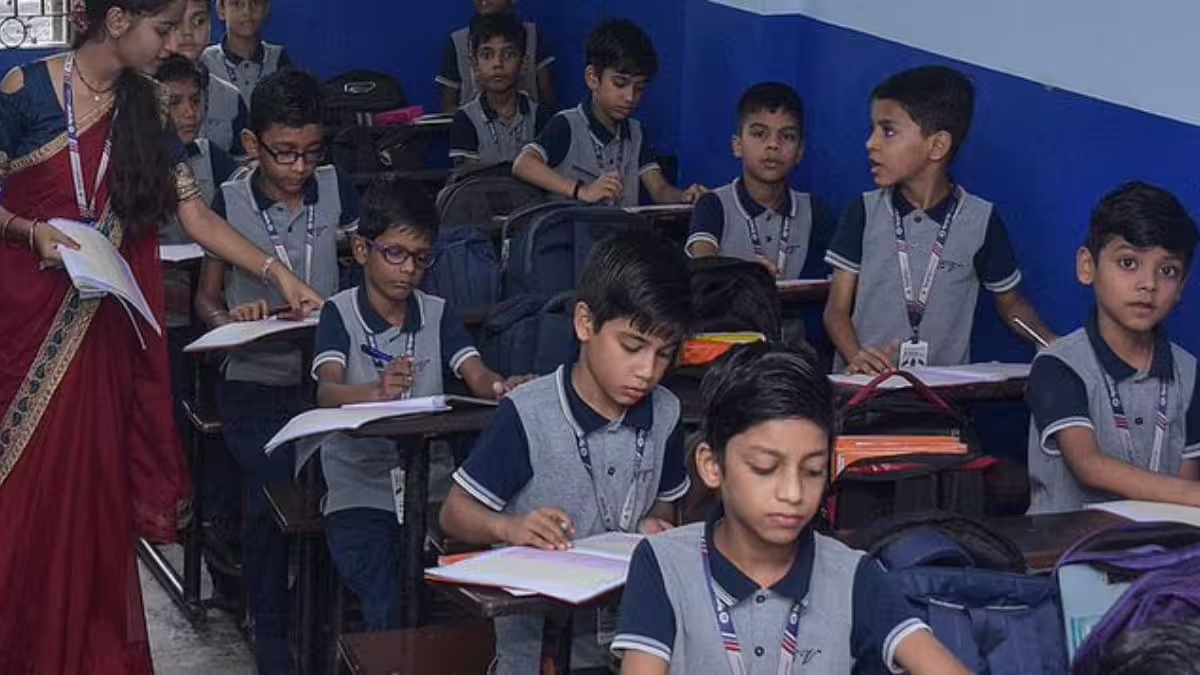
The Federation of Private School Associations (FePSA) has formally requested the Tamil Nadu government to increase the reimbursement amount provided to private schools for educating children admitted under the Right to Education (RTE) Act for the 2026-27 academic year. The association also called for the clearance of pending payments for the 2025-26 year to support schools in managing their operational costs.
Understanding the RTE Act and Its Impact on Private Schools
The Right to Education Act mandates that private schools reserve 25% of their seats for children from economically disadvantaged families, specifically those with an annual income below Rs 2 lakh. To support schools in providing free education to these students, the government reimburses private institutions based on a per child expenditure (PCE) amount. This reimbursement is intended to cover the costs schools incur while educating these children.
Currently, the PCE rates are governed by a single government order that spans four academic years, from 2022-23 through 2025-26. However, FePSA argues that the fixed reimbursement has not kept pace with the rising expenses faced by private schools, putting financial strain on these institutions.
Key Details Behind FePSA's Request
- The PCE reimbursement for lower kindergarten (LKG) and upper kindergarten (UKG) students has remained at Rs 6,000 annually throughout the four-year period.
- During this time, schools have experienced significant increases in costs related to teachers’ salaries, dearness allowance, and employee provident fund (EPF) contributions.
- Other rising expenses include electricity, drinking water, building maintenance, smart classroom technology, and teaching materials.
- FePSA emphasizes that these growing operational costs are not reflected in the current reimbursement rates, making it difficult for schools to sustain quality education for RTE students.
- The association has also highlighted the urgency of releasing pending reimbursement amounts for the 2025-26 academic year to enable schools to begin the RTE admission process without financial hurdles.
Why Revising the Reimbursement Matters for Tamil Nadu Schools
Increasing the PCE reimbursement would provide much-needed financial relief to private schools, allowing them to maintain and improve educational standards for students admitted under the RTE Act. Without adequate funding, schools may struggle to cover essential expenses, potentially affecting the quality of education and resources available to underprivileged children.
Clearing pending dues is equally critical, as delays in reimbursement can disrupt school operations and delay the admission process for RTE students. Timely payments would help schools plan their budgets better and ensure smooth enrollment procedures.
FePSA’s appeal reflects broader concerns about balancing the social responsibility of providing free education with the financial realities of running private institutions. The government’s response to this request will likely influence how effectively private schools can continue supporting RTE students in the coming years.
Frequently Asked Questions
Q: What is the Right to Education (RTE) Act?
A: The RTE Act is a law that mandates private schools to reserve 25% of their seats for children from families with an annual income below Rs 2 lakh, ensuring free and compulsory education for underprivileged children.
Q: Why are private schools asking for higher reimbursements?
A: Private schools face rising operational costs such as increased salaries, maintenance, and teaching resources, but the current reimbursement rates have remained unchanged, making it difficult to cover these expenses.
Q: What happens if the government does not clear pending dues?
A: Delays in reimbursement payments can disrupt school finances, delay the RTE admission process, and potentially impact the quality of education provided to students admitted under the RTE Act.