The Tamil Nadu government has renamed the Chief Minister's Breakfast Scheme to honor the late Congress leader K Kamaraj, calling it the Perunthalaivar Kamarajar Breakfast Scheme. This change was announced on July 15, coinciding with Kamaraj's birth anniversary. Alongside the renaming, the government expanded the scheme to cover students in Classes 6 to 8 in government and aided schools throughout the state, starting September 17, the birth anniversary of social reformer Periyar Ramasamy.
The Legacy of K Kamaraj and School Meal Programs in Tamil Nadu
K Kamaraj, a former Chief Minister of Tamil Nadu, is widely recognized for his transformative contributions to the state's education system. In 1956, he introduced the mid-day meal program aimed at reducing poverty and encouraging school attendance among children. This initiative laid the foundation for future nutrition programs in schools.
Subsequent leaders built on Kamaraj's work: M G Ramachandran revamped the scheme in 1982 as the Puratchi Thalaivar MGR Nutritious Meal Programme, while later Chief Ministers M Karunanidhi and J Jayalalithaa enhanced the nutritional quality of the meals. The previous DMK government under M K Stalin launched the Chief Minister's Breakfast Scheme in 2022, initially targeting students from Classes 1 to 5.
Details of the Renaming and Expansion
- The scheme has been renamed Perunthalaivar Kamarajar Breakfast Scheme to honor Kamaraj's pioneering role in school nutrition programs.
- It will now include students from Classes 6 to 8 in government and aided schools statewide, starting September 17.
- The expansion adds approximately 15.14 lakh middle school students, increasing total beneficiaries to 35 lakh.
- The government has allocated an additional Rs 343.55 crore for the expansion, with Rs 217.63 crore sanctioned for the current financial year.
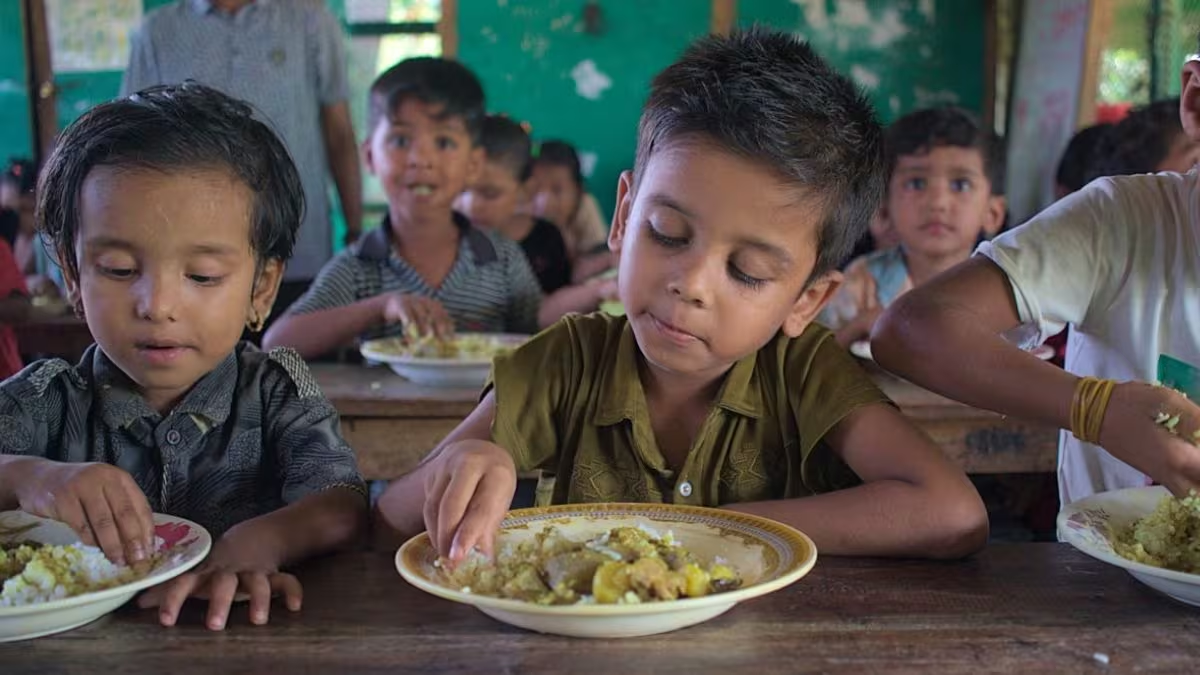
- The program operates in 37,447 schools, providing nutritious breakfasts such as Upma, Kichadi, or Pongal on weekdays, with a sweet dish, Rava Kesari, served on Fridays.
- Meals are millet-based and locally sourced, delivering about 293 calories, 9.85 grams of protein, along with iron and calcium to help combat nutritional deficiencies.
Political Reactions and Significance of the Change
The renaming has sparked political debate. DMK leader Duraimurugan acknowledged that honoring Kamaraj is appropriate but criticized the current government's tendency to rename existing schemes rather than introduce new initiatives. He argued that the original scheme was meant to represent the office of the Chief Minister broadly, not any individual leader.
Duraimurugan also pointed out that when the DMK was in power, it did not rename popular welfare programs like the 'Amma Unavagam' (Amma Canteens), despite their association with political rivals. He cited former Chief Minister M Karunanidhi's approach of tolerating criticism and accepting predecessor schemes as a model of political magnanimity.
The DMK leader suggested that frequent renaming reflects a lack of political generosity and called for restraint in political discourse, referencing recent arrests of DMK legislators over remarks against the current Chief Minister. The debate highlights ongoing tensions in Tamil Nadu politics over legacy, recognition, and governance.
Frequently Asked Questions
Q: Who was K Kamaraj and why is the scheme named after him?
A: K Kamaraj was a former Chief Minister of Tamil Nadu known for revolutionizing the state's education system. He introduced the mid-day meal program in 1956 to improve school attendance and child nutrition, which laid the foundation for current school meal schemes.
Q: What changes have been made to the Chief Minister's Breakfast Scheme?
A: The scheme has been renamed the Perunthalaivar Kamarajar Breakfast Scheme and expanded to include students from Classes 6 to 8 in government and aided schools across Tamil Nadu, increasing the total beneficiaries to 35 lakh students.
Q: What kind of meals are provided under this scheme?
A: The scheme offers nutritious, millet-based breakfasts such as Upma, Kichadi, or Pongal on weekdays, with a sweet dish called Rava Kesari served on Fridays. These meals provide essential calories, protein, iron, and calcium to support children's health.