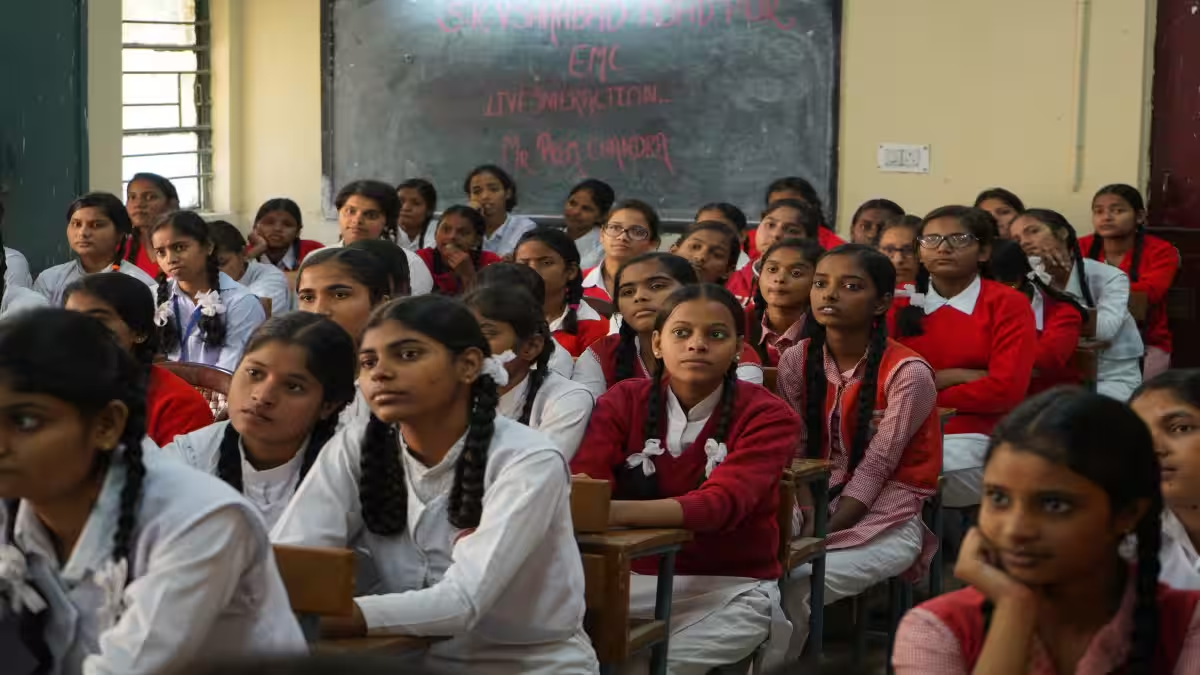
The Telangana Board of Intermediate Education (TGBIE) has announced an extension for admissions to first-year intermediate courses for the academic year 2026-27. The new deadline for completing admissions is August 31, 2026. This extension applies across various types of junior colleges affiliated with the board, including government, private aided and unaided, residential, and welfare colleges.
Understanding Telangana Intermediate Admissions
The intermediate course in Telangana is a two-year program that serves as a bridge between secondary education and higher studies. It is offered by junior colleges across the state and is critical for students aiming to pursue professional courses or university education. The TGBIE oversees the admission process, curriculum, and examination standards for these colleges.
Admissions are typically based on academic performance in qualifying examinations rather than entrance tests. The board sets guidelines to ensure fair access and adherence to reservation policies, reflecting the state’s commitment to inclusive education.
Key Admission Guidelines and Reservation Details
- The admission deadline is extended to August 31, 2026, for all affiliated junior colleges.
- Colleges must follow the existing rules and cannot conduct entrance exams; admissions are based on Grade Point Average (GPA), subject-wise Grade Points, or marks from qualifying exams.
- Reservation quotas include 15% for Scheduled Castes (SC), 10% for Scheduled Tribes (ST), and 29% for Backward Classes (BC).
- Additional reservations cover 5% for physically handicapped students, 5% for NCC, sports, and extracurricular achievers, 3% for ex-servicemen and defense personnel residents, and 10% for the Economically Weaker Section (EWS).
- One-third of the total seats in colleges without separate girls’ institutions must be reserved for female students category-wise.
- Students returning after a gap must provide a local candidate or residential certificate from the Tahsildar.
- Colleges must update and display the number of sanctioned sections, filled seats, and vacancies daily during admissions.
- Unaided junior colleges are limited to a maximum of 88 students per section and must not admit students to discontinued course combinations.
- Admission of foreign nationals or Overseas Citizens of India requires submission of Form-II to local police within 24 hours.
- An anti-drug declaration signed by both students and parents is mandatory during admission.
Implications of the Extended Deadline and New Rules
The extension provides additional time for students and parents to complete the admission process, potentially easing pressure on those who may have missed earlier deadlines. By reinforcing admission criteria based on academic merit and strict adherence to reservation policies, the board aims to maintain transparency and fairness.
Limiting the number of students per section and prohibiting admissions to discontinued courses ensures quality education and manageable class sizes. The requirement for anti-drug declarations and enhanced security measures for girl students reflects the board’s focus on creating a safe and supportive learning environment.
Parents and students are advised to verify the affiliation status of junior colleges before applying, as admissions are only valid in officially recognized institutions. This helps prevent fraudulent admissions and protects students’ academic futures.
Frequently Asked Questions
Q: What is the new last date for Telangana intermediate first-year admissions?
A: The Telangana Board of Intermediate Education has extended the admission deadline to August 31, 2026.
Q: Are entrance exams required for admission to intermediate courses?
A: No, the board has instructed colleges not to conduct entrance tests. Admissions are based on GPA, subject-wise grades, or marks from qualifying exams.
Q: What reservation percentages are applied in Telangana intermediate admissions?
A: Reservations include 15% for SC, 10% for ST, 29% for BC, 5% for physically handicapped, 5% for NCC/sports/extracurricular, 3% for ex-servicemen/defense personnel, and 10% for the Economically Weaker Section.