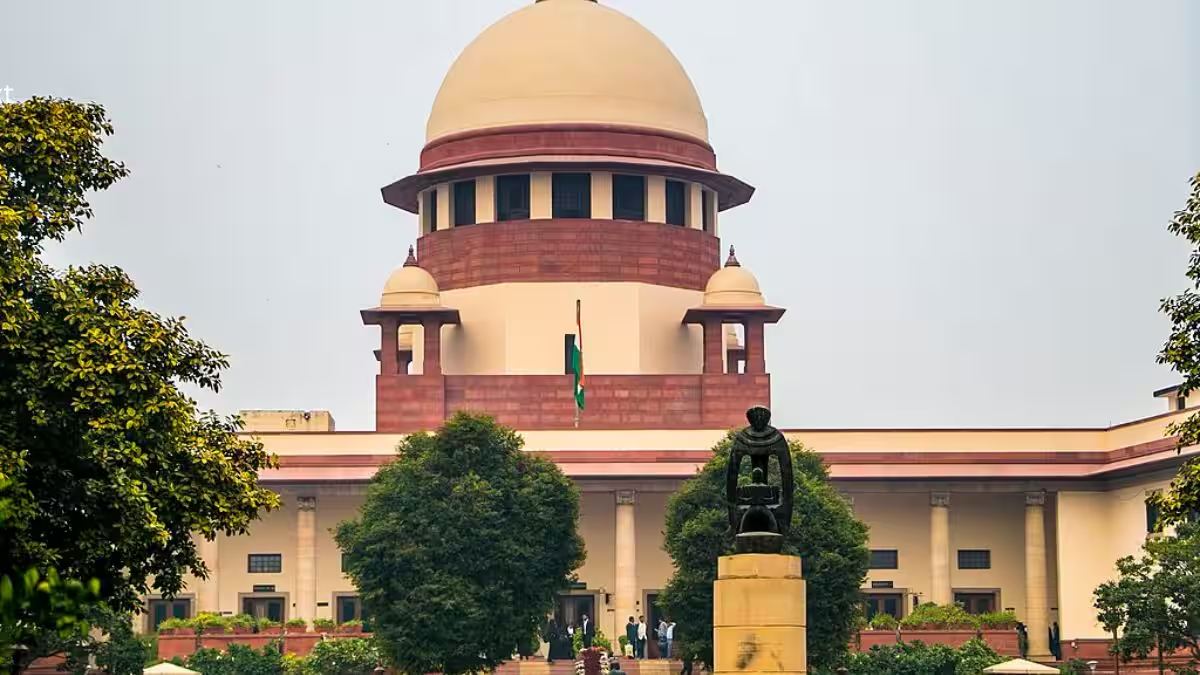
The Indian government has told the Supreme Court that the University Grants Commission's (UGC) 2026 regulations aimed at promoting equity and preventing caste-based discrimination in higher education institutions are currently being reconsidered. This update came during a hearing on February 1, 2024, before a Supreme Court bench led by Chief Justice Surya Kant.
Understanding the UGC Equity Regulations 2026
The UGC's 2026 regulations were designed to address caste-based discrimination on college and university campuses across India. These rules aimed to create a more equitable environment for students from Scheduled Castes (SC), Scheduled Tribes (ST), and Other Backward Classes (OBC) by mandating measures to prevent discrimination and promote inclusivity.
However, the regulations sparked controversy and protests from various student groups and organizations who argued that some provisions could undermine merit-based admissions and create divisions within campuses. The regulations included specific definitions of caste-based discrimination and outlined procedures for redressal committees to handle complaints.
Key Developments and Court Proceedings
- On January 29, 2024, the Supreme Court issued a stay on the 2026 UGC equity regulations, describing them as "prima facie vague" and warning they could have "very sweeping consequences" that might divide society.
- The Court questioned the necessity of a separate definition for caste-based discrimination under regulation 3(1)(c), since regulation 3(1)(e) already broadly defines discrimination.
- Concerns were raised about the exclusion of ragging from the regulations, despite its prevalence as a form of harassment in educational institutions.
- The Court directed that the earlier 2012 UGC equity regulations remain in force until further orders, ensuring continuity in anti-discrimination measures.
- Solicitor General Tushar Mehta informed the bench that the Centre is reconsidering the 2026 regulations and the UGC has been asked to file a detailed counter affidavit within four weeks.
- Petitioners challenging the regulations will have two weeks to respond after the counter affidavit is submitted.
Why the Supreme Court’s Review Matters
The Supreme Court’s intervention highlights the delicate balance between promoting social equity and maintaining meritocracy in India’s higher education system. The 2026 regulations were introduced against a backdrop of ongoing debates about caste privilege and discrimination, especially following high-profile student suicides linked to caste-based harassment.
By pausing the new regulations and seeking detailed responses, the Court is ensuring that any policy changes are carefully scrutinized to avoid unintended consequences. The concerns about vague language and potential misuse suggest the need for clearer definitions and safeguards to protect all students’ rights.
This reconsideration also reflects the broader societal challenge of addressing caste discrimination while fostering unity and fairness on campuses. The outcome of this legal review will shape how universities implement equity measures in the coming years.
Frequently Asked Questions
Q: What are the UGC equity regulations 2026?
A: They are rules introduced by the University Grants Commission to prevent caste-based discrimination and promote equity in higher education institutions across India.
Q: Why did the Supreme Court stay these regulations?
A: The Court found the regulations to be vague and potentially divisive, raising concerns about their impact on society and the education system.
Q: What happens while the regulations are under reconsideration?
A: The earlier 2012 UGC equity regulations remain in effect, and the Court has asked the Centre and UGC to provide detailed responses before deciding on the future of the 2026 rules.