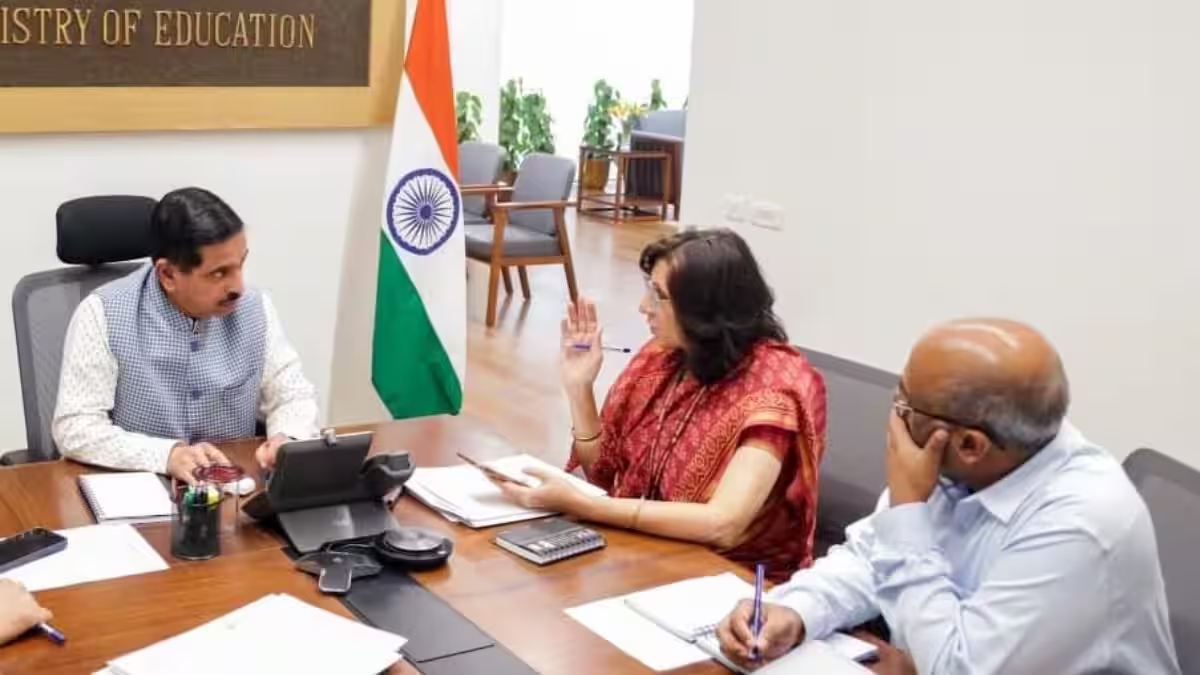
Union Education Minister Pralhad Joshi has mandated a comprehensive overhaul of the National Testing Agency (NTA), focusing on its operations, security protocols, and examination processes. This directive follows concerns raised after recent exam irregularities, including the NEET UG paper leak and errors during the UGC NET exam. The minister’s decision came after a high-level meeting with senior officials, including the Secretary of the Department of Higher Education, Deepti Gaur Mukerjee, and the NTA Director General.
Why the Overhaul Is Necessary
The National Testing Agency is responsible for conducting major entrance exams in India, including NEET and UGC NET. However, recent incidents have shaken confidence in the agency’s ability to maintain exam integrity. The NEET UG paper leak exposed vulnerabilities in exam security, while students reported multiple errors during the UGC NET exam, prompting demands for reforms and even calls for the agency’s scrapping by student groups.
In response, the Education Minister emphasized the need to revamp the confidential operations (CONOPS) architecture, which governs the agency’s exam management and security systems. This overhaul aims to prevent future breaches and ensure that exam processes are transparent and reliable.
Steps Taken to Strengthen NTA
During the meeting, officials updated the minister on several key actions already underway to improve the agency’s functioning:
- Over 50 staff members have been removed from the NTA to address accountability and performance issues.
- Ten new senior leadership roles have been created and advertised, including Chief Technology Officer, Chief Finance Officer, Chief Information Security Officer (CISO), General Manager for Test Security, and experts in research, development, and psychometrics.
- Specialists from the private sector are being recruited to bring expertise in cybersecurity, question-paper design, and psychometrics, areas critical to exam security and fairness.
- New protocols are being established, such as secluded rooms for exam-related work, air-gapped computer systems to prevent unauthorized access, and strict device-deposit rules to control electronic devices during exam preparation and administration.
The NTA has been instructed to submit a detailed report on the corrective measures taken, ensuring transparency and accountability throughout the reform process.
What This Overhaul Means for Exam Takers
The Education Minister’s directive signals a strong commitment to restoring trust in India’s examination system. By addressing security flaws and improving operational management, the NTA aims to safeguard the integrity of exams that affect millions of students nationwide.
For students, this means future exams should be more secure, with fewer chances of leaks or errors. The involvement of private-sector experts and new leadership is expected to bring fresh perspectives and advanced technologies to the agency’s operations. Additionally, the introduction of stricter security measures like air-gapped systems will reduce the risk of digital breaches.
These reforms come at a critical time when the credibility of competitive exams is under scrutiny. Ensuring fair and transparent testing processes is essential not only for students’ futures but also for maintaining the overall quality and reputation of India’s higher education system.
Frequently Asked Questions
Q: What prompted the Education Minister to order an overhaul of the NTA?
A: Recent exam controversies, including the NEET UG paper leak and errors during the UGC NET exam, raised concerns about the agency’s security and operational effectiveness, prompting the directive.
Q: What specific changes are being made to improve NTA’s security?
A: The overhaul includes establishing secluded rooms, air-gapped computer systems, device-deposit protocols, and recruiting cybersecurity experts to strengthen exam security.
Q: How will these changes affect students taking NTA exams?
A: Students can expect more secure and reliable exams with reduced risks of leaks or errors, helping to ensure fair competition and accurate assessment of their abilities.