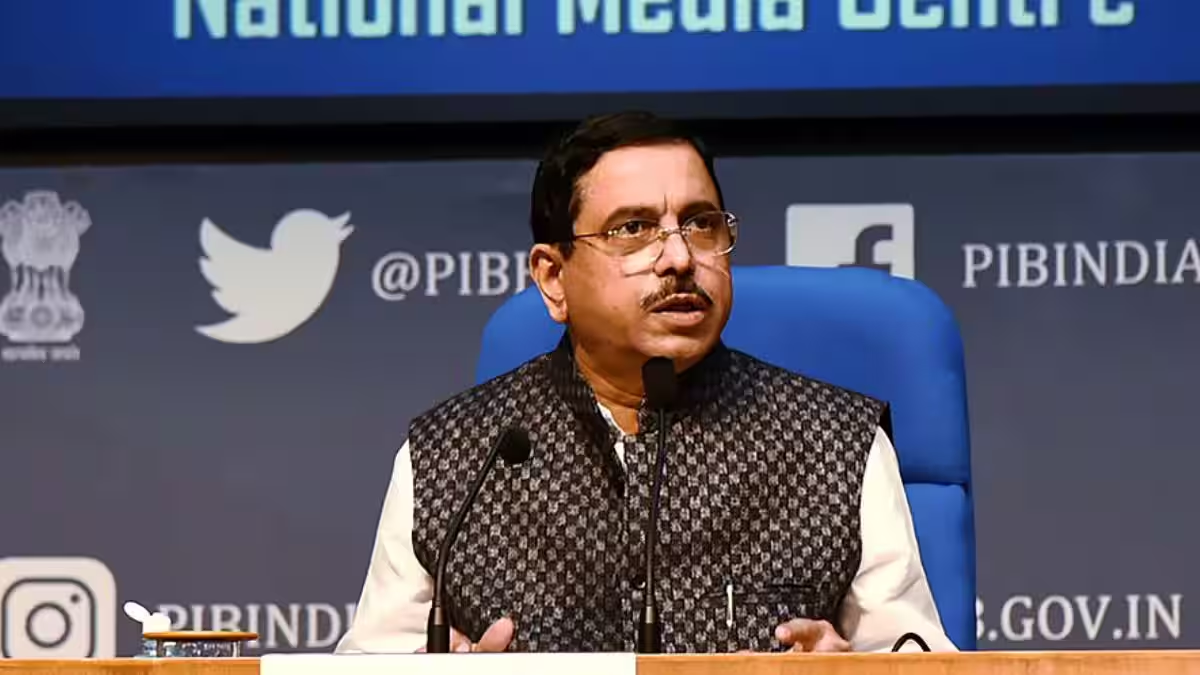
Union Education Minister Pralhad Joshi convened a meeting with senior officials from the Education Ministry on Thursday to assess and advance key priorities in higher education. The discussions centered on improving educational quality, fostering institutional excellence, and expanding opportunities for students across India.
Why Higher Education Reform Is Urgent
The Education Ministry has faced intense scrutiny following recent exam-related controversies, including leaks in the UGC-NET and NEET-UG medical entrance examinations. These incidents have raised concerns about the integrity and security of the country’s examination systems, prompting swift government action. Joshi, who took office after his predecessor Dharmendra Pradhan resigned amid the NEET-UG scandal, is leading efforts to restore confidence in the system and ensure fair assessment for all candidates.
Key Actions Taken to Strengthen Exams and Education
- Joshi directed the implementation of comprehensive security and infrastructural upgrades for exam centers to prevent future breaches.
- The National Testing Agency (NTA), responsible for conducting many national-level exams, has introduced a four-tier paper evaluation process to enhance transparency and accuracy.
- Approximately 600 experts involved in exam evaluation were removed, with new qualified personnel onboarded to maintain high standards.
- Exam venues are now secured under the supervision of the Central Industrial Security Force (CISF) to prevent unauthorized access and leaks.
- The NTA Director General, Abhishek Singh, updated the ministry on the progress of these reforms, highlighting the agency’s commitment to a secure and efficient examination environment.
What This Means for Students and Institutions
These reforms aim to rebuild trust in India’s higher education assessment systems, which are critical gateways for millions of students seeking admission to universities and professional courses. By enhancing exam security and instituting rigorous evaluation protocols, the government hopes to ensure that merit remains the sole criterion for academic advancement.
Beyond exam reforms, Joshi’s focus on institutional excellence and expanding educational opportunities signals a broader commitment to raising India’s higher education standards. This could lead to improved teaching quality, better research facilities, and more inclusive access for students from diverse backgrounds.
As India prepares to host the 13th BRICS Education Ministers’ meeting in Bhubaneswar, Joshi’s leadership in these reforms also positions the country as a proactive player in global education dialogues.
Frequently Asked Questions
Q: What prompted the recent overhaul of the examination system?
A: The overhaul was triggered by exam paper leaks in the UGC-NET and NEET-UG exams, which exposed vulnerabilities in exam security and evaluation processes.
Q: How will the new four-tier paper checking system work?
A: The four-tier system involves multiple levels of scrutiny for exam papers to reduce errors and prevent malpractice, ensuring fair and accurate results.
Q: What role does the CISF play in exam security now?
A: The CISF is responsible for securing exam venues to prevent unauthorized entry and safeguard exam materials, helping to maintain the integrity of the examination process.