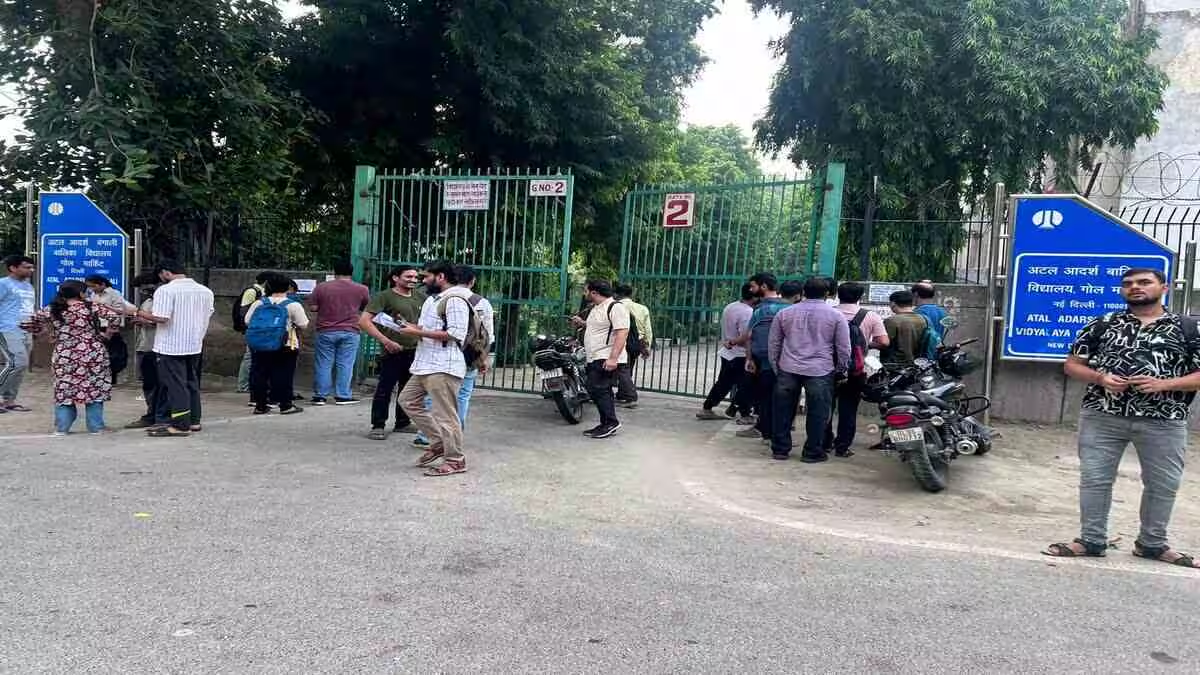
Dr. APJ Abdul Kalam Technical University (AKTU) has released the Uttar Pradesh Technical Admission Counselling (UPTAC) round 3 seat allotment results for 2026. Candidates who appeared for the Joint Entrance Examination (JEE) can now check their B.Tech, BDes, MTech, and integrated course seat allotments on the official UPTAC portal. The results are available at uptac.samarth.edu.in, where students must log in using their registration number or email ID and password.
After viewing their seat allotment, candidates have until August 1, 2026, to decide whether to freeze, float, or withdraw their allotted seat. Those who accept the seat must also pay the seat acceptance fee by this deadline to confirm their admission.
Understanding UPTAC and Its Role in Technical Admissions
UPTAC is the centralized counselling process conducted by AKTU to allocate seats in various technical courses across participating institutes in Uttar Pradesh. It primarily serves candidates who have qualified through the JEE Main examination. The counselling rounds allow students to select institutes and branches based on their ranks and preferences.
The process involves multiple rounds of seat allotment, with each round giving candidates the opportunity to accept or reject their allotted seats. This system ensures a fair and transparent distribution of seats among thousands of aspirants seeking admission in engineering, design, and postgraduate technical programs.
Key Details of UPTAC Round 3 Seat Allotment 2026
- The round 3 seat allotment results are published on the official UPTAC website.
- Candidates must log in with their registration number or email ID and password to access their allotment details.
- After checking the allotment, candidates can choose to freeze (accept), float (wait for a better seat), or withdraw their seat by August 1, 2026.
- The seat acceptance fee is Rs 20,000 for General and OBC candidates and Rs 12,000 for SC and ST candidates.
- Payment of the seat confirmation fee must be made online via net banking, credit card, or debit card by August 1, 2026.
- Important documents required during college reporting include a scanned passport-size photo, signature image, all uploaded supporting documents such as mark sheets and certificates, and a printed copy of the UPTAC application form.
- The fourth round of seat allotment, which will be an auto-freeze round, is scheduled for August 3, 2026.
- Physical reporting at allotted institutions and payment for new allotments will take place from August 4 to August 7, 2026.
Why Timely Action Is Crucial for Candidates
For students participating in UPTAC counselling, adhering to deadlines is essential to secure admission. Missing the payment or choice submission deadlines can result in losing the allotted seat. The option to freeze a seat confirms acceptance, while floating allows candidates to wait for a better seat in subsequent rounds without losing their current allotment.
With the fourth round approaching, candidates who have not yet secured their preferred seats still have a chance to improve their placement. However, the auto-freeze nature of round 4 means that seats allotted then will be automatically accepted, so candidates must be prepared to commit.
Completing the payment and reporting formalities within the specified dates ensures a smooth admission process. It also helps institutes plan their intake and manage seat availability efficiently.
Frequently Asked Questions
Q: How can I check my UPTAC round 3 seat allotment result?
A: Visit the official UPTAC website at uptac.samarth.edu.in, log in using your registration number or email ID and password, and view your allotted institute and branch details.
Q: What are the options after seat allotment?
A: Candidates can choose to freeze (accept) the seat, float (wait for a better seat in the next round), or withdraw from the counselling process. These choices must be made by August 1, 2026.
Q: What is the seat acceptance fee and how do I pay it?
A: The fee is Rs 20,000 for General and OBC candidates and Rs 12,000 for SC and ST candidates. Payment must be made online through net banking, credit card, or debit card by August 1, 2026.