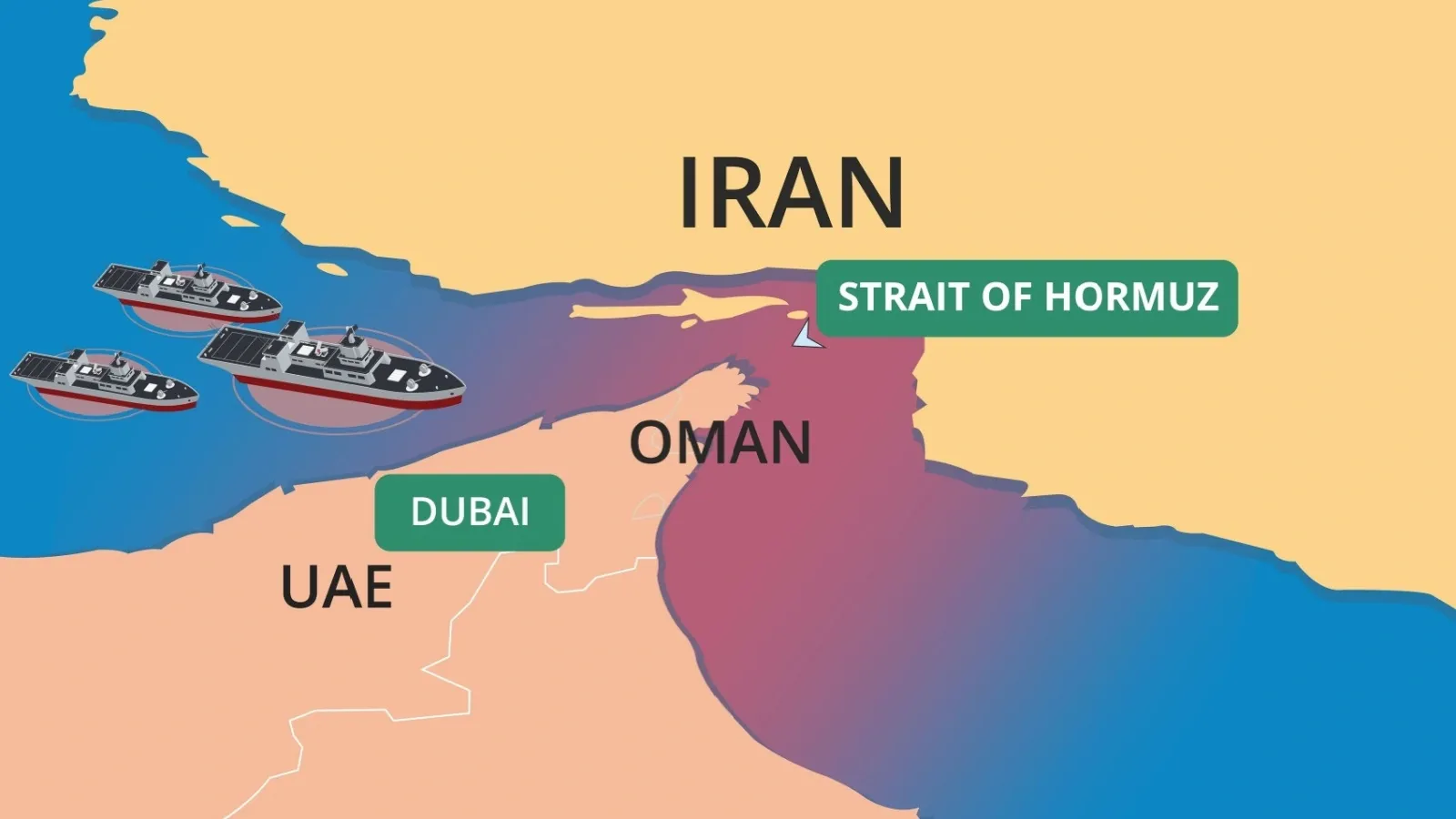
Iran’s Islamic Revolutionary Guard Corps (IRGC) launched a new series of missile and drone strikes on US military bases in Bahrain, Kuwait, and Jordan on Monday, escalating the ongoing conflict near the strategic Strait of Hormuz. These attacks came shortly after the US military conducted its own strikes on Iranian targets, intensifying fears of further instability in a region critical to global oil supplies.
The renewed violence has sent oil prices soaring, with Brent crude climbing over 4% to around $79 a barrel and the US benchmark West Texas Intermediate rising above $74 a barrel. The Strait of Hormuz, through which about one-fifth of the world’s oil and liquefied natural gas shipments pass, remains a flashpoint in the confrontation between Washington and Tehran.
Why the Strait of Hormuz Matters
The Strait of Hormuz is a narrow waterway between the Persian Gulf and the Gulf of Oman, serving as a vital maritime corridor for global energy trade. Approximately 20% of the world’s oil supply moves through this passage, making it one of the most strategically important chokepoints for energy security. Any disruption here can have immediate and far-reaching effects on global markets and economies.
Iran has long asserted influence over the strait, occasionally threatening to close or restrict passage as a means of leverage in its disputes with the United States and its allies. The recent escalation follows months of rising tensions after a series of attacks on shipping vessels and military assets in the region.
Details of the Latest Attacks
- The IRGC targeted multiple US military installations, including Kuwait’s Ali Al Salem and Ahmad Al Jaber bases, both hosting American troops.
- Iran claimed it destroyed fuel storage tanks and Patriot missile defense systems at Ali Al Salem.
- In Bahrain, the IRGC struck Sheikh Isa Air Base, damaging helicopter maintenance facilities, a hangar housing a P-8 Poseidon maritime patrol aircraft, and a drone command center.
- Jordan’s Prince Hassan Air Base was also hit, with missiles and drones reportedly setting fire to fuel and weapons storage areas.
- Bahrain’s Interior Ministry activated air raid sirens and urged residents to seek shelter, though no immediate casualties or damage were reported.
- These Iranian attacks followed US Central Command’s announcement of offensive strikes against dozens of Iranian targets aimed at degrading Iran’s ability to threaten commercial shipping in the strait.
Why This Escalation Matters for Global Energy and Security
The latest round of attacks underscores the fragile security situation in the Persian Gulf and the potential for conflict to disrupt global energy supplies. With oil prices already volatile, any prolonged closure or threat to the Strait of Hormuz could lead to significant economic consequences worldwide.
The US maintains that the strait remains open for commercial traffic, while Iran claims it has closed the waterway after accusing ships of unauthorized passage. This conflicting narrative adds to the uncertainty faced by shipping companies and global markets.
Additionally, the attacks threaten to derail diplomatic efforts aimed at stabilizing the region. An interim agreement reached last month sought to reopen the strait and pave the way for further negotiations, but the recent violence casts doubt on its durability.
Frequently Asked Questions
Q: Why is the Strait of Hormuz so strategically important?
A: The strait is a key maritime route through which about 20% of the world’s oil and liquefied natural gas shipments pass, making it critical for global energy supply and trade.
Q: What triggered the recent attacks between the US and Iran?
A: The attacks followed a cycle of military strikes and retaliations, with the US targeting Iranian military sites to reduce threats to shipping, and Iran responding with missile and drone attacks on US bases hosting American troops.
Q: How could these tensions affect global oil prices?
A: Increased conflict near the Strait of Hormuz raises fears of supply disruptions, which typically drive oil prices higher due to concerns over reduced availability of crude oil on the global market.