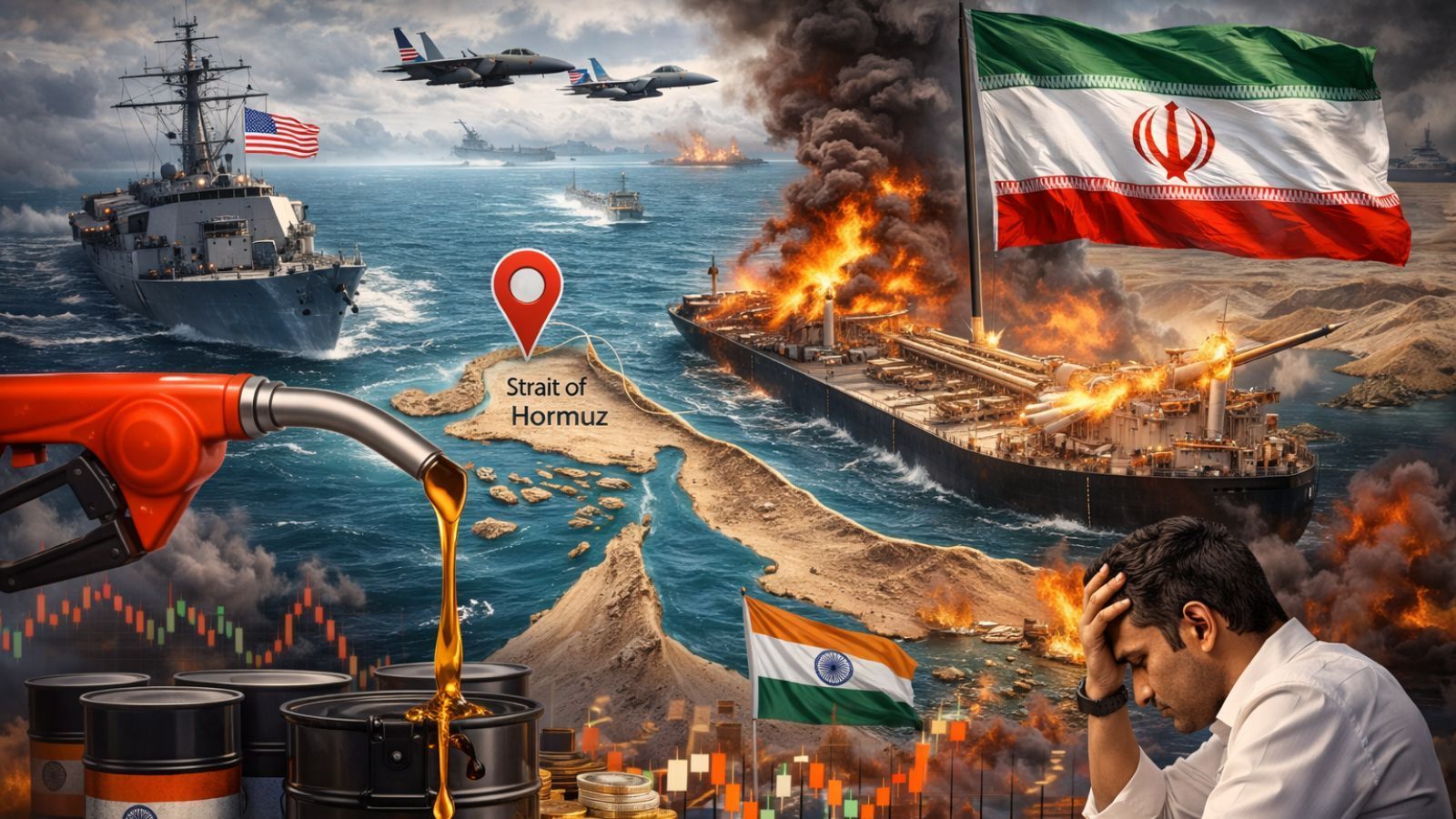
The United States military carried out fresh air and naval strikes against Iranian military targets near the Strait of Hormuz, coinciding with the resumption of a US naval blockade on ships traveling to or from Iranian ports. This escalation occurred despite an interim peace agreement reached last month that had aimed to reopen the critical shipping route.
President Donald Trump announced a full blockade on vessels linked to Iran, emphasizing that the Strait of Hormuz would remain open to all shipping except those connected to Iran. The strikes and blockade mark a significant intensification of US-Iran tensions in a region vital to global energy supplies.
Understanding the Strait of Hormuz and Its Importance
The Strait of Hormuz is a narrow waterway located between the Persian Gulf and the Gulf of Oman. It serves as a crucial passage for a large portion of the world’s seaborne oil exports, making it strategically vital for global energy markets. Any disruption in this shipping lane can have widespread economic consequences, including spikes in oil prices and supply chain uncertainties.
Iran has long asserted its influence over the strait, and the US has maintained a naval presence to ensure freedom of navigation. The recent blockade and military strikes reflect ongoing disputes over control and security in this region, which has been a flashpoint for conflict for decades.
Details of the US Military Operation and Blockade
- The US Central Command (CENTCOM) reported that the operation lasted seven hours, beginning at 10 pm EDT on Tuesday.
- Strikes targeted dozens of Iranian missile and drone sites, naval assets, and coastal defense systems near the Strait of Hormuz and along Iran’s coastline.
- US forces used fighter aircraft, drones, and naval vessels to carry out precision attacks aimed at reducing Iran’s ability to threaten commercial shipping and civilian crews.
- The naval blockade resumed at 4 pm EDT on Tuesday, restricting vessels traveling to or from Iranian ports or carrying Iranian cargo.
- US forces remain prepared for further military actions as the situation develops.
- President Trump abandoned a previously proposed 20% fee on cargo transiting the strait after objections from Gulf allies, who argued the toll would undermine US objectives and validate Iran’s demands for compensation.
Implications of Renewed Conflict on Global Energy and Diplomacy
The renewed US strikes and blockade have heightened uncertainty over shipping through the Strait of Hormuz, already strained by the conflict. Commercial traffic has declined sharply, raising concerns about disruptions to global oil supplies and contributing to rising crude oil prices.
Following the strikes, crude oil futures rose for the third consecutive session, reflecting market fears over supply risks. The instability threatens to impact energy markets worldwide, potentially increasing costs for consumers and businesses.
Diplomatically, the US decision to drop the toll plan after pressure from Gulf states underscores the delicate balance Washington seeks to maintain with regional allies while confronting Iran. Iran’s foreign minister responded by reaffirming Iran’s role as the guardian of the strait and suggesting compensation for maritime security is justified, though the proposed 20% fee was deemed excessive.
This ongoing tension highlights the fragile nature of peace efforts in the region and the challenges of securing one of the world’s most important maritime corridors.
Frequently Asked Questions
Q: Why is the Strait of Hormuz so important?
A: The Strait of Hormuz is a key maritime route through which a significant portion of the world’s oil exports pass. Its strategic location makes it vital for global energy security and international trade.
Q: What triggered the recent US strikes on Iran?
A: The US launched strikes targeting Iranian military sites near the strait to degrade Iran’s ability to threaten commercial shipping, coinciding with the resumption of a naval blockade on Iranian ports.
Q: How have Gulf countries reacted to US actions?
A: Gulf states including Saudi Arabia, the UAE, Bahrain, and Qatar opposed the US proposal to impose a transit fee on shipping through the strait, arguing it would harm US interests and validate Iran’s compensation claims.