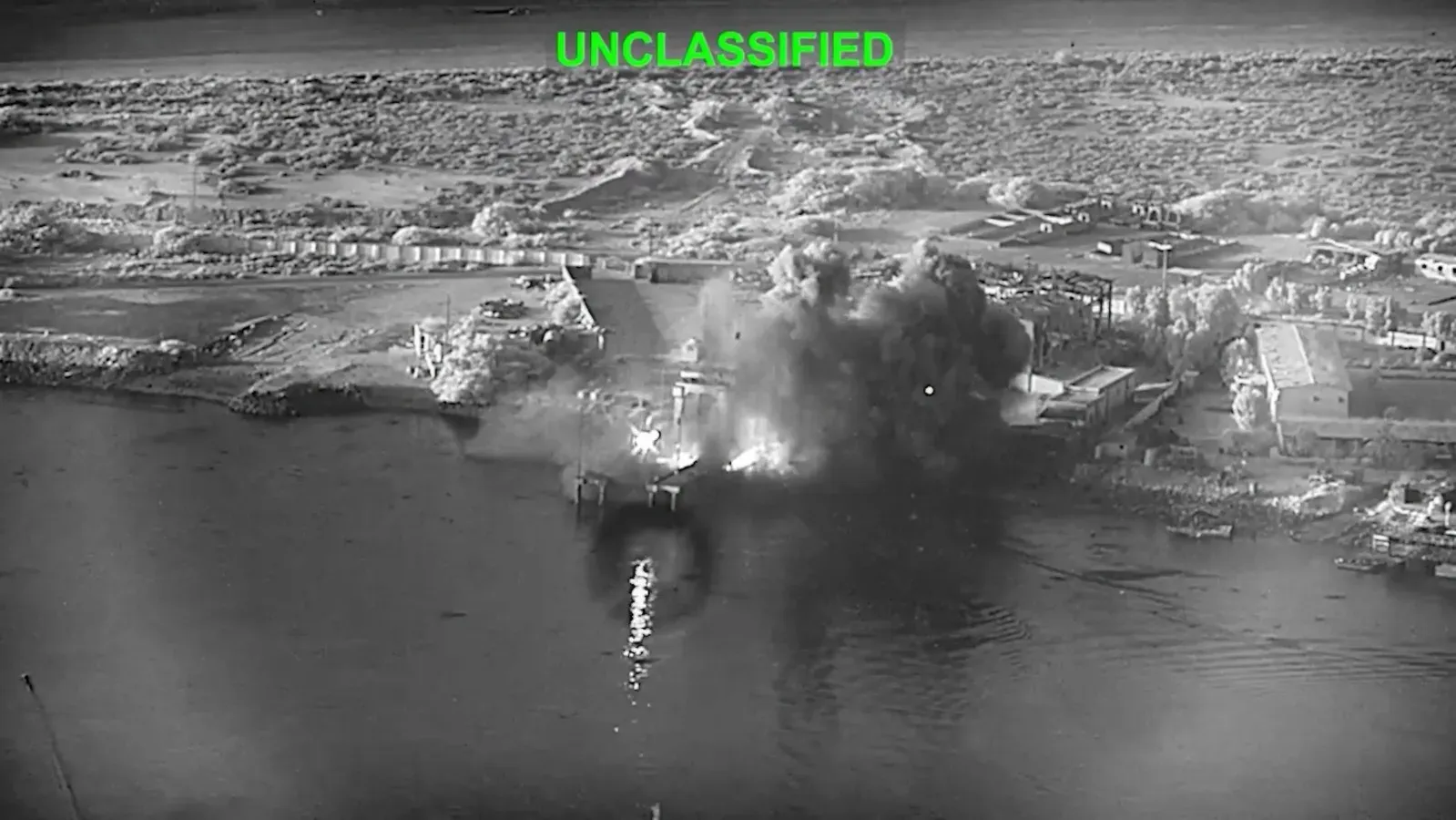
The United States carried out a new series of airstrikes across Iran late Monday, marking the third consecutive night of military action amid escalating tensions in the Middle East. The strikes targeted multiple Iranian military sites along the southern coast, while Iran responded with missile and drone attacks toward Bahrain and assaults on shipping in the strategic Strait of Hormuz.
Escalating Conflict in a Critical Region
The recent military operations reflect a sharp intensification of hostilities between the US and Iran, centered on control over the Strait of Hormuz, a vital chokepoint for global oil shipments. The US Central Command (CENTCOM) reported that the operation lasted five hours, concluding at 10:15 p.m. Eastern time. It focused on Iranian coastal defense systems, missile and drone launch sites, and maritime capabilities at locations including Bushehr, Chabahar, Jask, Konarak, Abu Musa, and Bandar Abbas.
President Donald Trump emphasized the US intent to maintain dominance over the strait, stating from the Oval Office that the strikes would continue to degrade Iran's offensive capabilities and that the US was reestablishing control over the waterway. Video footage circulating online showed explosions and fires in Iran’s southeastern Sistan and Baluchestan province, near the Pakistan border.
Details of the Strikes and Iranian Response
- The US used precision-guided munitions to target Iranian military infrastructure.
- Iran launched multiple missile and drone attacks toward Bahrain, triggering air raid sirens and calls for residents to seek shelter.
- The Islamic Revolutionary Guard Corps (IRGC) claimed to have struck weapons warehouses, a satellite communications center, and a US forces building at Bahrain’s Juffair naval base.
- Iran also reported disabling two tankers accused of navigating a mined route in the Strait of Hormuz.
- Reports indicated that two United Arab Emirates tankers were hit by Iranian missiles in the southern part of the strait.
- Brent crude oil prices briefly rose above $84 per barrel amid concerns over supply disruptions.
Implications of the Conflict and New US Policy Proposals
The ongoing clashes raise serious concerns about the stability of global energy markets and the security of one of the world’s most important maritime routes. President Trump announced a significant policy shift, proposing a 20% fee on cargo passing through the Strait of Hormuz to cover security costs, while pledging to keep the waterway open under US protection. This marks a departure from longstanding US policy supporting free navigation without transit fees.
Iranian Foreign Minister Abbas Araghchi responded by reaffirming Iran’s role as the guardian of the strait and acknowledged that compensation for maritime security might be appropriate, though he called the proposed 20% fee excessive and promised a fair approach.
The renewed violence also casts doubt on a recent interim peace agreement that had aimed to reopen the strait after the US lifted an earlier blockade. President Trump criticized Iran’s commitment to the deal, describing the agreement as a test that Tehran failed to pass.
Frequently Asked Questions
Q: Why is the Strait of Hormuz so important?
A: The Strait of Hormuz is a narrow waterway that connects the Persian Gulf to the Arabian Sea. It is a critical route for global oil shipments, with a significant portion of the world’s petroleum passing through it daily.
Q: What triggered the recent US airstrikes on Iran?
A: The US launched strikes targeting Iranian military sites in response to increased Iranian attacks on shipping and missile and drone strikes toward Bahrain, aiming to degrade Iran’s offensive capabilities in the region.
Q: What does the proposed 20% transit fee mean for global trade?
A: If implemented, the fee would represent a major shift in policy and could increase costs for shipping companies using the strait, potentially affecting global oil prices and trade dynamics. It also risks escalating diplomatic tensions between the US, Iran, and other regional players.