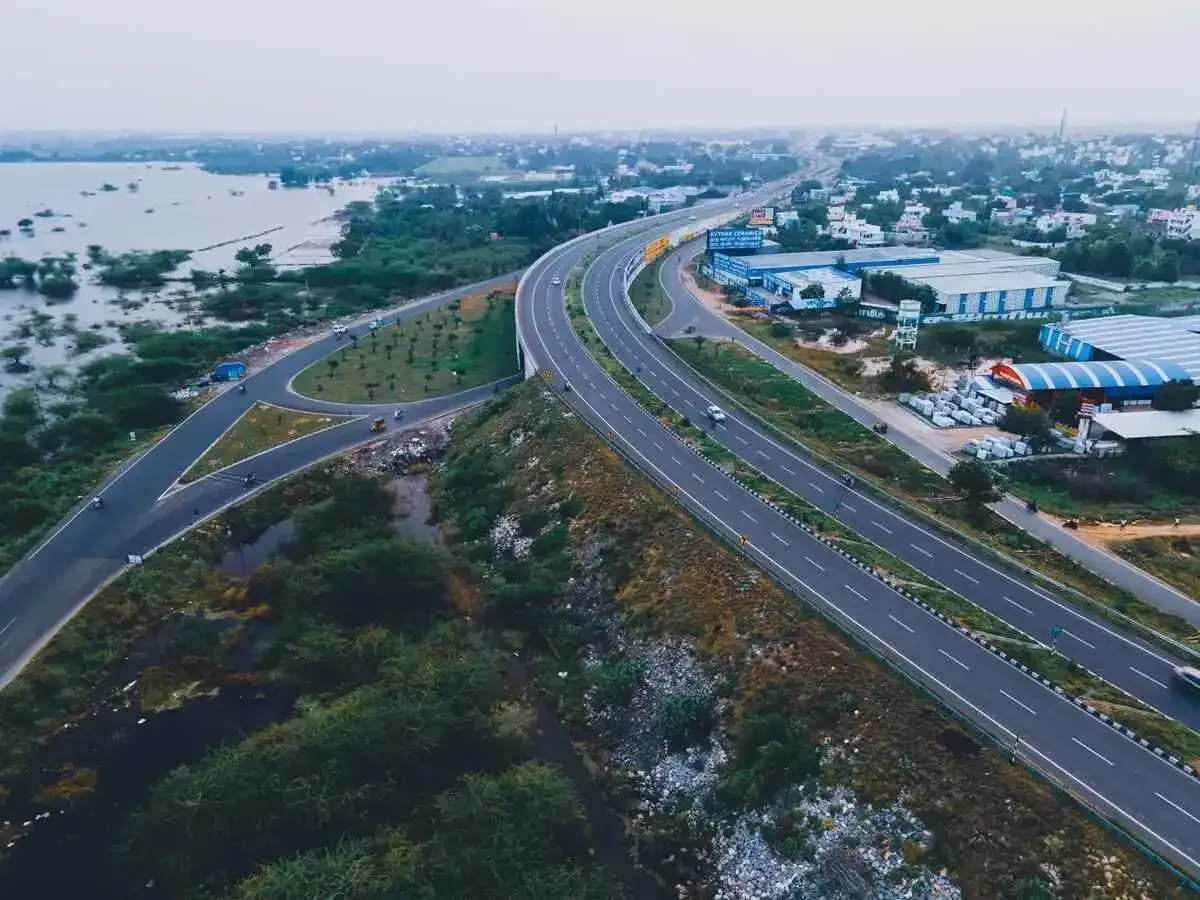
The Cabinet Committee on Economic Affairs (CCEA) has approved two significant infrastructure projects in Varanasi, Uttar Pradesh, aimed at reducing traffic congestion and enhancing urban mobility. The projects include the construction of two elevated corridors spanning over 89 kilometers combined, with an estimated total investment of ₹25,446 crore.
These corridors will run along the Varuna and Ganga rivers, providing faster and more efficient travel routes through the city. The National Highways Authority of India (NHAI) will oversee the implementation of both projects under the Hybrid Annuity Model (HAM), a public-private partnership framework.
Elevated Corridors to Transform Varanasi's Traffic Flow
Varanasi, one of India's oldest cities and a major cultural and religious hub, faces chronic traffic congestion due to its narrow roads and increasing vehicle numbers. The new elevated corridors are designed to alleviate this problem by creating dedicated routes above ground level, allowing uninterrupted traffic movement.
The first corridor will stretch 43.218 kilometers along the Varuna river, with a capital cost of ₹10,998.32 crore. The second corridor is a 46.039-kilometer six-lane greenfield elevated highway along the Ganga river, costing ₹14,447.64 crore. Together, these projects will provide a modern transport infrastructure that supports the city's growing population and economic activities.
Key Facts About the Elevated Corridor Projects
- Length: 43.218 km (Varuna river corridor) and 46.039 km (Ganga river corridor)
- Cost: ₹10,998.32 crore for Varuna corridor; ₹14,447.64 crore for Ganga corridor; total ₹25,446 crore
- Implementation Agency: National Highways Authority of India (NHAI)
- Model: Hybrid Annuity Model (HAM), combining government funding and private sector participation
- Purpose: To decongest Varanasi’s roads and improve connectivity along two major rivers
- Features: Six-lane elevated highways designed for high-speed traffic flow
Why These Elevated Corridors Matter for Varanasi
Varanasi’s urban infrastructure has struggled to keep pace with rapid growth and increasing vehicle density. The elevated corridors will separate through-traffic from local traffic, reducing bottlenecks and travel times significantly. This is expected to boost economic activity by improving access to commercial areas and tourist sites.
Moreover, the corridors will help protect the riverside environment by limiting road expansion on the ground and reducing pollution caused by idling vehicles. The use of the Hybrid Annuity Model also ensures efficient project execution with shared financial risk between the government and private investors.
Once completed, these corridors will serve as a model for other congested cities seeking sustainable urban transport solutions. They represent a major step forward in modernizing Varanasi’s infrastructure while preserving its cultural heritage.
Frequently Asked Questions
Q: What is the Hybrid Annuity Model (HAM)?
A: HAM is a public-private partnership approach where the government and private companies share the investment and risks. The government pays a portion of the project cost upfront, while the private partner finances the rest and operates the project for a fixed period.
Q: How will these corridors reduce traffic congestion in Varanasi?
A: By creating elevated highways above existing roads, these corridors will allow vehicles to bypass congested city streets, reducing travel time and easing traffic jams.
Q: When will construction of the corridors begin?
A: The approval by the Cabinet Committee on Economic Affairs is the first step. Detailed project planning and tendering will follow, with construction expected to start soon after these processes are completed.