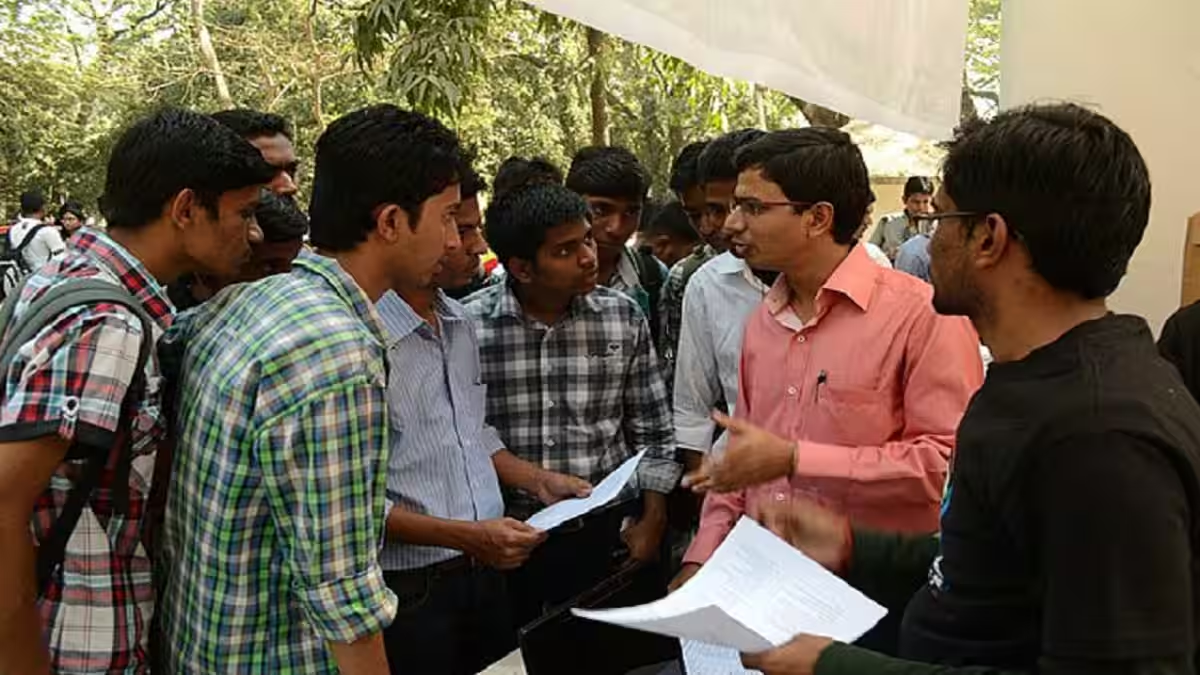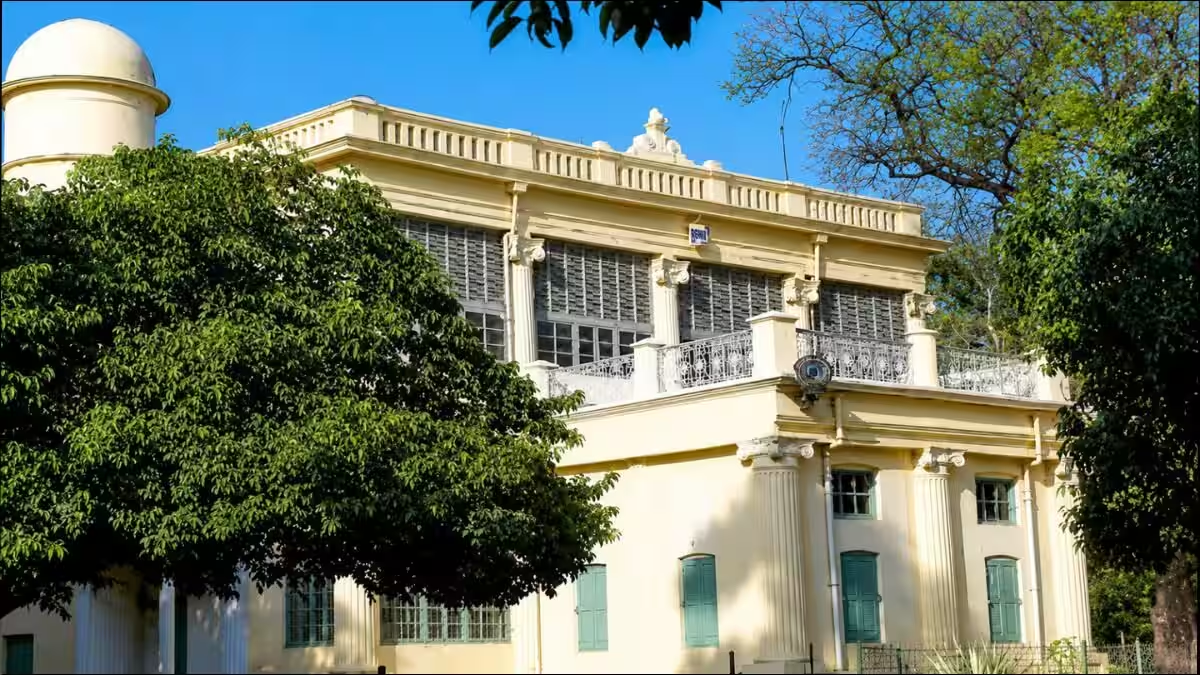
The Visva-Bharati University Faculty Association (VBUFA) has formally opposed recent administrative orders requiring biometric attendance for employees and monthly workload reports from faculty. The university issued these directives in early August, sparking protests from teachers who say the measures threaten academic freedom and privacy.
On August 6, Visva-Bharati announced mandatory biometric attendance for all staff, followed by a directive on August 7 asking faculty to submit monthly workload reports. The faculty association raised objections during a general body meeting on August 8 and sent a detailed letter to Vice-Chancellor Probir Kumar Ghosh on August 10, demanding the withdrawal of both orders.
Understanding the New Policies at Visva-Bharati
Biometric attendance involves collecting fingerprints to record employees’ presence. The university’s notification stated this would apply to all employees, but it did not clarify if faculty members were included. This ambiguity has caused concern among teachers, who fear their biometric data might be collected without clear guidelines or consent.
The monthly workload report requires faculty members to document their daily academic activities, including classes taught and other responsibilities, which department heads would then review. The university cited University Grants Commission (UGC) guidelines and concerns about punctuality and unauthorized leave as reasons for introducing these reports.
Key Facts About the Faculty Association’s Objections
- The VBUFA argues that fingerprint data is sensitive personal information and that the university has not specified adequate safeguards like encryption or restricted access to protect this data.
- The association fears biometric data could be misused for surveillance beyond attendance tracking, violating privacy rights upheld by the Supreme Court’s 2017 judgment on informational privacy.
- There is no official directive from the Ministry of Education or UGC mandating biometric attendance for faculty at central universities like Visva-Bharati.
- The monthly workload report is seen as an excessive administrative burden not supported by UGC or university statutes, potentially undermining faculty autonomy.
- The system allows department heads to record both positive and negative remarks about faculty without requiring these to be communicated to the concerned teachers, raising fairness and transparency issues.
- The faculty association claims these measures contradict the educational philosophy of Rabindranath Tagore, the university’s founder, and the National Education Policy 2020, which emphasizes respect and autonomy for teachers.
- VBUFA has called for the withdrawal of both policies and warned of legal action and protests if the university does not comply.
Why These Changes Matter for Visva-Bharati’s Academic Community
The faculty’s resistance highlights a broader debate about balancing administrative oversight with academic freedom. Teachers argue that biometric attendance and detailed workload reporting could create a climate of surveillance and mistrust, discouraging innovation and independent scholarship.
Concerns about data privacy are particularly acute given the lack of clear policies on how biometric information will be stored, used, or protected. Without transparent safeguards, faculty fear their personal information could be exploited or mishandled.
Moreover, the workload report system may add bureaucratic complexity, diverting time from teaching and research. The faculty association suggests the university should prioritize improving essential infrastructure such as internet connectivity, smart classrooms, library resources, and basic facilities like toilets and canteens instead of imposing these administrative controls.
The controversy also reflects tensions between modern management practices and the university’s founding ideals. Visva-Bharati was established by Nobel laureate Rabindranath Tagore with a vision of fostering creativity and freedom in education. Faculty members argue that the new policies undermine this legacy.
Frequently Asked Questions
Q: What is biometric attendance and why is it controversial at Visva-Bharati?
A: Biometric attendance records employees’ presence using fingerprint scans. At Visva-Bharati, faculty members oppose it because of privacy concerns and unclear rules about how their biometric data will be used and protected.
Q: Why does the faculty association oppose the monthly workload report?
A: They believe it imposes unnecessary administrative burdens, lacks support from official guidelines, and could be used unfairly by department heads to monitor or criticize teachers without transparency.
Q: What actions has the faculty association taken against these policies?
A: The Visva-Bharati University Faculty Association has formally requested the withdrawal of both policies, appealed to faculty not to submit biometric data, and warned of legal challenges and protests if the university proceeds.