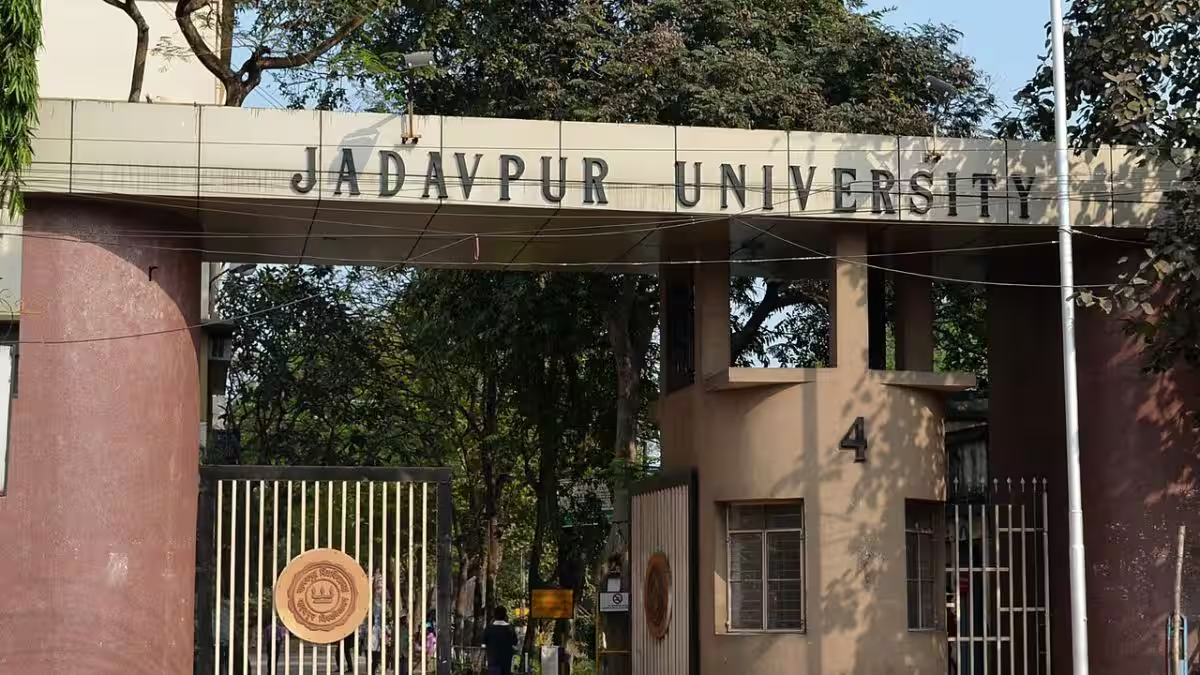
The Jadavpur University Teachers' Association (JUTA) has expressed serious concerns about the West Bengal Joint Entrance Examinations Board (WBJEE) decentralised counselling guidelines for 2026. The association is particularly worried about the lack of options for seat upgrades, the rules around exiting the counselling process, and the eligibility criteria involving Class 12 marks for admissions to engineering and architecture courses.
According to the WBJEE decentralised counselling brochure, once a candidate secures admission to a seat or course, they are barred from participating in subsequent counselling phases or seat allotments. The decentralised counselling will be conducted in multiple phases, depending on seat availability.
Understanding WBJEE Decentralised Counselling
The WBJEE is a state-level entrance examination used for admission to various engineering and architecture programs in West Bengal. Traditionally, counselling for seat allotment has been centralised, but from 2026, the process will shift to a decentralised model. This means that counselling will occur in multiple rounds, with seats being allocated based on vacancies after each phase.
Under the new rules, candidates who have already secured a seat cannot participate in further rounds to upgrade their seat or switch to preferred departments. Additionally, the counselling process will allow new entrants to apply based on their Class 12 board examination marks, where permitted.
Key Concerns Raised by JUTA
- No Upgrade Option: Students who secure a seat early will not have the chance to upgrade to a better course or department in later counselling rounds.
- Exit Rules: Once admitted, candidates cannot exit and re-enter the counselling process, limiting their flexibility.
- Eligibility Dilution: Allowing admission based on Class 12 marks is seen as lowering the eligibility standards compared to relying solely on entrance exam ranks.
- Merit List Fairness: Combining WBJEE ranks with JEE Main scores to create a single merit list raises questions about maintaining fairness, as both exams have different evaluation criteria.
- Impact on High-Ranking Students: Vacant seats in later phases may be allotted to lower-ranked candidates, potentially disadvantaging those with higher ranks who miss out on upgrades.
Why JUTA Wants Changes to the Counselling Process
JUTA argues that the current rules could unfairly penalize students who perform well in the entrance exams. By preventing seat upgrades, high-ranking candidates might lose the opportunity to join their preferred departments, while lower-ranked candidates could benefit from vacant seats. The association calls this a "grave injustice" and questions the moral and legal justification of such rules.
Moreover, JUTA is concerned that admitting students based on Class 12 marks alongside entrance exam ranks dilutes the merit-based admission system. Since WBJEE and JEE Main exams assess candidates differently, merging their results into a single merit list could complicate fair seat allocation.
To address these issues, JUTA demands an immediate review and withdrawal of the current notification. They insist that all students, regardless of when they secure a seat, should be allowed to participate fully in the decentralised counselling process, including options for seat upgrades.
Frequently Asked Questions
Q: What is decentralised counselling in WBJEE 2026?
A: It is a multi-phase seat allotment process where candidates are admitted based on seat vacancies after each round, unlike the previous single-phase centralised counselling.
Q: Why is JUTA opposing the no upgrade rule?
A: Because it prevents students who secure seats early from upgrading to preferred courses or departments in later counselling rounds, potentially disadvantaging high-ranking candidates.
Q: How does including Class 12 marks affect eligibility?
A: Allowing admission based on Class 12 marks alongside entrance exam ranks may lower the admission standards and complicate merit-based seat allocation.