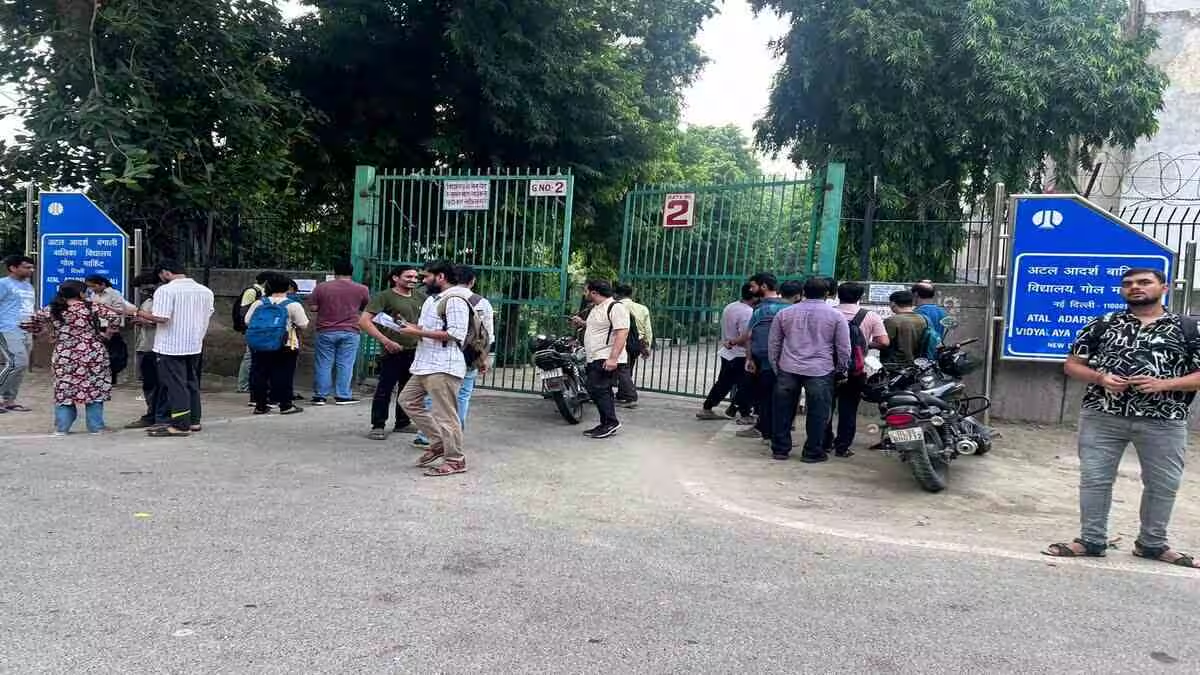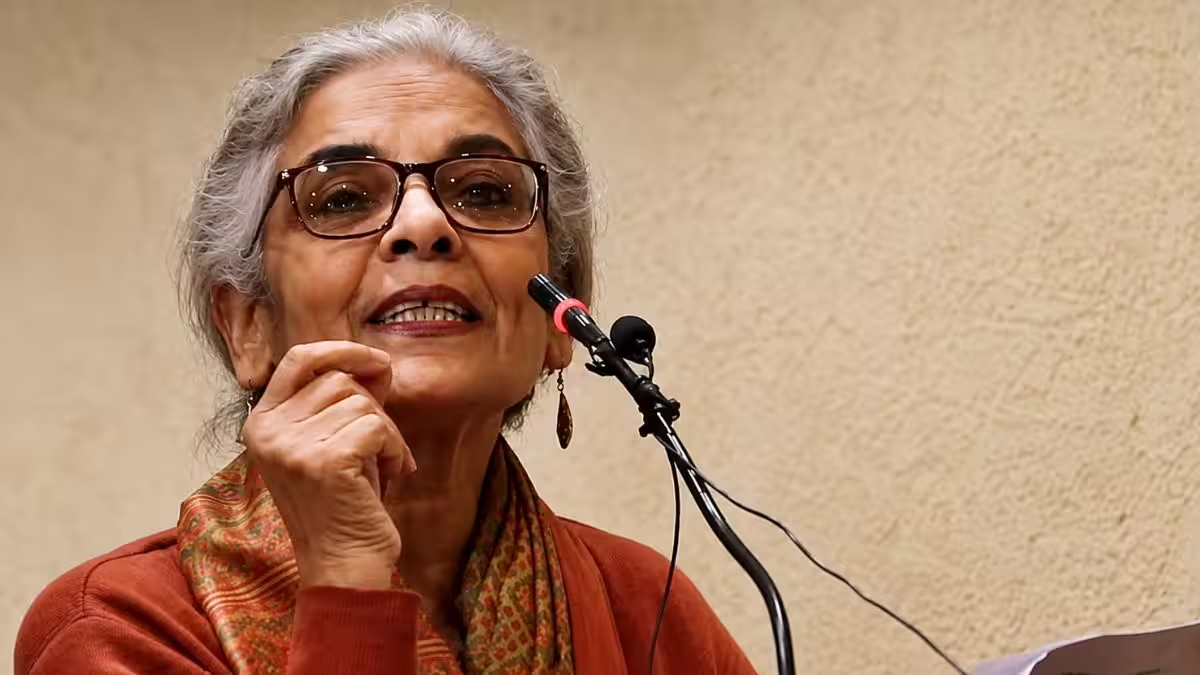
On Independence Day, Delhi’s Sardar Patel Vidyalaya abruptly cancelled a scheduled lecture by renowned social scientist Prof. Zoya Hasan on the topic of pluralism. The cancellation followed a gathering of individuals identifying as members of the Vishwa Hindu Parishad (VHP) outside the school, which led to police presence and disruption of the event.
The lecture was set to take place at around 10 a.m. as part of the school’s Independence Day celebrations. However, parents reported that 10 to 15 VHP members assembled at the school gate, creating a disturbance that ultimately resulted in the cancellation of Hasan’s talk. Instead, an alumnus of the school took the role of chief guest for the event. Neither the school administration nor Prof. Hasan could be reached for comment.
Understanding the Context of the Lecture and Its Cancellation
Prof. Zoya Hasan is a respected academic known for her work on Indian democracy, pluralism, and social inclusion. Her lecture was intended to address the concept of pluralism—an idea central to India’s diverse society where multiple cultures, languages, and religions coexist. The topic is particularly relevant on Independence Day, a national holiday that celebrates India’s unity and democratic values.
The Vishwa Hindu Parishad is a right-wing Hindu nationalist organization that has often been involved in controversies related to religious and cultural issues in India. Their presence and protests at the school gate raised concerns among parents and academics about the influence of political and ideological groups on educational spaces.
Key Facts About the Incident
- The lecture by Prof. Zoya Hasan was planned as part of the Independence Day program at Sardar Patel Vidyalaya in Delhi.
- Approximately 10 to 15 members identifying as VHP gathered outside the school before the event.
- Delhi Police arrived at the scene, although the school stated it did not request their presence.
- The lecture was cancelled last-minute, with an alumnus replacing Prof. Hasan as the chief guest.
- Academic Jayati Ghosh highlighted on social media that police outnumbered the protesters and questioned who called the police.
- Critics argue that the cancellation was due to pressure from official sources and concerns over Prof. Hasan’s security.
- Delhi University professor Apoorvanand and columnist Nilanjana Roy publicly condemned the cancellation and police intervention.
Why the Cancellation Matters for India’s Democratic Values
The cancellation of Prof. Hasan’s lecture raises important questions about freedom of speech, academic independence, and the role of education in fostering democratic ideals. Her work emphasizes that India’s strength lies in its inclusive nationalism, which embraces diverse identities rather than privileging any single religious or ethnic group.
Critics argue that preventing students from hearing about pluralism on Independence Day undermines the very principles the day represents. The intervention by police and protesters is seen by many as an attempt to silence voices that promote tolerance and diversity, which are essential for a healthy democracy.
This incident also reflects broader tensions in India’s social and political landscape, where debates over national identity and cultural values often become highly polarized. The disruption of an educational event on such a significant day highlights the challenges faced by institutions trying to maintain open dialogue amid growing ideological pressures.
Frequently Asked Questions
Q: Who is Prof. Zoya Hasan?
A: Prof. Zoya Hasan is a prominent social scientist and academic known for her research on Indian democracy, pluralism, and social inclusion.
Q: What is pluralism in the Indian context?
A: Pluralism refers to the coexistence of diverse cultures, religions, languages, and identities within India, forming the basis of its democratic and inclusive national identity.
Q: Why was the lecture cancelled?
A: The lecture was cancelled after members of the Vishwa Hindu Parishad protested outside the school, leading to police involvement and concerns about security, which pressured the school to call off the event.