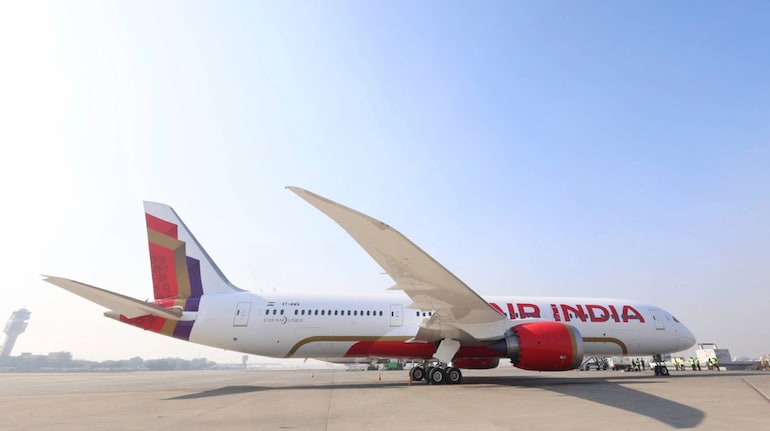
Air India grounds Dreamliner after pilot reports possible fuel control switch defect
An Air India pilot reported a potential problem with the fuel control switch on a Boeing 787-8 aircraft during flight from London to Bengaluru. This led to the aircraft being taken out of service and a series of investigations to find the cause. Authorities are closely monitoring the situation to ensure safety and understand the details of the incident.
4 min read267 views
On February 2, 2026, an alert was raised when a pilot flying an Air India Boeing 787-8 aircraft noticed a possible defect with the fuel control switch. The plane was flying from London to Bengaluru at the time. Based on this report, the airline decided to ground the aircraft immediately. They also informed the Directorate General of Civil Aviation, which is responsible for overseeing civil aviation safety in the country.
This incident is part of a larger context involving previous safety concerns and investigations into similar aircraft. It is important to understand the background to see why this recent event is significant.
In July 2025, Air India completed inspections of the fuel control switch locking mechanisms on all Boeing 787 and 737 aircraft in its fleet. These inspections were ordered by the Directorate General of Civil Aviation to check if there were any issues with the switches. The inspections found no problems in any of the aircraft at that time.
Previously, in June 2025, a tragic accident occurred involving an Air India Boeing 787-8 shortly after takeoff from Ahmedabad. The plane crashed, resulting in 260 fatalities. Investigations revealed that both engine fuel control switches had been moved from 'RUN' to 'CUTOFF' just seconds after takeoff. This switch movement caused the engines to lose power.
Following the crash, the Aircraft Accident Investigation Bureau (AAIB) examined the aircraft’s maintenance history. They reported that the throttle control module, which includes the fuel control switches, had been replaced twice—once in 2019 and again in 2023. These replacements followed Boeing’s Maintenance Planning Document. The AAIB clarified that these changes were not related to any known defect with the fuel control switches.
In July 2025, the Federal Aviation Administration (FAA), which oversees civil aviation safety in the United States, conducted a review. The FAA found no conclusive evidence of a mechanical fault in the fuel control system of the crashed aircraft. As a result, the FAA decided that there was no need to issue a formal Airworthiness Directive, which is a mandatory safety action.
The FAA issued a Continued Airworthiness Notification, stating that the design of the fuel control switch does not pose an unsafe condition. This meant that the switches’ design and function do not currently require regulatory action to ensure safety.
However, the AAIB's preliminary report raised additional questions. It stated that Air India had not conducted specific inspections related to the fuel control switch locking mechanisms as per a 2018 FAA advisory. The advisory was considered only_optional and not mandatory, so it was not followed. This could be relevant in understanding how the switches are maintained.
The report confirmed that the fuel control switches on the aircraft involved in the crash had been moved to the 'CUTOFF' position shortly after takeoff, which led to engine power loss. Since 2023, no issues with the switches had been reported by Air India. The airline has followed all applicable airworthiness directives and service bulletins during the aircraft's service life, including the twice-replaced throttle control module.
Additionally, the preliminary findings noted that the design of the fuel control switches, including their locking features, is similar across several Boeing airplane models, including the Boeing 787-8. This suggests that the issues under investigation could potentially impact multiple aircraft types, which makes understanding the causes even more important.
In summary, the recent incident involving the fuel control switch is part of ongoing investigations into the safety and maintenance of Boeing 787 aircraft. While authorities have not found conclusive evidence of a fault in the current system, the occurrence has prompted the airline and regulators to review maintenance practices and safety protocols. The grounding of the aircraft serves as a precaution while studies continue to ensure that similar incidents can be prevented in the future.