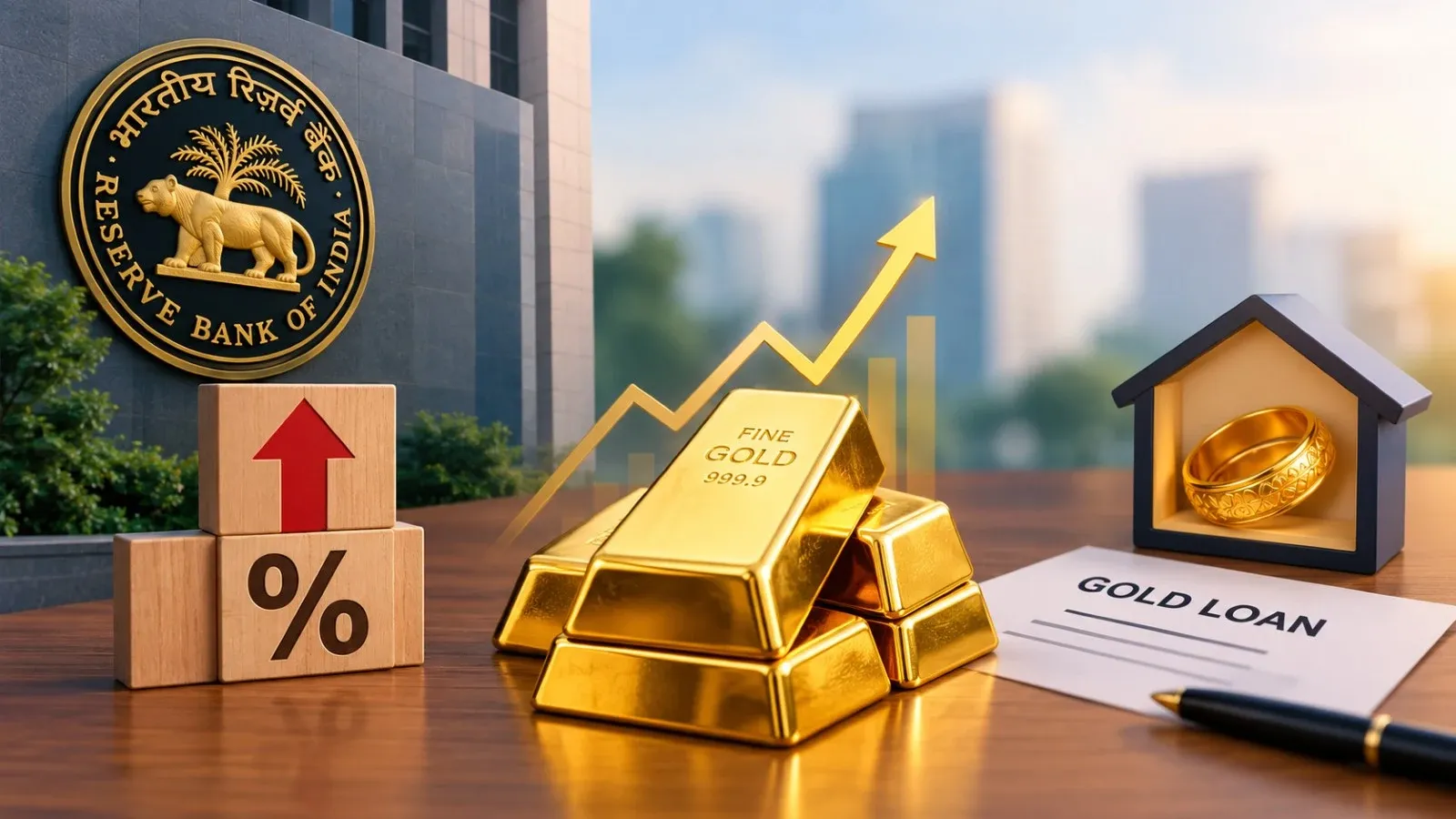
The Reserve Bank of India (RBI) raised the repo rate by 25 basis points to 5.50%, signaling a shift to a "calibrated tightening" stance. This move affects gold prices and gold loan rates in several ways. Understanding these impacts is important for both investors and borrowers dealing with gold-related financial products.
- Gold prices may face short-term pressure due to higher domestic yields and a stronger rupee.
- Floating-rate gold loans could become more expensive following the rate hike.
- Loan-to-value (LTV) ratios may be affected if gold prices fall while interest rates rise.
- Borrowers should check if their gold loan rates are fixed or floating to understand potential changes.
- Market reactions and lender policies will influence the extent of these changes.
How Does the RBI Repo Rate Hike Affect Gold Prices?
Higher domestic yields increase the opportunity cost of holding gold, which does not generate income. When fixed-income investments offer better returns in a high-yield environment, investors might reduce their gold holdings, putting downward pressure on gold prices.
Additionally, the rate hike may strengthen the Indian rupee. A stronger rupee makes gold more expensive in foreign currency terms, which can further lower domestic gold prices even if international prices remain stable.
However, factors like inflation and geopolitical uncertainties continue to support gold as a hedge, which can moderate price declines despite rising interest rates.
What Impact Does the Rate Hike Have on Gold Loan Rates?
Gold loan rates often respond to changes in the repo rate, but the effect depends on the loan structure and lender policies. Bank gold loans linked to external benchmarks such as the repo rate may see rate resets after policy changes.
Non-banking financial companies (NBFCs) typically set their own rates and may adjust them at their discretion. Some gold loans carry fixed interest rates for the loan tenure, meaning their rates will not change until renewal.
Muthoot Finance explains that the repo rate is directly proportional to floating gold loan rates. Fixed-rate gold loans remain unaffected by repo rate changes.
How Do Loan-to-Value (LTV) Ratios Change With Gold Prices and Interest Rates?
Under RBI's tiered LTV rules effective from April 1, 2026, lenders can offer:
- Up to 85% LTV for loans up to ₹2.5 lakh
- 80% LTV for loans between ₹2.5 lakh and ₹5 lakh
- 75% LTV for loans above ₹5 lakh
If gold prices fall while interest rates rise, borrowers may face higher costs and lower LTV ratios. This situation might lead lenders to request part-payment or additional collateral to secure the loan.
What Should Borrowers and Investors Do?
Borrowers should confirm whether their gold loan interest rate is fixed or floating and inquire how rate changes will be communicated by their lender. Considering shorter loan tenures could be beneficial during a period of rising rates.
Investors should monitor market reactions and geopolitical developments, as these factors influence gold prices alongside monetary policy changes.
Frequently Asked Questions
Q: Will gold prices definitely fall after the RBI repo rate hike?
A: Not necessarily. While higher interest rates can put downward pressure on gold prices, factors like inflation and geopolitical uncertainty may support gold prices.
Q: How do floating-rate gold loans change with the repo rate?
A: Floating-rate gold loans linked to the repo rate may see their interest rates reset following RBI policy changes, potentially increasing the cost of borrowing.
Q: What happens if gold prices drop but my loan interest rate rises?
A: Both your loan cost and loan-to-value ratio may worsen, and your lender might ask for part-payment or additional collateral to maintain the loan security.
Q: Are all gold loan rates affected by the repo rate hike?
A: No. Fixed-rate gold loans do not change until renewal, while floating-rate loans linked to the repo rate may adjust after policy changes.