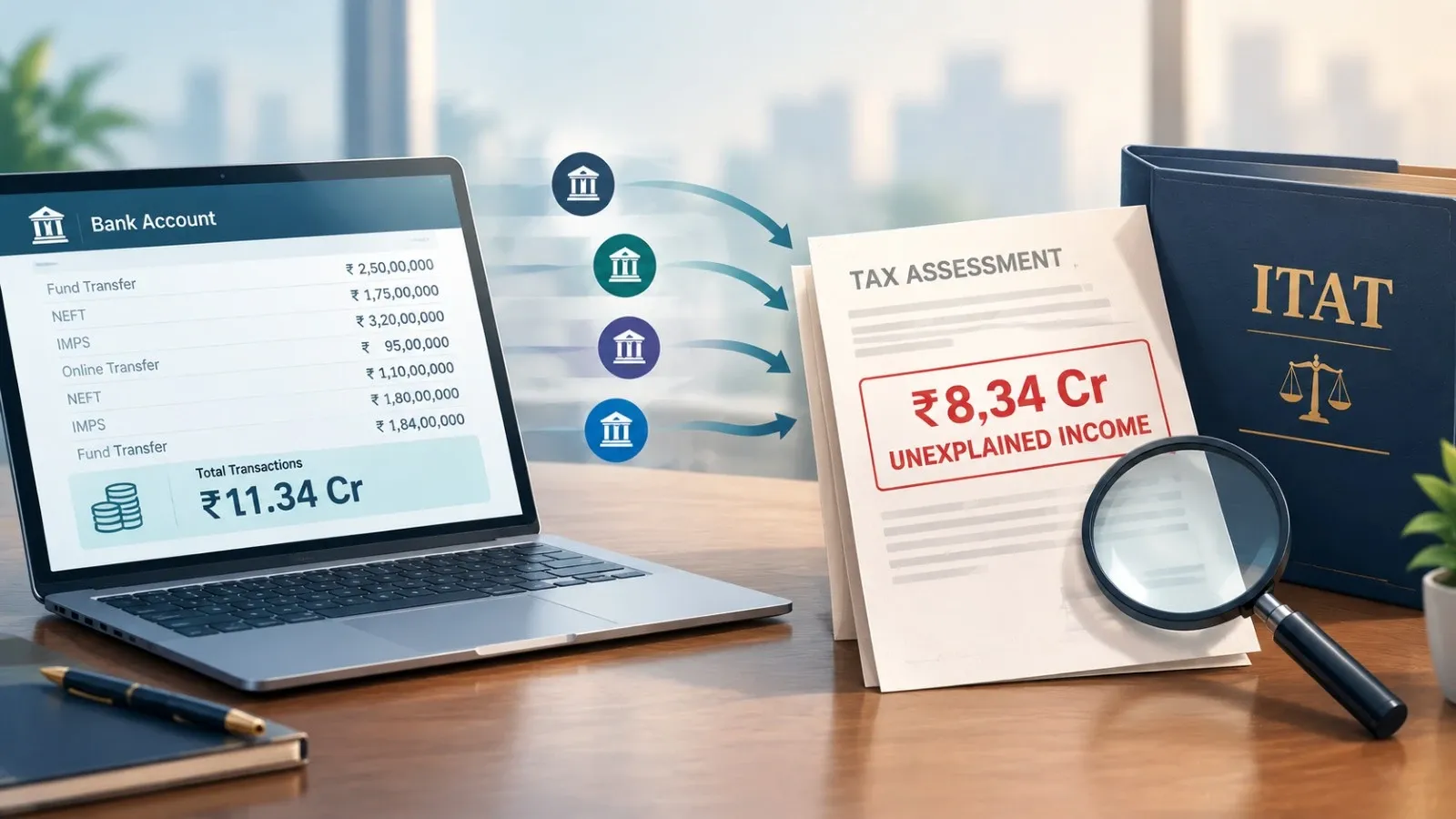
Varma, a Business Correspondent Agent from Thane, moved ₹11.34 crore through his bank accounts for his business activities. However, the tax authorities treated ₹8.34 crore of this amount as unexplained income. The Income Tax Appellate Tribunal (ITAT) disagreed with the taxman’s assessment, highlighting the need for proper documentation to explain such transactions.
- Varma declared a total income of ₹6,60,250 for AY 2020-21, but his assessment was reopened.
- The tax officer found ₹11.34 crore credited across multiple bank accounts.
- Varma explained these were customer funds in transit as part of his agency business.
- The officer treated ₹8.34 crore as unexplained income after partial calculation.
- ITAT ruled in favor of Varma, emphasizing the importance of agency agreements and commission records.
What was the nature of Varma's business and bank transactions?
Varma worked as a Business Correspondent Agent for several financial entities, including Vodafone M-Pesa Ltd and IDFC First Bank Ltd. His bank accounts were used to receive cash from customers and transfer it to his principals. The transactions involved frequent deposits and withdrawals, reflecting the flow of customer funds rather than Varma’s personal income.
How did the tax authorities assess Varma's income?
During reassessment under section 147, the tax officer examined Varma's bank accounts and found large cash deposits and withdrawals totaling ₹11.34 crore. The officer calculated commission income from Vodafone M-Pesa Ltd as ₹1,50,306 and applied a 0.5% rate to estimate the transaction value at ₹3.01 crore. The difference, ₹8.34 crore, was treated as unexplained income and added to Varma’s taxable income.
What evidence did Varma provide to support his case?
Varma submitted agency agreements and certificates with his principals, showing that the funds were customer money in transit. He also presented commission records from multiple entities, including IDFC First Bank Ltd and Nearby Technologies Pvt. Ltd, totaling several lakhs. Additionally, he pointed out that the tax officer ignored cash withdrawals and inter-account transfers, which reduced the unexplained amount significantly.
How did the CIT(A) and ITAT respond to the case?
The Commissioner of Income Tax (Appeals) found Varma’s explanation plausible, noting that large bank credits alone do not prove unexplained income. The CIT(A) recognized that inter-bank transfers between Varma’s own accounts were not income. The ITAT upheld this view, emphasizing consistency with previous assessment years and rejecting the tax officer’s partial approach.
What is the key takeaway for agents handling customer cash?
This case highlights the importance of maintaining clear documentation, such as agency agreements, commission records, and inter-account reconciliations. These documents help explain large cash movements and prevent incorrect tax additions based on incomplete calculations. Agents should be diligent in record-keeping to avoid disputes with tax authorities.
Frequently Asked Questions
Q: Why did the tax officer treat part of the money as unexplained income?
A: The officer applied a reverse calculation based on commission income from one principal and treated the remaining amount as unexplained, ignoring other commissions and transactions.
Q: How did Varma prove the money was not his personal income?
A: Varma provided agency agreements, commission records, and showed that the funds were customer money in transit, not income earned by him.
Q: What role did the ITAT play in this case?
A: The ITAT reviewed the evidence and ruled that the tax officer’s addition was unsustainable, supporting Varma’s explanation and emphasizing the need for consistent and complete assessment.