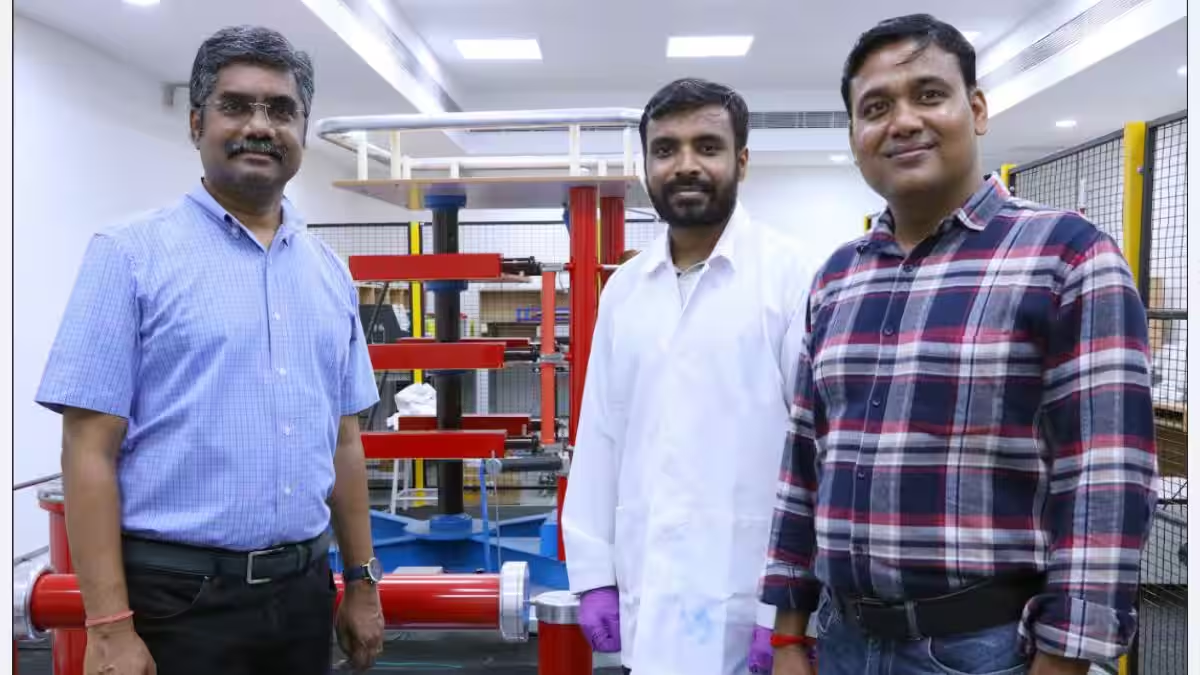
Researchers at the Birla Institute of Technology and Science (BITS) Pilani's Hyderabad campus have developed a pioneering technology to recycle wastewater from biopharmaceutical processes. This new system not only disinfects the wastewater but also recovers valuable resources like reusable water and methane-rich biogas, offering a sustainable solution for an industry known for its heavy water and energy use.
The project, supported by the Department of Science and Technology (DST) under its Water Technology Initiative, has led to an Indian patent for the disinfection method. The BITS team is collaborating with Hyderabad-based vaccine manufacturer Biological E. Limited to scale the technology for industrial application.
Understanding Biopharmaceutical Wastewater Challenges
Biopharmaceutical manufacturing generates wastewater containing complex organic materials and microorganisms, making treatment difficult. Traditional methods often rely on large amounts of chemicals and thermal energy, which are costly and environmentally taxing. The need for efficient, low-impact treatment solutions has grown as the biopharma sector expands, especially with increased vaccine production demands.
Wastewater from fermentation processes in biopharma contains bacteria and organic pollutants that must be removed or neutralized before water can be safely reused or released. Additionally, managing the sludge produced during treatment is a challenge, as it requires further processing or disposal.
Key Features of the Three-Stage Treatment Process
- Stage One – Pulsed Electric Field (PEF) Technology: This stage uses high-voltage electrical pulses to inactivate bacteria without heat or chemicals. Laboratory tests showed over 99.9999% bacterial inactivation with lower energy consumption compared to conventional sterilization.
- Stage Two – Biological Treatment via Sequencing Batch Reactor (SBR): After disinfection, the wastewater undergoes biological treatment that removes more than 90% of organic pollutants. This step prepares the water for filtration and potential reuse.
- Stage Three – Intelligently Stirred Thermophilic Anaerobic Reactor (iSTAR®): The patented iSTAR® system processes residual sludge to produce methane-rich biogas. This biogas can supply part of the energy needed to run the treatment plant, enhancing overall sustainability.
Why This Technology Could Transform Biopharma Waste Management
The integrated approach developed by BITS Pilani Hyderabad addresses multiple challenges in biopharmaceutical wastewater treatment simultaneously. By using electrical pulses for disinfection, the process avoids harsh chemicals and reduces energy use. Recovering clean water for reuse helps conserve scarce water resources, while generating biogas provides a renewable energy source that can lower operational costs.
Such innovations are critical as industries face increasing pressure to reduce their environmental footprints. This technology offers a scalable, energy-efficient solution that could help biopharma companies meet stricter regulations and sustainability goals. The collaboration with Biological E. Limited signals potential for real-world application and wider adoption.
Frequently Asked Questions
Q: What makes this wastewater treatment different from traditional methods?
A: It uses pulsed electric fields to disinfect without chemicals or heat, reducing energy consumption and environmental impact while recovering water and biogas.
Q: How effective is the disinfection process?
A: Laboratory tests achieved over 99.9999% bacterial inactivation, demonstrating a high level of safety and cleanliness.
Q: Can this technology be applied to other industries?
A: While designed for biopharmaceutical wastewater, the principles of low-energy disinfection and resource recovery could potentially be adapted for other wastewater treatment needs.