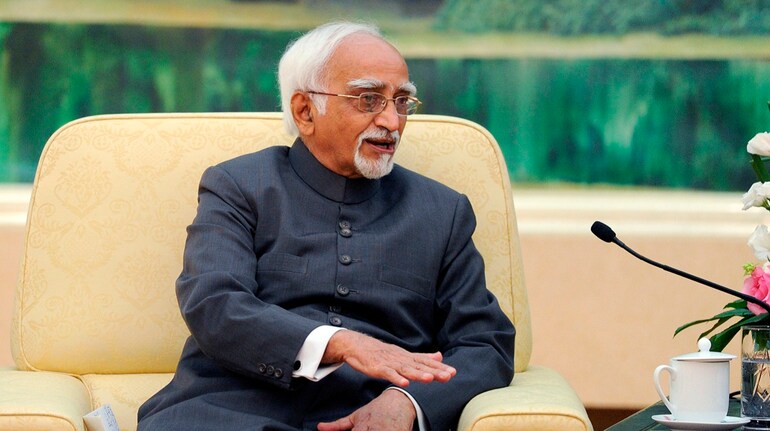
Recently, Hamid Ansari, a former Vice President of India, made a statement about Mahmud of Ghazni. In his remarks, Ansari called Mahmud of Ghazni an "Indian looter." He explained that Mahmud and other similar figures were not outsiders who invaded India from other lands, but rather, they were people from within the Indian subcontinent. Ansari's words suggested that these historical figures, often seen as conquerors or destroyers, should be viewed as part of India’s own history.
This statement has sparked a lot of reactions from different political parties and leaders in India. Some critics believe that Ansari's comments attempt to change how people see these figures. Others feel that it is important to look at history from different perspectives, even if it involves controversial figures.
One such critic was Shehzad Poonawalla, a spokesperson for the Bharatiya Janata Party (BJP), a major political party in India. Poonawalla criticized Ansari for his comments. He also criticized the Congress party, which is another major political group in India, for allegedly praising people linked to acts of violence or destruction.
Poonawalla pointed out that Mahmud of Ghazni was responsible for attacking and destroying the famous Somnath Temple. This temple was an important spiritual site for many Hindus. Mahmud's attack on the temple is often remembered as a violent event, which many people see as a symbol of destruction during his time. Poonawalla argued that such actions should not be downplayed or ignored when talking about Mahmud.
Besides criticizing Ansari, Poonawalla also mentioned other individuals, such as Shahrukh Imam and Umar Khalid. He accused the Congress and its allies of praising these people, who have been linked to controversial activities. Shahrukh Imam and Umar Khalid are often seen as figures involved in protests or activities that some groups consider sensitive or contentious.
The whole debate brings up a larger discussion about how history is remembered and taught. Some people believe that historical figures should be seen in a positive light and celebrated for their achievements. Others think that it is important to acknowledge the full story, including any acts of violence or destruction associated with these figures.
This controversy remains sensitive, as history and national identity are deeply intertwined topics in India. The discussions are happening at a time when many people are paying close attention to how history is being interpreted and who is being honored or criticized.
- Hamid Ansari made his statement on January 30, 2026.
- His comments focused on the idea that Mahmud of Ghazni was an Indian from within the territory he invaded.
- Poonawalla and others responded by criticizing Ansari and the Congress party.
Right now, the discussion is ongoing. Different political leaders and historians are sharing their opinions about what this means for India’s history and its understanding of its past.
Why does this matter? This debate is not just about history—it also touches on how society views its heroes and villains. People have different opinions on which figures should be celebrated and which ones should be condemned. How history is remembered influences national identity, cultural pride, and political beliefs.
In India, history is often a subject of intense discussion. It reflects people's views on their heritage and their beliefs about what is right and wrong. The controversy over Mahmud of Ghazni and other historical figures shows how complex and sensitive these discussions can be.
In conclusion, this debate is ongoing. It reveals how different groups interpret the past differently. Each side has its reasons and perspectives, and the conversation about history in India continues to develop. As more opinions are shared, the way the country remembers its history may continue to evolve.