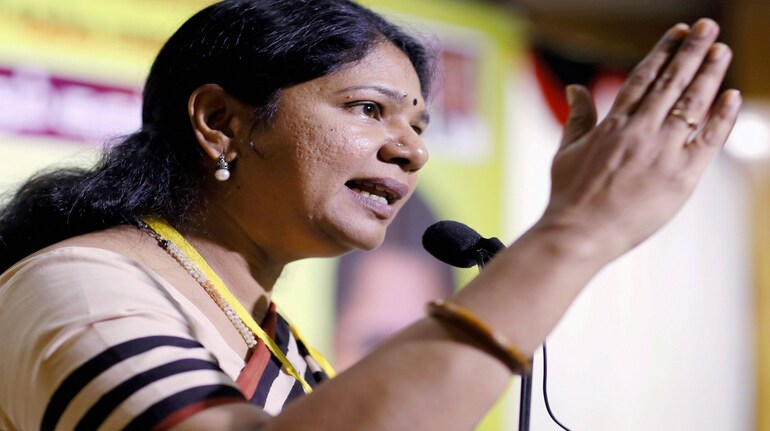
Kanimozhi, who is a Member of Parliament from the DMK party, has recently spoken out about concerns regarding the Central government’s efforts to promote Hindi language policies in Tamil Nadu. She shared a photo of a signboard at a railway station in Chennai. In this photo, she pointed out that the sign had been changed from English to Hindi. She expressed her worry that these changes are part of a larger effort to make Hindi the main language in areas where people speak Tamil.
Language plays an important role in the culture and daily life of people. In Tamil Nadu, many people speak Tamil, which is their native language. For a long time, the people here have wanted to keep their language safe and protect their regional identity. The recent changes to signboards and other official communication make many residents feel uneasy. They see these as signs that the government is trying to impose Hindi on them, which is not their native language.
In the past, there have been protests in Tamil Nadu against what many locals see as the forced promotion of Hindi. During these protests, some members of the DMK party have taken action by blackening the Hindi letters on railway station signs. They do this to show that they do not agree with the idea of making Hindi the only or main language used in public places. The protestors believe that this kind of language imposition can threaten the use of Tamil and disturb the cultural balance of the region. These protests have been ongoing because many people feel that their language and identity are being pushed aside in favor of Hindi.
On the other side, some members of the Bharatiya Janata Party (BJP), which is the ruling political party at the national level, have condemned these protests. They argue that Hindi is an important language for national unity and that promoting Hindi helps to connect different parts of India. However, these differing views have created a lot of tension between supporters of Tamil language and those who support Hindi promotion.
Kanimozhi has also criticized the Central government for using Hindi only when naming schemes and programs. She points out that this makes it difficult for local villagers and people in Tamil Nadu to understand what these programs are about. Many government notices, schemes, and official efforts are announced only in Hindi, making people who don’t speak the language feel left out. She believes that government communication should be accessible in multiple languages, especially in Tamil Nadu, where Tamil is the most spoken language.
She has clarified that her party, the DMK, is not against Hindi or any other language. Her main concern is that no language should be forced on people. She emphasizes that people should have the freedom to speak their own language and use it in public spaces. The issue is not about opposing Hindi itself but about preventing its imposition as the only language used by the government or official institutions in Tamil Nadu.
Some officials, like Union Minister L. Murugan, have made claims about Kanimozhi. They say that she can speak Hindi when she visits Delhi, the capital city of India. Kanimozhi, however, denies this claim and insists that her position is about protecting Tamil language and regional identity, not about her personal language skills.
This ongoing controversy shows how language policies can sometimes create tensions between regional identities and national initiatives. People in Tamil Nadu feel that their language and culture are unique and deserve respect. When the government promotes Hindi without considering regional feelings, it can lead to protests and disagreements.
In conclusion, this situation highlights the importance of respecting regional languages and cultural identity in India. It also shows that language policies can influence how people feel about their own region and their place in the larger country. Protecting regional languages while promoting national unity is a delicate balance that needs careful attention and understanding.