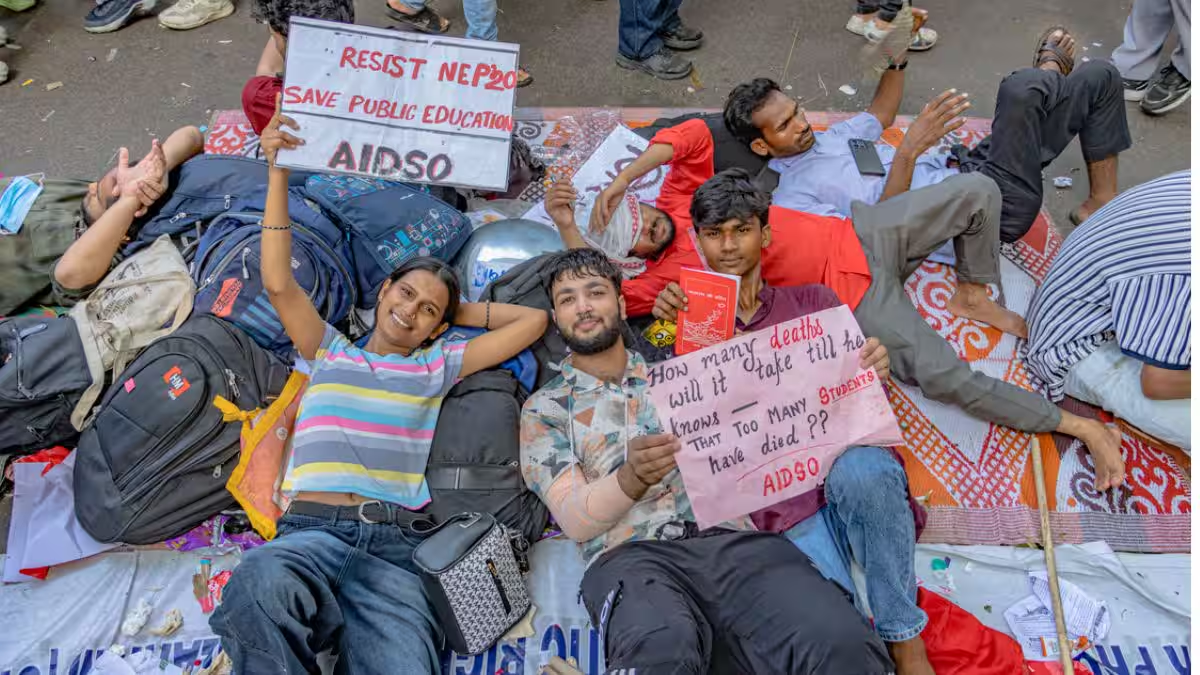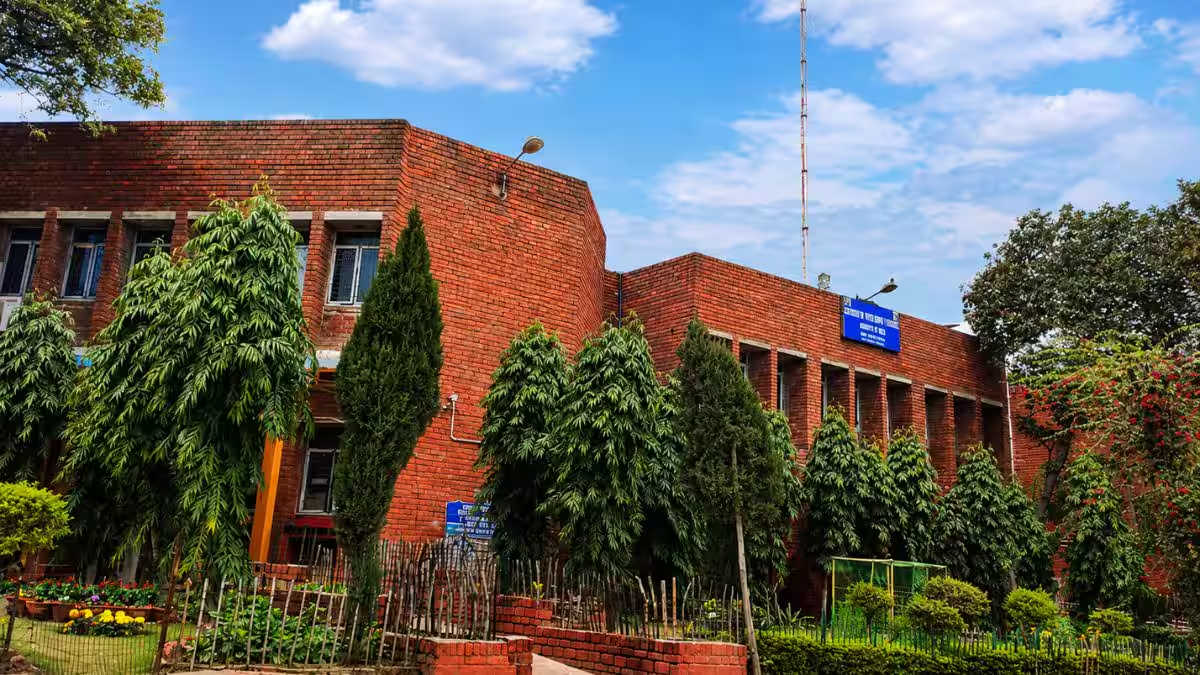
Delhi University recently announced significant changes to the Masters of Arts (MA) History programme by removing several discipline specific elective (DSE) papers from the semester III syllabus. Among the excluded courses is "The Delhi Sultanate: Structures of Authority in Medieval North India (13th-14th Centuries)," which explored the political, social, and cultural dynamics of medieval India. This decision has drawn criticism from faculty and historians who see it as a challenge to departmental autonomy.
Understanding the Changes to the MA History Curriculum
The revision affects students enrolled in both the traditional two-year MA programme and the newer one-year postgraduate courses. Semester III in the two-year track aligns with semester I for one-year students, making this a pivotal point in the curriculum. The university’s updated syllabus, notified on August 7, excludes several important papers that were initially proposed and discussed in the Academic Council meeting held in July.
These dropped papers covered a range of historical topics, including:
- "Gender and Women in Early India: 1500 BCE to 1000 CE"
- "Religion and Society in Ancient Indian Literature"
- "Political Processes and Structure of Polities in Ancient India"
- "History of North India, c. 1400-1550"
Originally, the History Department had proposed 35 DSE papers, but only 16 made it into the final syllabus. The removal of these courses has raised questions about the decision-making process and the role of various university bodies in shaping academic content.
How the Syllabus Approval Process Unfolded
Official documents reviewed by news agencies reveal that the dropped papers had passed earlier stages of the syllabus approval process. However, they were omitted from the final notification without clear explanation. This has led to concerns about transparency and governance within the university.
Maya John, a historian and member of Delhi University’s Academic Council, criticized the move, stating it undermines the authority of the department’s Committee of Courses, which is responsible for curriculum development. She also questioned the legitimacy of an "expert" or "oversight committee" that recommended removing entire papers, suggesting that such bodies should be constituted through formal university channels like the Academic Council.
John expressed unease about the growing influence of oversight committees, which she believes are encroaching on the autonomy traditionally enjoyed by academic departments. She noted that the syllabus had been delayed for months, signaling potential conflicts behind the scenes.
Implications for History Students and Academic Freedom
The timing of these changes coincides with Delhi University’s implementation of a new postgraduate curriculum framework (PGCF). Semester III serves as a critical transition point for students moving between different postgraduate structures, making the syllabus revisions particularly impactful.
Critics argue that removing key papers diminishes the breadth and depth of historical study available to students, potentially limiting their exposure to important themes such as medieval political authority, gender studies, and ancient religious practices. The controversy highlights broader tensions between centralized oversight and departmental independence in shaping university curricula.
For students, these changes may affect course choices, academic planning, and future research opportunities. Faculty members worry that sidelining expert committees in favor of oversight bodies could set a precedent that affects other departments and disciplines.
Frequently Asked Questions
Q: Which history papers were removed from the MA syllabus?
A: Several discipline specific electives were dropped, including "The Delhi Sultanate: Structures of Authority in Medieval North India (13th-14th Centuries)," "Gender and Women in Early India: 1500 BCE to 1000 CE," "Religion and Society in Ancient Indian Literature," "Political Processes and Structure of Polities in Ancient India," and "History of North India, c. 1400-1550."
Q: Why were these papers removed from the syllabus?
A: The exact reasons have not been fully clarified, but an oversight committee recommended removing these papers despite their earlier approval. This has raised concerns about the syllabus approval process and departmental autonomy.
Q: How do these changes affect students in the MA History programme?
A: The changes impact both two-year and one-year postgraduate students, particularly at semester III, which is a key stage in the curriculum. Students may face fewer elective options and a narrower range of historical topics to study.