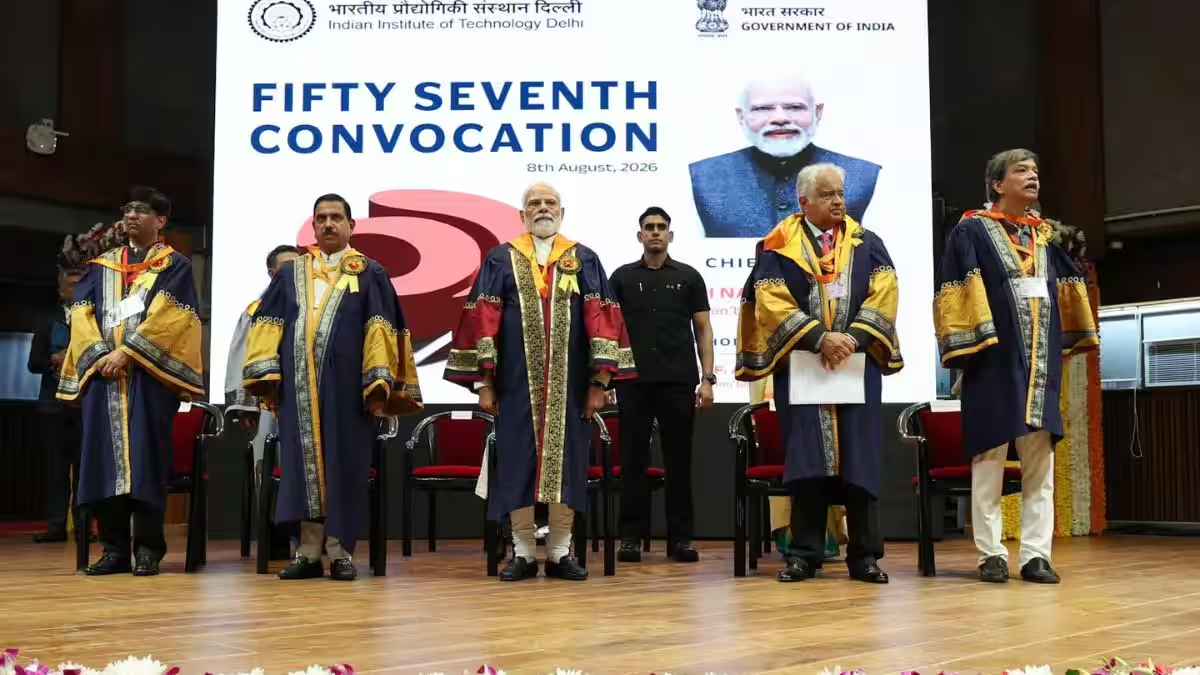
Prime Minister Narendra Modi addressed the graduating students at the Indian Institute of Technology (IIT) Delhi's 57th convocation ceremony, urging them to keep questioning, learning, and innovating as they step into their professional lives. The event, held recently at IIT Delhi, saw over 3,000 students receive their degrees, including 587 PhD scholars. Modi emphasized the importance of curiosity and confidence in exploring new ideas to shape India's future.
Understanding IIT Delhi and Its Convocation
IIT Delhi is one of India's premier engineering and technology institutions, known for producing highly skilled graduates who contribute significantly to various industries and research fields. The convocation ceremony is an annual event where students are formally awarded their degrees, marking the culmination of their academic journey. This 57th convocation was notable not only for the large number of graduates but also for the presence of the Prime Minister, highlighting the importance of the occasion.
Key Highlights from the Convocation
- 3,036 students graduated, including 587 PhD scholars.
- PM Modi inaugurated 'Param Pragya,' an AI-powered high-performance computing facility at IIT Delhi's Sonipat campus.
- The Prime Minister encouraged graduates to retain their curiosity and confidence to question accepted ideas and seek innovative solutions.
- He highlighted the growing opportunities in sectors like fintech, digital payments, and startups, which are opening new career paths for young Indians.
- Modi mentioned the National Research Foundation's role in boosting scientific research with a planned funding of Rs 1 lakh crore.
- The 'one nation one subscription' initiative was discussed, aiming to provide access to international research journals across India, including smaller towns, at no extra cost.
- The Prime Minister expressed a wish for greater female representation among the medallists and awardees.
Why PM Modi’s Message Matters for India’s Future
Modi’s call for graduates to question and innovate reflects a broader vision for India’s development. By encouraging young professionals to challenge conventional thinking and pursue new ideas, he is emphasizing the role of education and research in driving progress. The launch of advanced facilities like 'Param Pragya' supports this vision by providing cutting-edge resources for AI and high-performance computing research.
The focus on sectors such as fintech and digital payments highlights the rapid transformation of India’s economy and the expanding opportunities for youth. The National Research Foundation’s substantial funding signals a commitment to strengthening scientific research nationwide, which can lead to technological breakthroughs and economic growth.
Initiatives like 'one nation one subscription' aim to democratize access to knowledge, ensuring that students and researchers from all regions can benefit from global academic resources. Modi’s encouragement to graduates to carry their curiosity forward is a reminder that education is not just about earning degrees but about contributing meaningfully to society and the nation’s progress.
Frequently Asked Questions
Q: How many students graduated at IIT Delhi’s 57th convocation?
A: A total of 3,036 students graduated, including 587 PhD scholars.
Q: What is 'Param Pragya' that was inaugurated during the convocation?
A: 'Param Pragya' is an AI-powered high-performance computing facility at IIT Delhi's Sonipat campus designed to advance research in artificial intelligence and related fields.
Q: What initiatives did PM Modi mention to support research and education in India?
A: He highlighted the National Research Foundation’s funding of Rs 1 lakh crore to boost scientific research and the 'one nation one subscription' initiative to provide widespread access to international research journals.