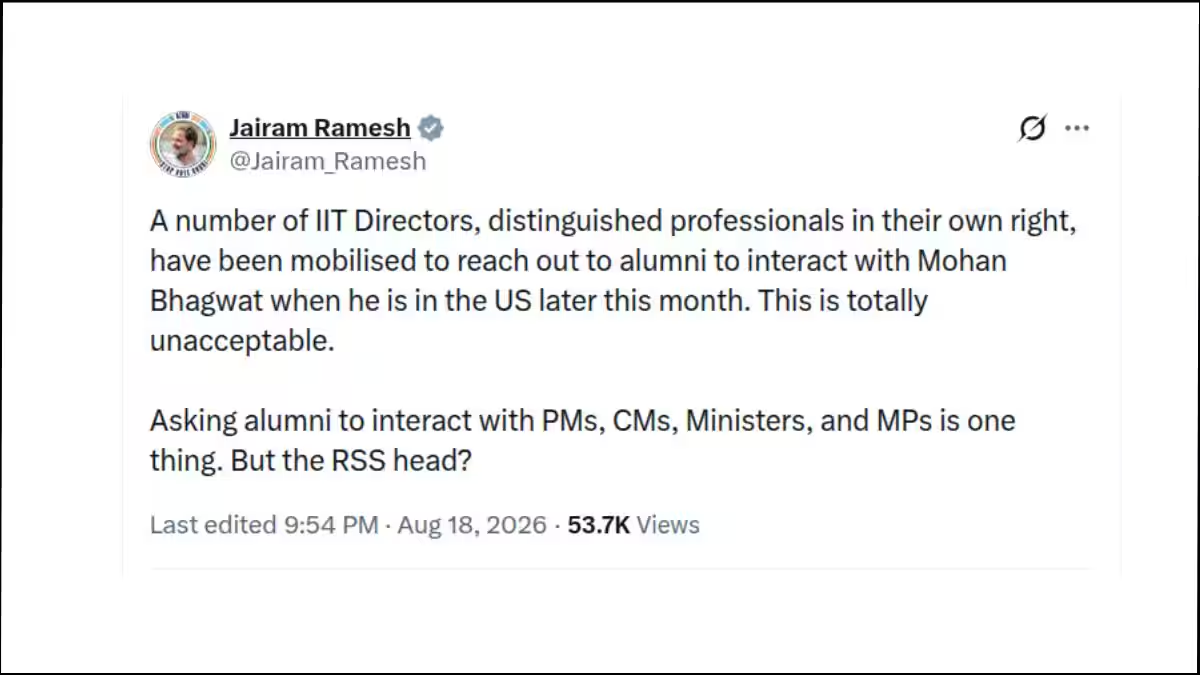
The Indian National Congress has raised concerns about the involvement of several Indian Institute of Technology (IIT) directors in encouraging alumni to engage with Rashtriya Swayamsevak Sangh (RSS) chief Mohan Bhagwat during his visit to the United States later this month. The opposition party described this outreach as "totally unacceptable," highlighting the unusual nature of alumni being asked to interact with the head of the RSS rather than elected officials.
Understanding the Controversy Around IIT Directors and Alumni Outreach
IITs are premier engineering institutions in India, known for their academic excellence and influential alumni network. Typically, alumni are invited to interact with political leaders such as prime ministers, chief ministers, ministers, and members of parliament to discuss policy, innovation, and national development. However, the Congress party has pointed out that mobilizing alumni to meet the RSS chief Mohan Bhagwat crosses a line, given the RSS's identity as a socio-political organization rather than an elected government body.
The RSS is a right-wing, Hindu nationalist organization that has played a significant role in shaping political discourse in India. Mohan Bhagwat, as its chief, holds considerable influence but does not hold an elected government position. The Congress's objection stems from the perception that IIT directors, who are government-appointed or government-affiliated officials, should not be facilitating meetings with a non-governmental figure in this manner.
Key Facts About the Situation
- Congress general secretary Jairam Ramesh publicly criticized the move on social media platform X, emphasizing the difference between engaging with elected officials and the RSS chief.
- Mohan Bhagwat is scheduled to visit the United States, Canada, and Britain starting August 25, 2023.
- The RSS has stated that this international tour is at the invitation of local groups abroad and coincides with the centenary year of the RSS's founding.
- There has been no immediate response from the RSS or the Indian government regarding the Congress's allegations.
- The outreach to IIT alumni reportedly involves several IIT directors who are respected professionals in their fields.
Why This Issue Matters for Indian Institutions and Politics
The controversy highlights the sensitive intersection between educational institutions and political or ideological organizations in India. IITs are viewed as centers of academic neutrality and excellence, and their involvement in political mobilization can raise questions about institutional independence. The Congress party’s reaction reflects broader concerns about the influence of the RSS within government-affiliated institutions and the potential for blurring lines between education and political agendas.
For alumni and current students, such developments may affect perceptions of their alma mater’s role in political matters. It also raises questions about the appropriateness of using institutional networks for outreach by organizations that are not part of the formal government structure. The debate underscores the ongoing tensions in Indian politics around the role of the RSS and its expanding influence.
Frequently Asked Questions
Q: Who is Mohan Bhagwat and why is his visit significant?
A: Mohan Bhagwat is the chief of the Rashtriya Swayamsevak Sangh (RSS), a prominent Hindu nationalist organization in India. His visit to the US, Canada, and Britain is significant as it involves outreach to Indian diaspora groups and coincides with the RSS’s 100th anniversary.
Q: Why is Congress upset about IIT directors reaching out to alumni?
A: Congress objects because IIT directors are government-affiliated officials, and mobilizing alumni to meet the RSS chief, who is not an elected official, is seen as inappropriate and a misuse of institutional influence.
Q: Has the RSS or government responded to these allegations?
A: As of now, there has been no official response from either the RSS or the Indian government regarding the Congress’s claims.