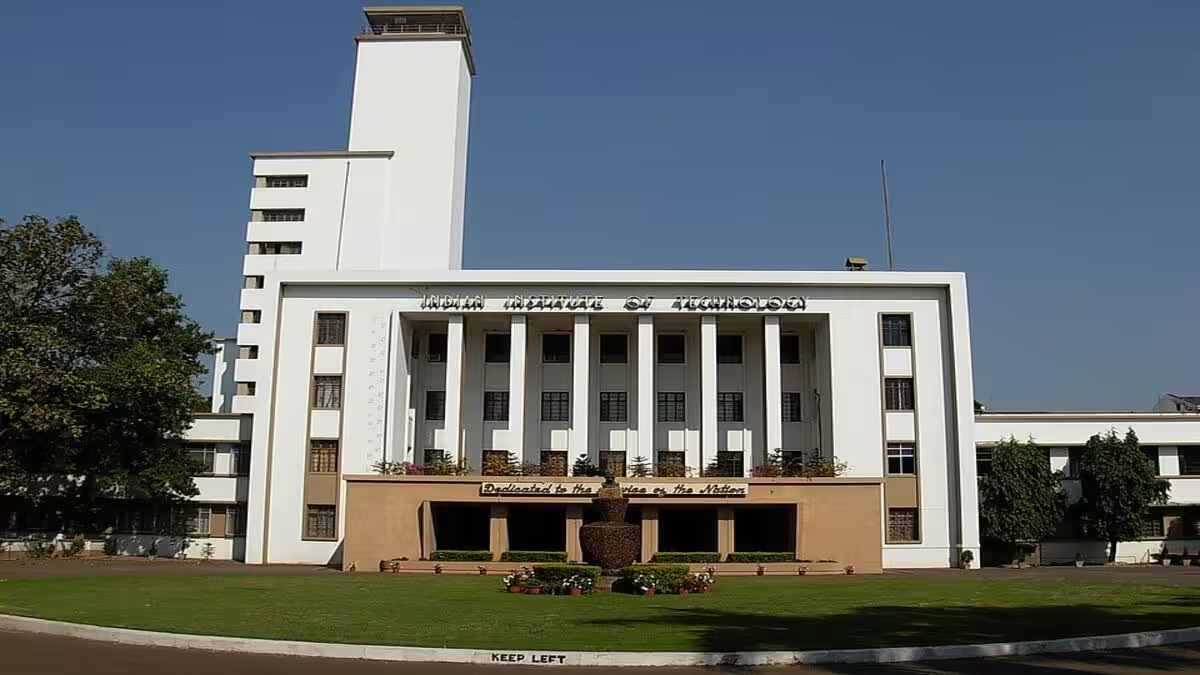
The All India OBC Students Association (AIOBCSA) has raised concerns about the representation of OBC, SC, and ST faculty members at premier Indian Institutes of Technology (IITs), specifically IIT Kharagpur and IIT Kanpur. Using responses obtained through the Right to Information (RTI) Act, the association spotlighted the low numbers of faculty from these communities and called for the enforcement of reservation policies in faculty recruitment.
Understanding Faculty Representation and Reservations at IITs
Reservations in India are affirmative action policies aimed at increasing representation of historically marginalized communities such as Other Backward Classes (OBC), Scheduled Castes (SC), and Scheduled Tribes (ST) in education and employment. IITs, as leading technical institutions, are expected to follow government guidelines on reservations not only for students but also for faculty recruitment. However, the implementation of these policies in faculty hiring has been a subject of debate and scrutiny.
Faculty positions at IITs are categorized by academic ranks such as professors, associate professors, and assistant professors. The sanctioned faculty strength refers to the total number of teaching positions approved, while the filled positions indicate how many of these are currently occupied. Vacant posts reflect opportunities for recruitment.
Key Facts from RTI Responses at IIT Kharagpur and IIT Kanpur
- IIT Kharagpur has a sanctioned faculty strength of 1,600, with 776 positions filled and 824 vacant as of February 2026.
- Among the 776 faculty members at IIT Kharagpur, there are 320 professors: only 7 belong to OBC, 6 to SC, and none to ST categories.
- The institute follows a flexible cadre structure for recruitment, making it difficult to calculate sanctioned posts by category and rank.
- IIT Kanpur has 957 sanctioned faculty positions, with 581 filled and 376 vacant.
- Of the 257 professors at IIT Kanpur, 252 are from the general category, 3 from OBC, 1 from Economically Weaker Sections (EWS), and 1 under Persons with Disabilities (PwD); there are no SC or ST professors.
- At the associate professor level in IIT Kanpur, there are 7 OBC, 6 SC, and 4 ST faculty members among 128 total.
- Assistant professors at IIT Kanpur include 42 OBC, 16 SC, and 7 ST members out of 193 total.
Why Faculty Reservation and Representation Matter at IITs
AIOBCSA argues that the low representation of OBC, SC, and ST faculty at IITs reflects systemic exclusion and calls into question claims that reservations compromise merit. The association stresses that reservations are necessary to ensure equal opportunity and justice for marginalized communities, especially in elite institutions that shape India’s future workforce and leadership.
The lack of faculty diversity can affect the academic environment, mentorship, and inclusivity for students from underrepresented groups. It also raises concerns about whether government guidelines on reservations are being fully implemented in faculty recruitment processes. The flexible cadre structure cited by IIT Kharagpur complicates transparency in tracking category-wise sanctioned posts, which critics say may hinder accountability.
Calls for ending reservations often emerge from groups citing meritocracy, but advocates like AIOBCSA emphasize that true merit cannot be assessed without equal access and representation. They argue that increasing faculty diversity is essential for fostering a more inclusive and equitable educational system.
Frequently Asked Questions
Q: What is the current faculty strength at IIT Kharagpur and IIT Kanpur?
A: IIT Kharagpur has 1,600 sanctioned faculty positions with 776 filled, while IIT Kanpur has 957 sanctioned positions with 581 filled as of early 2026.
Q: How many OBC, SC, and ST professors are there at these IITs?
A: IIT Kharagpur has 7 OBC and 6 SC professors but no ST professors. IIT Kanpur has 3 OBC professors and none from SC or ST categories.
Q: Why is there a demand for reservation implementation in faculty recruitment?
A: Advocates argue that reservations help correct historical exclusion and ensure fair representation of marginalized communities in faculty roles, which is crucial for equity and diversity in education.