India and Malaysia Strengthen Their Strategic Partnership
India and Malaysia have taken significant steps to improve their relationship, focusing on cooperation in many areas including trade, culture, education, and digital technology. The two countries are working closely to build a stronger partnership that benefits their people and economies.
4 min read275 views
In recent years, India and Malaysia have increased their efforts to work together more closely. This partnership aims to promote growth, security, and cultural understanding between the two nations.
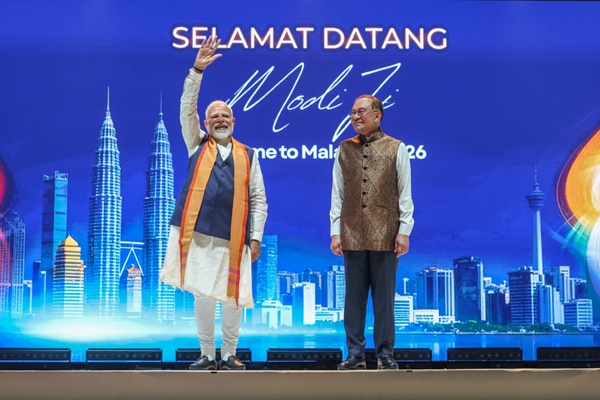
One of the most important moments for India and Malaysia was in February 2026, when Indian Prime Minister Narendra Modi visited Malaysia. During this visit, the leaders signed six key agreements to deepen cooperation. These agreements cover various sectors such as semiconductors, healthcare, vocational training, disaster management, anti-corruption efforts, social security, and audiovisual co-production. These deals are expected to help both countries improve their industries, protect their citizens, and promote cultural exchanges.
Since entering into a new phase of their relationship, the countries elevated their ties to a Comprehensive Strategic Partnership in August 2024. This level of partnership encourages them to work more closely on digitalization, defense manufacturing, artificial intelligence, and other new areas that are important for the future.
The two nations are also involved in many collaborative projects. For example, the Malaysia-India Digital Council is helping both countries work together in digital technology. The council aims to improve digital cooperation and create new opportunities for businesses and governments.
Trade between India and Malaysia is already strong. In the fiscal year 2024-25, their bilateral trade reached about 19.85 billion US dollars. This highlights how important economic exchange is for both countries.
In addition to trade, Indian companies are active in Malaysia. Over 100 Indian IT companies operate there, creating thousands of jobs for local residents. This shows how India’s success can also benefit Malaysia through investment and employment opportunities.
Another area of progress is financial technology. India’s Unified Payments Interface, known as UPI, is set to launch in Malaysia soon. This digital payment system is widely used in India and will offer Malaysian users a reliable and efficient way to make transactions across borders.
Cultural and educational ties are also growing. India has established the Thiruvalluvar Chair at Universiti Malaya as well as the Ayurveda Chair at Universiti Tunku Abdul Rahman. These projects promote Indian culture and traditional medicine, helping people in Malaysia better understand India’s rich heritage.
The Indian diaspora in Malaysia, numbering approximately 2.9 million, plays a crucial role in strengthening the relationship. Their presence helps foster better understanding and cooperation between the two nations.
Several symbols of friendship exist between the countries. The Torana Gate in Brickfields, Kuala Lumpur, was inaugurated in 2015 as a symbol of enduring friendship. It serves as a reminder of the long-standing ties and mutual respect shared by India and Malaysia.
India and Malaysia also focus on collective transformation through the IMPACT framework, which stands for India-Malaysia Partnership for Advancing Collective Transformation. This framework emphasizes speed, ambition, and benefits that reach the people of both nations.
While many initiatives are underway, as of February 2026, there is no official confirmation about some specific areas. For instance, there are no confirmed defense deals or transfers of technology between India and Malaysia at this time. Similarly, no new Indian consulate has been announced, and the extension of India’s Overseas Citizen of India card eligibility to Malaysian citizens of Indian origin up to the sixth generation has not been confirmed.
Furthermore, the launch of India’s UPI in Malaysia, as well as the establishment of the Thiruvalluvar Chair at Universiti Malaya and the Ayurveda Chair at UTAR, are yet to be officially announced. The status of the Torana Gate in Brickfields and the guiding framework of the IMPACT initiative also remain unconfirmed.
Despite the absence of some specific bilateral agreements as of now, the overall relationship continues to grow and develop. The mutual efforts in trade, culture, technology, and people-to-people connections demonstrate a strong commitment by both countries to work together for mutual benefit. As their partnership evolves, it is expected they will explore more areas for cooperation, benefiting their citizens and strengthening their regional presence.