India Launches First AI-Enabled University Pilot at CCSU
India has started a new project to make university education more modern using artificial intelligence (AI). This initiative is in partnership with Google Cloud and Chaudhary Charan Singh University in Meerut. The goal is to improve how students learn and how universities operate.
4 min read242 views
In January 2026, India announced an important new project to bring artificial intelligence, or AI, into higher education. The goal is to change how universities work and improve the quality of education in the country. The Ministry of Skill Development and Entrepreneurship (MSDE) is leading this effort. They teamed up with Google Cloud, a big technology company, and Chaudhary Charan Singh University (CCSU) in Meerut, a city in India. Together, they plan to create the country's first university pilot that uses AI technology.
This project is part of India's plan to modernize and improve its education system. Traditionally, many tasks in universities are done manually, which can be slow and sometimes less effective. By using AI and cloud technologies, universities can offer better learning experiences for students and make administrative work easier for staff. The project at CCSU will serve as a test. It will help everyone see how AI can be used in real-life educational settings.
Chaudhary Charan Singh University will act as the model for this project. The idea is that other colleges and universities across India can watch what happens there and learn from it. If the project succeeds, this new way of working can be adopted by many more educational institutions in the future.
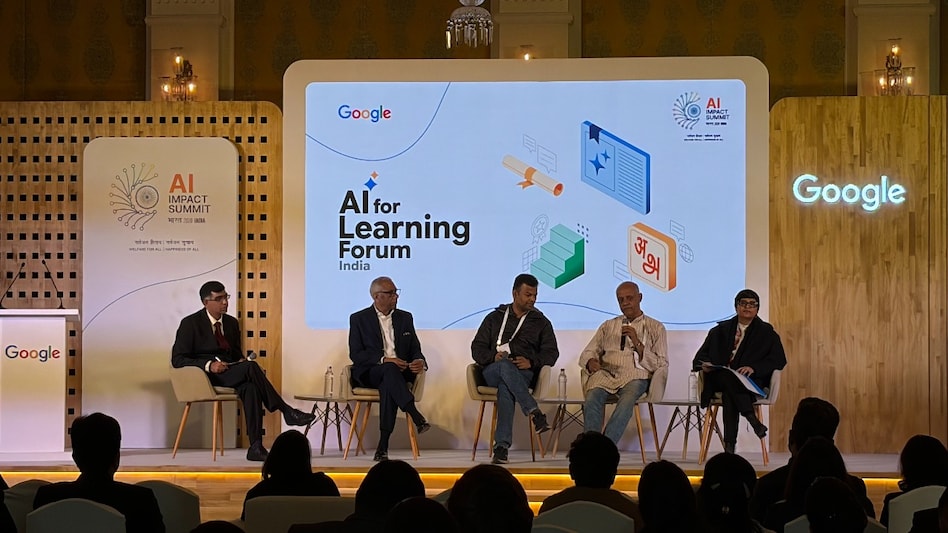
The project was announced during the AI for Learning Forum held in Delhi. This forum is an event where experts, government officials, and technology companies meet to discuss how AI can help improve education. One important government official, Shri Jayant Chaudhary, attended this event. His presence shows the government’s strong support for the project.
Some of the new ideas that this project will introduce include personalized AI tutors. These are AI-based systems that can help students learn in a way that matches their individual needs. For example, if a student needs extra help in math, the AI tutor can provide more practice problems and explanations. It can also analyze students’ skills to find out where they need more support, which is called skill-gap analysis. This helps teachers understand students better and guide their learning.
The project will also include features to make administrative work easier. Handling documents, managing records, and organizing schedules can be complicated and time-consuming. Using AI to automate some of these tasks will save time and reduce errors. This way, teachers and staff can focus more on teaching and helping students, rather than paperwork.
The entire project will act like a 'living laboratory.' This means that it will be a real place where AI technologies are tested and shown to work in daily university activities. It will be a proving ground for new ideas and innovations. Based on what is learned from the pilot, a framework will be developed. This framework will serve as a guide for other universities to follow if they want to adopt AI technologies.
The goal is to develop a flexible system that can be used across India’s higher education institutions. Since India has many types of colleges and universities, each with different needs, this framework must be adaptable. It will help ensure that AI can be used effectively in various settings, from large universities to smaller colleges.
As of now, in January 2026, detailed plans about which specific AI tools will be used, how long the implementation will take, or how much money the project will cost are still being worked out. Government officials and technology partners are continuing to plan and organize everything needed to start the project. More detailed information is expected to be shared later.
This project fits into India's larger plan called Viksit Bharat 2047. This plan aims to build a modern, advanced, and inclusive education system by the year 2047, which will mark the 100th anniversary of India’s independence. By integrating AI into higher education, India hopes to make learning more effective, accessible, and future-ready. If successful, the project could help the country develop a skilled workforce prepared for the demands of the 21st century.
In conclusion, the initiative to incorporate AI into higher education shows India’s commitment to using new technology for the benefit of students, teachers, and educational institutions. It is a step toward creating a more modern, efficient, and inclusive education system. While many details are still to be finalized, the project represents a significant move toward the future of education in India.