India's Ayurveda Treatment Gets a Boost with New Insurance Partnership
A new agreement between the All India Institute of Ayurveda and the General Insurance Council will enable cashless Ayurveda treatment for patients across India. This move aims to make Ayurveda healthcare more accessible and affordable.
3 min read309 views
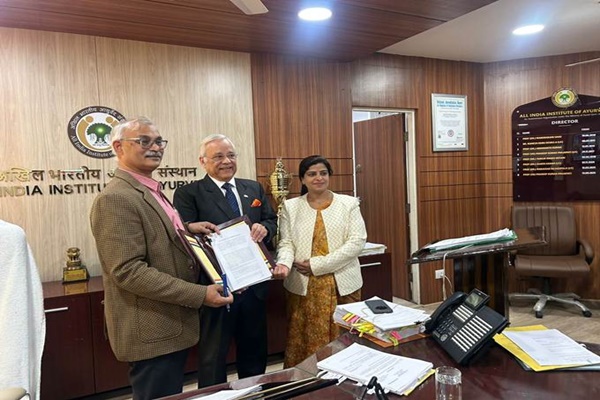
Recently, a new step has been taken to help more people access Ayurveda healthcare. The All India Institute of Ayurveda, which is an important government institution, has signed an agreement with the General Insurance Council. This agreement is called a Memorandum of Understanding, or MoU. It was signed on February 10, 2026.
This partnership makes it possible for patients to receive cashless Ayurveda treatment through their health insurance plans. The agreement covers all 32 general insurance companies that are part of the General Insurance Council. This means that anyone with insurance from these companies can get Ayurveda treatment without paying upfront. The insurance companies will pay directly for the treatment, making it easier and more affordable for patients.
The MoU was signed by two officials. Professor (Vaidya) P. K. Prajapati, the Director of the All India Institute of Ayurveda, signed for the institute. Shri Segar Sampathkumar, who is the Director of Health at the General Insurance Council, signed for his organization. This formal agreement marks a significant step in integrating Ayurveda into mainstream healthcare financing.
To support this effort, the Ministry of Ayush has also launched a special helpline dedicated to Ayush health insurance. This helpline is designed to help people understand their insurance benefits and improve awareness about coverage options available for Ayurveda treatments. It aims to answer questions and make insurance more accessible to everyone.
Prof. Bejon Kumar Misra, who is the Chairman of the Core Group of Experts on Ayush Health Insurance, said that this is the first time an Ayush institution in India has made a formal agreement with the General Insurance Council. This partnership is an important milestone because it connects Ayurveda more closely with health insurance policies.
The main goal of this initiative is to make Ayurveda healthcare easier for patients to access. By offering cashless treatment options, it hopes to improve patient trust and make treatment more affordable. Many people in India prefer Ayurveda for their health needs, and this move aims to support that preference by making it financially easier.
The All India Institute of Ayurveda is an autonomous institution under the Ministry of Ayush. It is equipped with a 200-bed referral hospital that has modern diagnostic tools and specialized departments. The hospital features 25 specialty departments, 12 clinical units, and 8 research laboratories that work on improving Ayurveda treatments and research.
The General Insurance Council, on the other hand, is a government-regulated body. It operates under the Insurance Act of 1938 and is overseen by the Insurance Regulatory and Development Authority of India. This regulatory body ensures that insurance companies follow rules and provide reliable services to consumers.
This new collaboration is expected to encourage more people to use Ayurveda treatments by reducing financial barriers. It reflects the government's commitment to promoting traditional healthcare systems like Ayurveda alongside modern medical services. Making Ayurveda more inclusive through insurance coverage could lead to increased trust and wider acceptance among the public.
This is a significant development in the field of Indian healthcare. It shows how traditional medicine like Ayurveda can be integrated into modern insurance systems, providing better service to patients. The partnership also intends to boost awareness about insurance options and encourage more individuals to consider Ayurveda as a safe and effective healthcare choice.
Overall, the agreement between the All India Institute of Ayurveda and the General Insurance Council marks an important step toward making Ayurveda more accessible. It helps to build a stronger link between traditional health practices and modern insurance coverage, benefiting patients across the country.