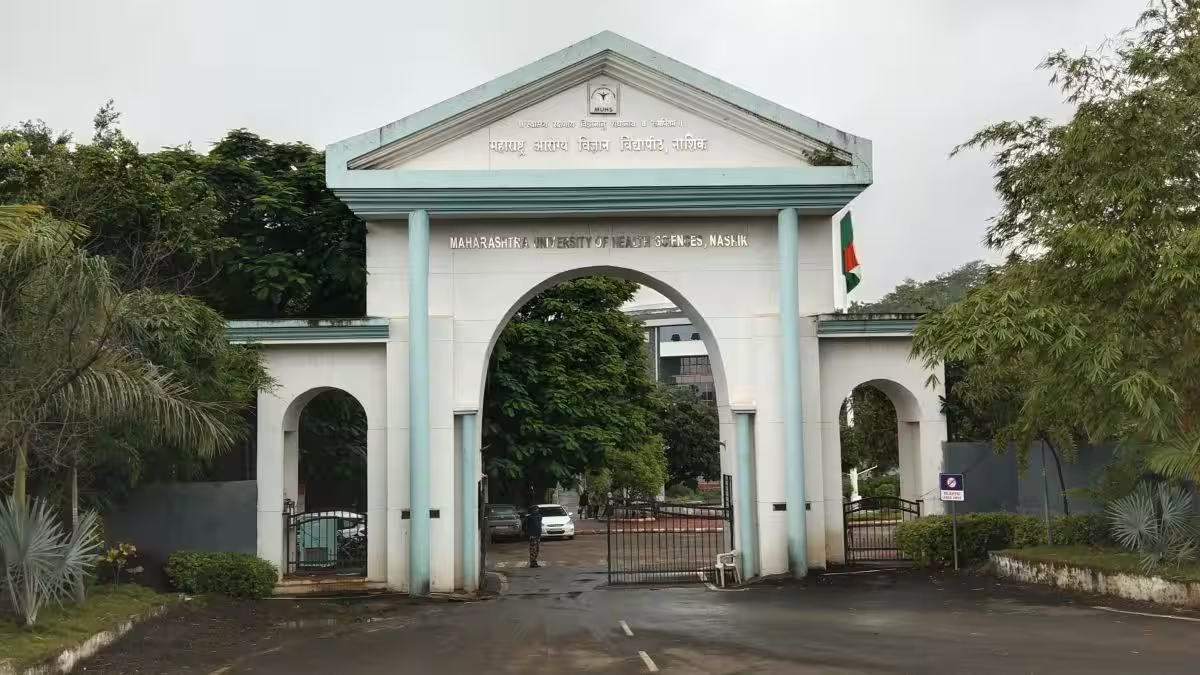
Maharashtra University of Health Sciences (MUHS) Nashik is set to add 865 new health science colleges across the state by 2032. This includes 51 new medical colleges, most of which will be located in small towns and rural areas. The university aims to boost allied health sciences training while slowing expansion in ayurveda, physiotherapy, and nursing colleges.
- MUHS approved a five-year perspective plan for 2027-32 to expand affiliated colleges.
- 865 new undergraduate college slots will be created across 61 zones in 36 districts.
- 51 new medical colleges planned, mostly outside large cities.
- Significant growth planned for allied health sciences like occupational therapy and audiology.
- New "one point one recommendation" policy to select the best candidate for college approvals.
What is MUHS's new perspective plan for 2027-32?
The MUHS senate recently approved a five-year perspective plan outlining the growth of health science colleges affiliated with the university. The plan aims to nearly double the current number of undergraduate colleges from 952 to 1,817 by adding 865 new slots. These slots are distributed across 61 zones in 36 districts of Maharashtra.
The plan focuses on expanding medical colleges, allied health sciences, and dentistry institutes, while limiting growth in ayurveda, nursing, and physiotherapy colleges.
How many new medical colleges will MUHS add and where?
MUHS plans to add 51 new medical colleges to its existing 69 MBBS institutes. Most of these new colleges—40 out of 51—will be established outside municipal corporation areas and large cities, targeting small towns and rural regions. This supports Maharashtra's goal of improving healthcare education access in underserved areas.
Why is there a focus on allied health sciences?
The university plans a major expansion in allied health sciences, offering over 100 new slots each for occupational therapy, audiology and speech-language pathology, prosthetics and orthotics, and naturopathy and yogic sciences. This aligns with the national policy to develop 100,000 additional allied healthcare professionals over five years, supported by a Rs. 1,000 crore budget allocation.
However, physiotherapy colleges will see limited growth with only 20 new slots planned, as the state already has 120 such colleges.
What changes have been made to the college approval process?
MUHS introduced the "one point one recommendation" policy, where the university will recommend only the best candidate among applicants for each available slot to the state government. This aims to streamline approvals and reduce disputes. Minority organizations can still establish new colleges regardless of slot availability.
Additionally, only institutes included in the final recommendation list will be charged full application fees. The application process is designed to filter out candidates who do not meet infrastructure and faculty norms early on.
How does the plan address population-based training requirements?
The new plan standardizes the population-to-college ratio to 1:15 lakh for most healthcare fields, except dentistry (1:20 lakh) and unani (1:30 lakh). This is a reduction from the previous plan, which had varied ratios ranging from 1:7.5 lakh to 1:25 lakh depending on the discipline.
What is the distribution of new college slots across healthcare disciplines?
| Course | Existing UG Colleges (2026) | New Colleges Planned |
|---|---|---|
| Medicine (MBBS) | 69 | 51 |
| Dentistry | 29 | 60 |
| Ayurveda | 149 | 25 |
| Unani | 8 | 69 |
| Homoeopathy | 64 | 60 |
| Nursing | 401 | 35 |
| Naturopathy and Yogic Sciences | 3 | 113 |
| Physiotherapy | 120 | 21 |
| Occupational Therapy | 4 | 114 |
| Audiology and Speech-Language Pathology | 2 | 158 |
| Prosthetics and Orthotics | 1 | 159 |
How will MUHS ensure regional balance in college distribution?
The university will allocate new college slots based on factors such as state population, regional balance, and equity. Districts without existing nursing or physiotherapy colleges will be prioritized for new institutes in these fields. The plan divides Maharashtra into zones, with specific numbers of MBBS and other colleges planned per zone.
What is the timeline and application process for new colleges?
Applications for new colleges under the perspective plan are open for the 2027-28 academic year. The university’s online system will allow applications only for available slots. Applicants must meet strict infrastructure and faculty requirements to proceed. The plan will be reviewed annually to adjust for population growth and changes in college openings or closures.