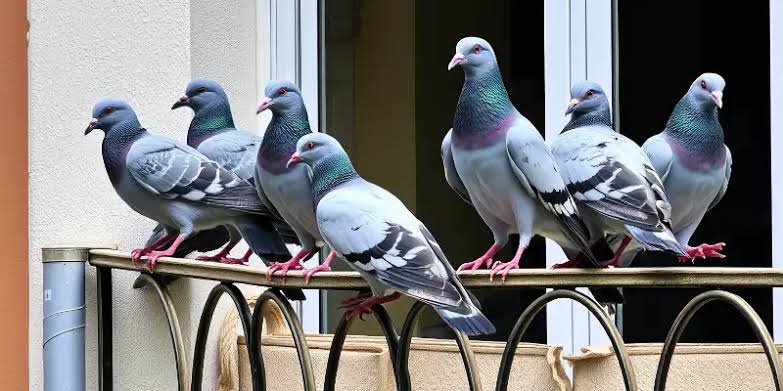
Imagine a bustling city like Mumbai or Pune, filled with the sounds of busy streets, honking vehicles, and lively markets. But lately, a new story has been unfolding—a story about pigeons. Not just a few pigeons fluttering around, but suddenly, large flocks of them. These birds are everywhere, perched on building ledges, pecking at the street corners, and sometimes, even causing trouble.
It seems that pigeon numbers have grown quite a lot. Some reports suggest that the population has increased by as much as 150%. That’s a huge rise! But here’s the thing: no one has confirmed these figures officially yet. Still, the signs are clear—a lot more pigeons than before.
Now, this might seem like just a bird story, but it’s also about our health. Some residents, especially in Pune, have started feeling the effects. They have had trouble breathing, coughing, or feeling unwell after being around these birds. Doctors believe that pigeon droppings could be part of the problem. That’s because droppings can carry germs, which might lead to lung infections and other health issues.
In Pune, the problem is serious enough that the city’s authorities stepped in. The Pune Municipal Corporation (PMC) pointed out that pigeons gather at specific spots in the city—about 20 of them. These are places where pigeons are fed regularly by people. To try to control the situation, the PMC has even fined those caught feeding the birds. The fines aren’t small—ranging from ₹500 to as much as ₹5,000—showing just how important they consider this issue.
Mumbai’s civic body, called the Brihanmumbai Municipal Corporation (BMC), has also spoken out. They issued warnings to residents, asking them not to feed the pigeons. The goal is clear: if fewer people feed these birds, their numbers will not grow so rapidly.
Up in the sky, an organization called the Bombay Natural History Society (BNHS) has taken another step. They created a short documentary—a movie about pigeons. But this isn’t just for fun. It’s a way to help people understand the possible health risks that come from having so many pigeons around. The video explains how pigeons can carry germs that cause illnesses, especially those related to the lungs.
The situation is complex. Both cities are trying to find a way to manage the increasing number of pigeons. They’ve started with simple rules: don’t feed the birds, and if you do, you might have to pay a fine. These measures aim to keep the population under control and protect public health.
Why does this matter so much? Because when too many pigeons gather in our cities, they can spread diseases. Their droppings can contaminate surfaces, and some germs are tough to get rid of. For vulnerable people, especially those with breathing problems, this can be dangerous.
There are no precise numbers on how much the pigeon population has grown. Yet, the concern is real enough for officials to act. About 30–40% of residents in Pune report health issues that could be connected to pigeons. That’s a significant number, showing that this isn’t just a minor nuisance—it’s a public health matter.
Local authorities are cautious. They have not made bold promises or announced huge plans yet, but they are taking steps to slowly reduce the problem. Advisories are in place, and fines are being imposed. The hope is that, by discouraging feeding and encouraging people to keep their surroundings clean, the city can better control these flying problems.
In the end, the story of the pigeons is more than just about birds. It’s about how urban life changes and how we need to adapt—we have to find common-sense ways to live safely alongside nature. As Mumbai and Pune work to handle their pigeon populations, they remind us all of one simple truth: small actions, like not feeding birds, can help keep our cities healthy and safe.
This ongoing story is still unfolding, and everyone hopes that the cities can strike a balance—respecting wildlife while protecting human health. After all, a city is a place where both humans and birds share the sky. But it’s up to us to make sure that this sharing remains safe and healthy for everyone.