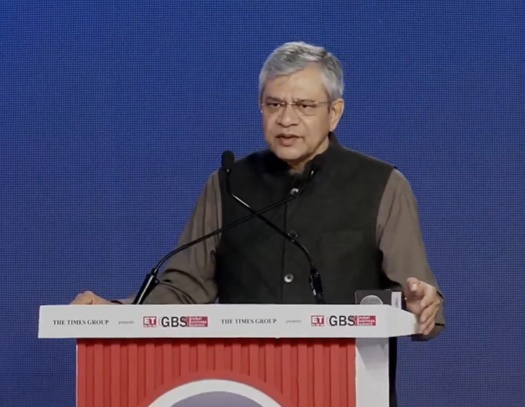
Principal Scientific Adviser says incubation centres must pivot towards supporting deep-tech startups to help India emerge as a product-driven economy
India is making significant efforts to support and develop deep tech startups through new policies, government initiatives, and funding programs. These steps aim to create a stronger ecosystem for innovation and technology-driven growth in the country.
3 min read273 views
India is actively working to strengthen its deep technology startup ecosystem. The government and related organizations are launching new policies and initiatives to encourage innovation and support startups working in advanced technology fields. These steps are meant to make India a leader in deep tech industries.
A key development was the finalization of the National Deep Tech Startup Policy in October 2023. The Principal Scientific Adviser to the Government of India announced that this policy was ready to be implemented. This policy aims to provide specific support and a favorable environment for deep tech startups across the country.
In the same month, the Principal Scientific Adviser also encouraged science and technology clusters in India to work more closely with deep tech startups. He emphasized the importance of these collaborations to help startups become self-sustaining. The goal is to build a strong connection between industry and research institutions, fostering innovation at every stage.
Prior to this, in August 2023, the government released a draft version of the National Deep Tech Startup Policy for public feedback. This draft was meant to gather opinions from different stakeholders and improve the final version. The policy aims to create an environment where deep tech startups can thrive, through incentives, support systems, and infrastructure.
The government’s focus on deep tech is supported by successful initiatives like iDEX, which works in defense technology, and BIRAC, which focuses on biotechnology. In April 2025, the Principal Scientific Adviser highlighted these initiatives as successful models. He explained that similar approaches could be effective in other sectors, helping to accelerate innovation.
However, recent studies reflect the need for further support. A study commissioned by the Office of the Principal Scientific Adviser and carried out by the Confederation of Indian Industry in April 2025 found that public-funded research and development organizations in India are not providing enough support to deep tech startups. This gap indicates the need for more focused efforts to strengthen the innovation ecosystem.
To boost entrepreneurship, India is investing in dedicated facilities. In January 2026, the Department of Science and Technology launched the DST–NIDHI Centre of Excellence at the Indian Institute of Management in Ahmedabad. The project involved an investment of about 40 crore rupees, with the goal of helping deep-tech startups translate scientific ideas into real products.
Alongside this, in November 2025, IIT Indore opened an Incubation and Innovation Centre in Madhya Pradesh. The project was a joint investment of around 10 crore rupees. This center is designed to support deep-tech startups by providing resources and mentorship, thereby encouraging innovation and entrepreneurship in the region.
Despite these efforts, as of February 2026, there remains no official confirmation on whether incubation centers are shifting their focus toward supporting deep-tech startups. Some experts believe this transition could be crucial for India's goal to become a product-driven economy.
Overall, India continues to take steps to promote deep technology startups through policies, funding, and infrastructure projects. The country aims to harness its scientific talent to develop innovative solutions and strengthen its position as a global leader in technology and innovation.