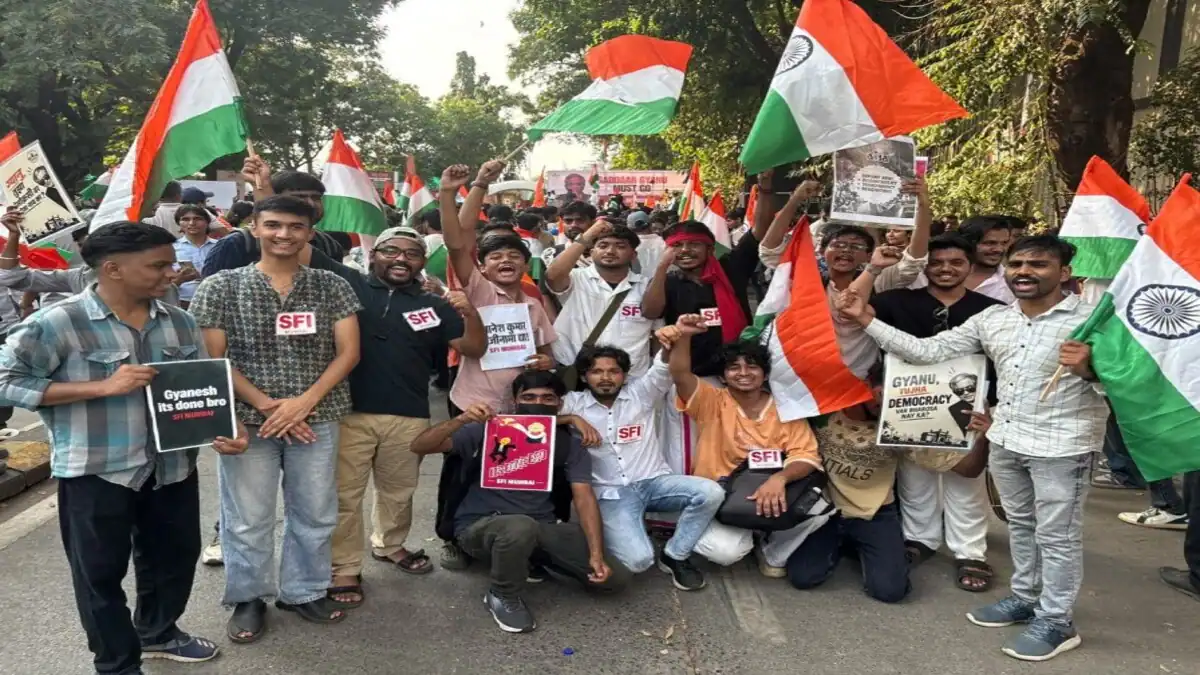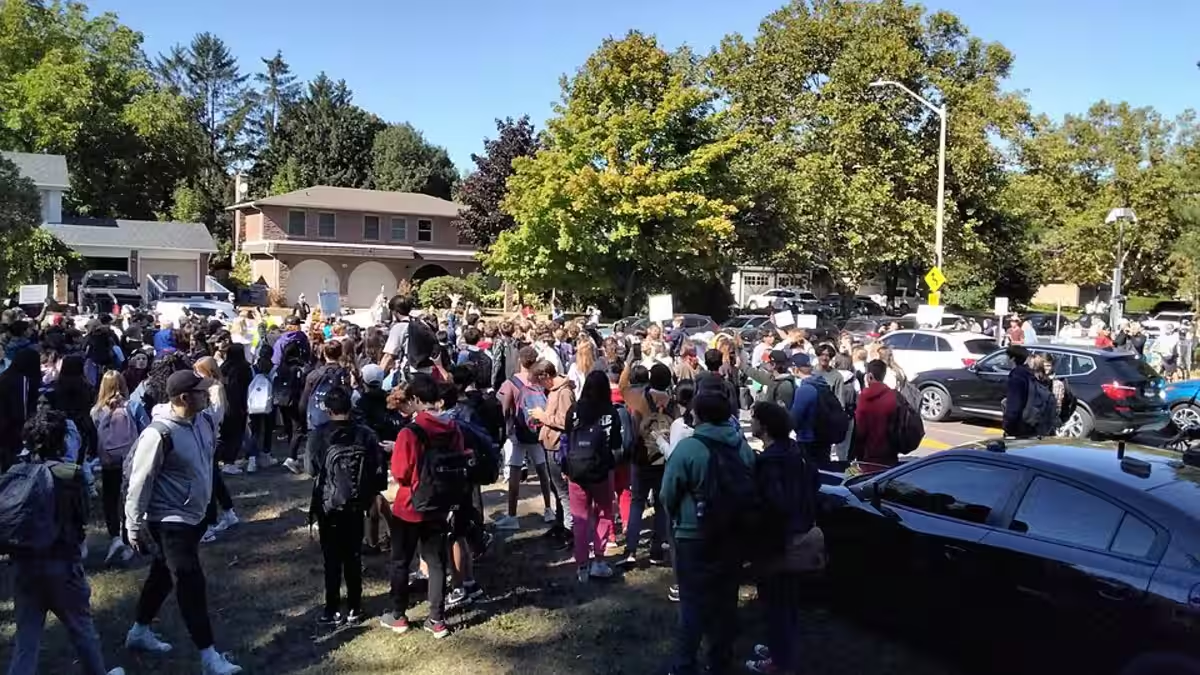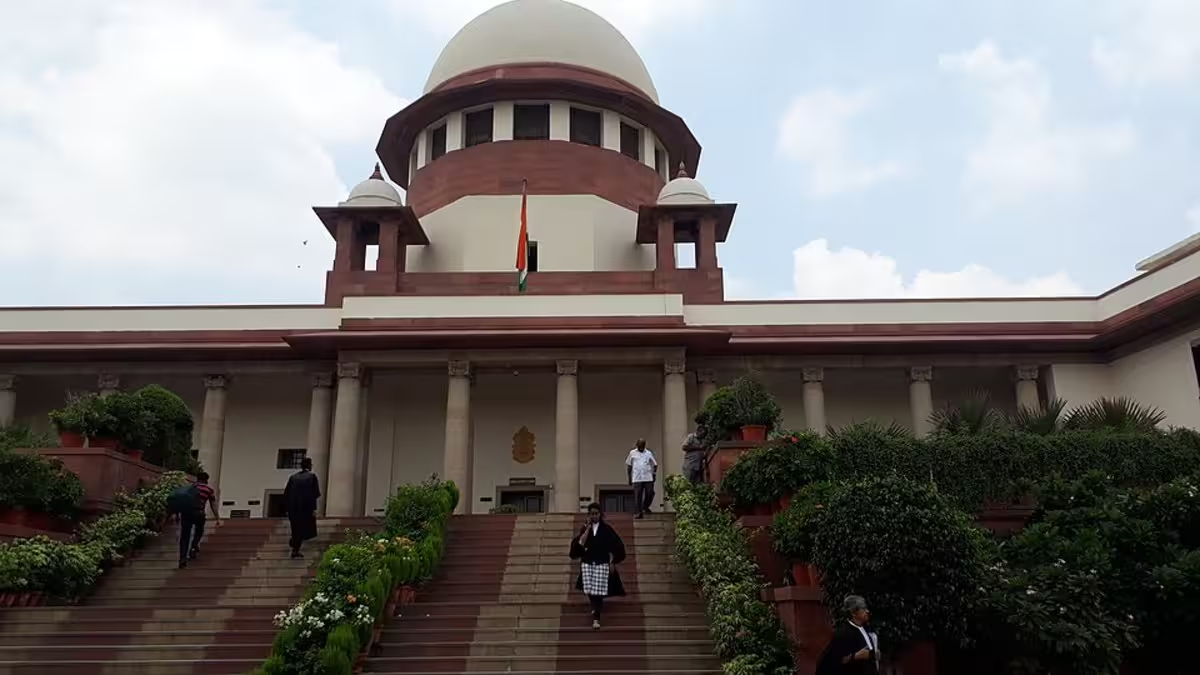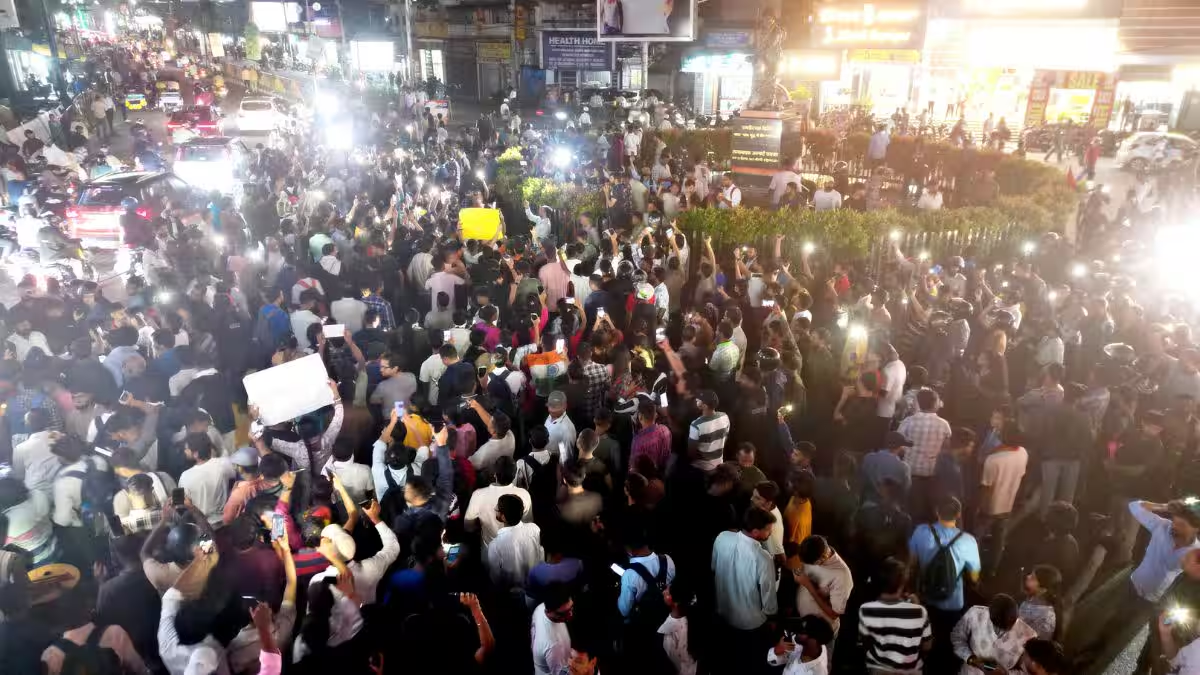
More than 700 protesters, including student activists and political leaders, were detained by Delhi Police at Jantar Mantar during a protest against Chief Election Commissioner Gyanesh Kumar. The protest focused on alleged irregularities in the Special Intensive Revision (SIR) of electoral rolls and the mass deletion of voters.
- Over 700 protesters, including members of SFI, AISA, NSUI, and AAP leaders, were detained.
- The protest demanded the resignation of Chief Election Commissioner Gyanesh Kumar.
- Police stopped protesters at various locations and suspended internet services near the protest site.
- Protesters claimed police used force, including against women activists.
- Several metro stations near Jantar Mantar were closed during the protest.
Why were students and political leaders protesting at Jantar Mantar?
Students from organizations like the Students' Federation of India (SFI), All India Students Association (AISA), and National Students' Union of India (NSUI), along with leaders from the Aam Aadmi Party (AAP), gathered to protest alleged irregularities in the electoral process. They demanded the resignation of Chief Election Commissioner Gyanesh Kumar, citing concerns over the Special Intensive Revision (SIR) of electoral rolls and the deletion of many voters.
How did the police respond to the protest?
Delhi Police detained more than 700 protesters, including prominent AAP leaders such as Saurabh Bharadwaj, Sanjeev Jha, Atishi, and Sanjay Singh. Police stopped protesters at various locations, including the Ashoka Road roundabout and North Avenue, preventing them from reaching Jantar Mantar. Internet services were suspended in and around the protest area, and several metro stations near Jantar Mantar were closed to restrict access.
What was the reaction of the student activists and political leaders?
Student leaders expressed strong opposition to the police action. SFI general secretary Aishe Ghosh criticized the police for focusing on protecting the Chief Election Commissioner instead of addressing crimes in the capital. She stated that detaining protesters would not stop the movement. AISA activists alleged that police used force against protesters, including women. NSUI national president Vinod Jakhar condemned the detentions and police actions during a foot march to the protest site, emphasizing that their peaceful struggle for democracy would continue.
Were there any restrictions during the protest?
Yes, the Delhi Metro closed entry and exit at 12 stations near Jantar Mantar, including Rajiv Chowk and Central Secretariat. Internet services were suspended around the protest site to control communication among protesters. Despite these restrictions, protesters attempted to reach Jantar Mantar and crossed barricades at Firoz Shah Road.
Did the protesters have permission to hold the demonstration?
AAP leader Saurabh Bharadwaj stated that the police claimed no permission had been granted for the protest. However, he questioned why permission was necessary at Jantar Mantar, which is a designated protest site. He also mentioned that the party had submitted letters requesting permission about a week earlier. Bharadwaj emphasized that the protest was an exercise of democratic rights to raise concerns.
What are the next steps for the protesters?
Despite the detentions and restrictions, protesters and student organizations have vowed to continue their agitation. They view the current actions as the beginning of a larger movement demanding transparency and accountability in the electoral process.