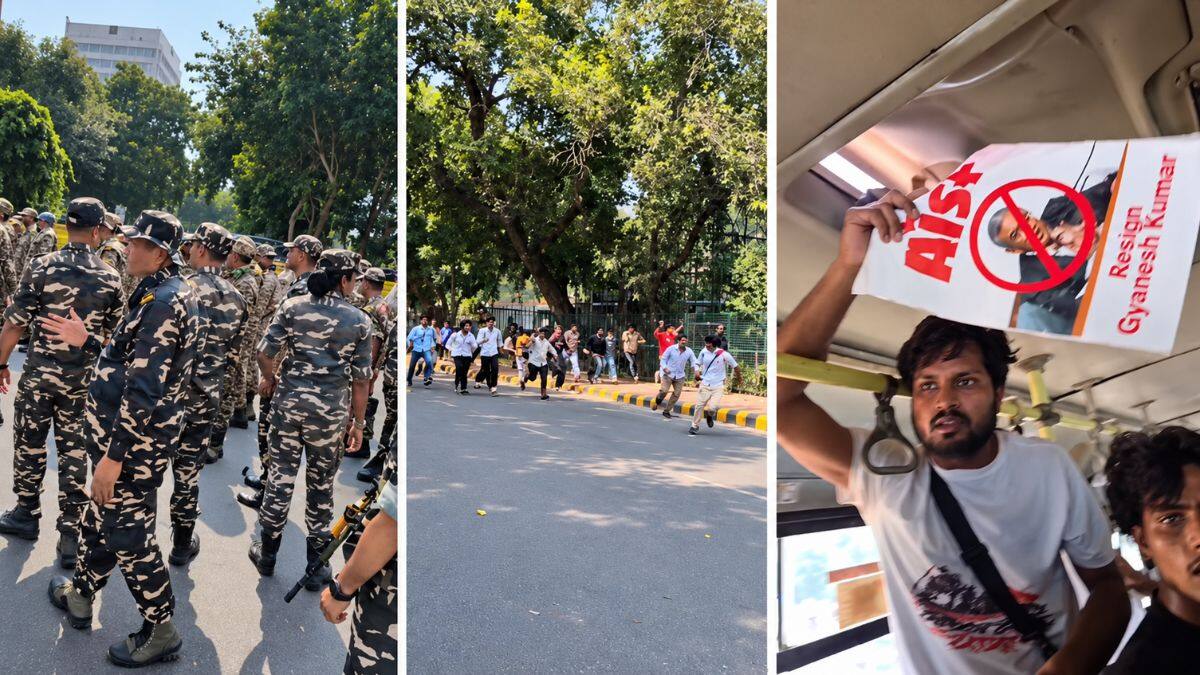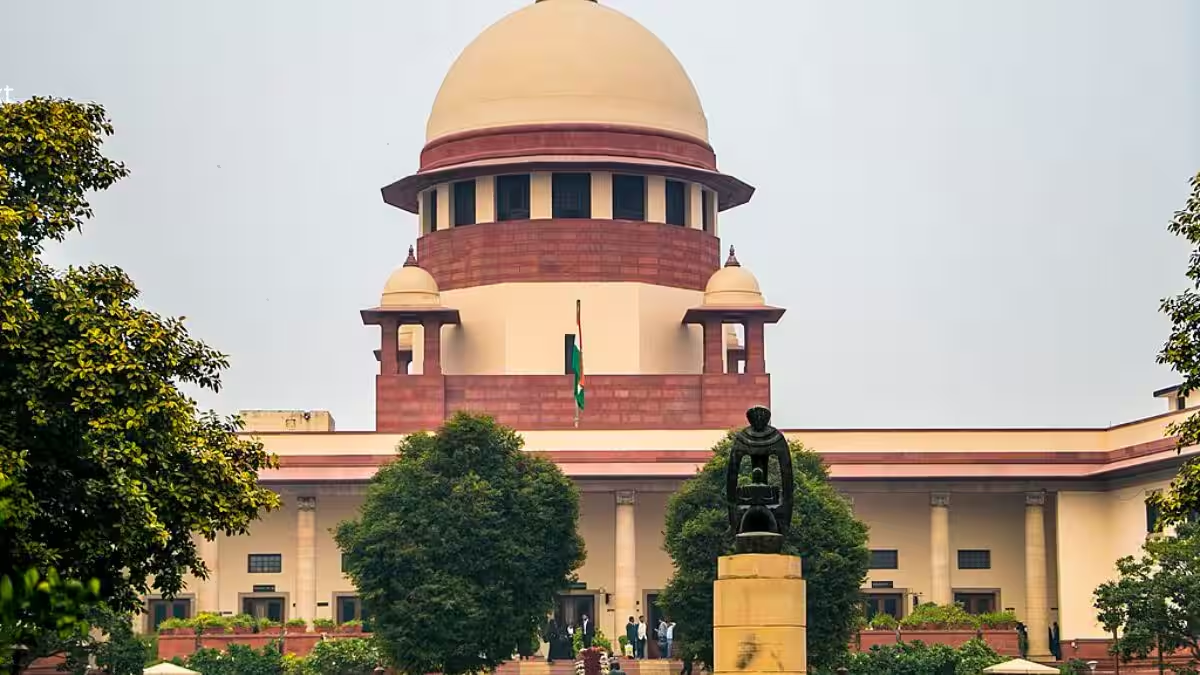
The Supreme Court of India has refused a plea seeking an independent and fair probe into the protest led by the Cockroach Janta Party (CJP) at Jantar Mantar in July. This protest was held against the NEET paper leak incident, which had significant political repercussions, including the resignation of Union Education Minister Dharmendra Pradhan.
- The Supreme Court rejected the plea for an independent investigation into the Jantar Mantar protest.
- The plea also sought a declaration that police investigations should be free from interference, similar to the judiciary's independence.
- The court emphasized the need to protect young students involved in the protests and highlighted the use of Article 142 to quash certain FIRs.
- The bench included Chief Justice of India Surya Kant and Justices Joymalya Bagchi and V Mohana.
- The court noted concerns about judicial intervention in public interest litigations without actual litigants.
Why did the Supreme Court reject the plea for an independent probe?
The Supreme Court bench, led by Chief Justice of India Surya Kant, rejected the plea on the grounds that judicial intervention was not maintainable without actual litigants. Advocate Mathews Nedumpara, representing the petitioner, questioned the validity of the Public Interest Litigation (PIL) since it lacked direct parties involved in the case. The court also expressed concerns about people treating the court as their private property by filing such petitions.
What was the context of the Jantar Mantar protest?
The protest at Jantar Mantar was organized by the Cockroach Janta Party in response to the NEET paper leak scandal. The incident caused widespread outrage and led to the resignation of Dharmendra Pradhan as the Union Education Minister. The protest resulted in multiple FIRs being registered, which became the subject of legal scrutiny.
How did the court justify quashing certain FIRs related to the protest?
The Supreme Court invoked Article 142 of the Constitution to quash some FIRs connected to the protests. Chief Justice Surya Kant explained that while the court does not guarantee 100 percent correct orders, it considered the young age of the students involved and their futures. The court aimed to prevent these students from becoming entangled in prolonged legal battles. The bench also cited a similar case in Himachal Pradesh where politicians caused public property damage during a dharna but were treated with consideration due to the circumstances.
What did the plea request regarding police independence?
The plea sought a declaration that police, like the judiciary, exercise sovereign and independent functions in maintaining law and order and investigating crimes. It argued that police investigations should be free from interference unless actions are unlawful or malicious. The petition requested a writ or direction mandating the Centre, Delhi government, and city police to ensure the investigation into the FIRs related to the Jantar Mantar protests is conducted independently, fairly, and according to the law.
What was the court's response to the plea about police independence?
The Supreme Court did not grant the requested declaration on police independence. The bench noted that such matters might involve adjudication of disputed facts and are not suitable for judicial review in this context. The court maintained that police functions are subject to legal scrutiny but did not find grounds to interfere with the ongoing investigations.
What are the broader implications of this decision?
This ruling underscores the Supreme Court's cautious approach to intervening in police investigations and its emphasis on protecting young individuals involved in protests from legal complications. It also highlights the court's recognition of the distinct roles of the judiciary and police, while refraining from extending judicial independence to police functions in the same manner.