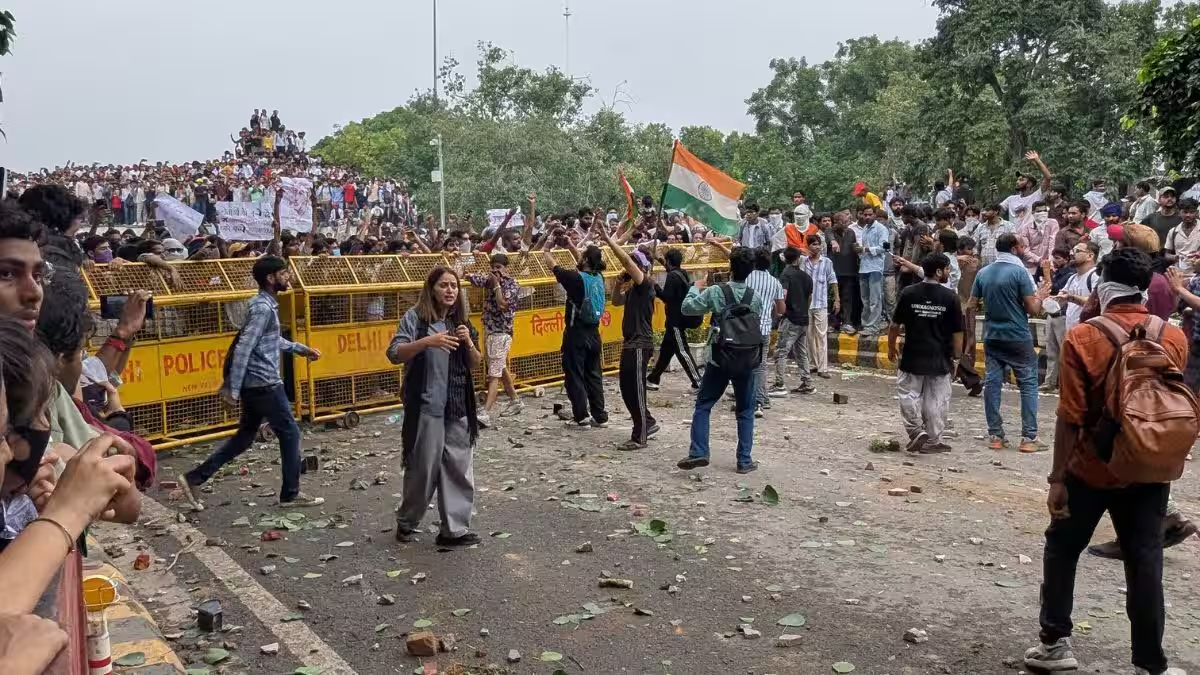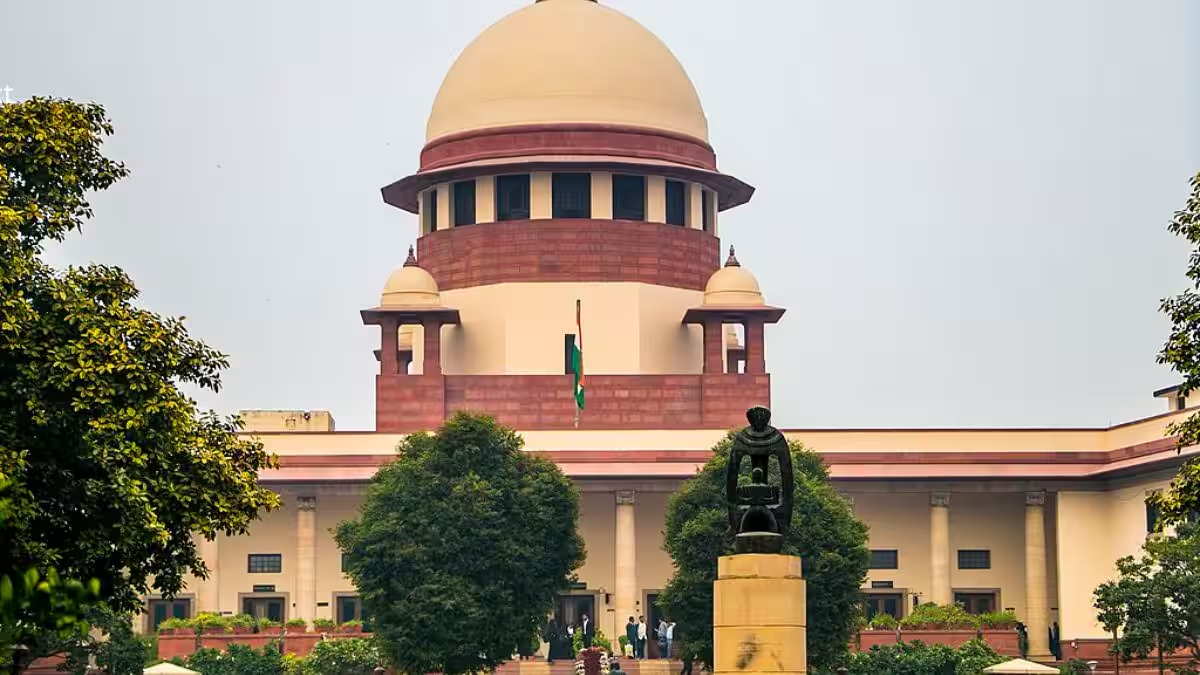
The Supreme Court Bar Association (SCBA) and the Supreme Court Advocates-on-Record Association (SCAORA) have publicly condemned the police's use of force against students protesting in Delhi. The protests, which took place during the Monsoon Session of Parliament, involved students marching to raise concerns about alleged irregularities in public examinations and demanding the resignation of Union Education Minister Dharmendra Pradhan. Both legal bodies have called for an independent and impartial investigation into the police actions, emphasizing the need to uphold constitutional rights to peaceful dissent.
Legal Bodies Speak Out Against Police Violence
The SCBA issued a resolution strongly denouncing what it described as a "brutal lathi charge" on innocent students. The incident reportedly caused serious injuries to several students and also affected members of the legal community, including SCBA members. The association called the use of excessive and disproportionate force "deeply disturbing" and unacceptable in a democratic society. It urged authorities to conduct a swift and unbiased inquiry to identify those responsible and to ensure that appropriate legal action is taken. The SCBA also stressed the importance of providing proper medical care to all injured individuals and preventing similar incidents in the future.
Details of the Protest and Police Response
- The protest involved students and young activists attempting to march towards Parliament to highlight concerns about public examination integrity.
- Delhi Police responded with lathi charges and tear gas to disperse the crowd.
- The protestors demanded the resignation of the Union Education Minister, citing alleged irregularities in exams.
- Several students and legal professionals sustained injuries during the police action.
- Authorities have been called upon to investigate the use of force and ensure accountability.
Why Upholding Peaceful Protest Matters
SCAORA expressed deep concern over the police's use of force against peaceful demonstrators. The association highlighted that in a constitutional democracy, peaceful dissent is a fundamental right protected under Articles 19(1)(a) and 19(1)(b) of the Indian Constitution, which guarantee freedom of speech and assembly. While acknowledging the state's duty to maintain public order, SCAORA emphasized that any restrictions on these freedoms must be legal, necessary, and proportionate. The burden lies with the state to justify any force used against citizens exercising their rights.
Referencing landmark Supreme Court rulings, SCAORA noted that peaceful public meetings are constitutionally protected and that police actions must meet strict standards of necessity and proportionality. The association urged authorities to ensure that allegations of excessive force are thoroughly and independently investigated. It stressed that the strength of the republic depends on protecting dissent within constitutional boundaries, and that how the state handles peaceful disagreement reflects the true measure of constitutional governance.
Frequently Asked Questions
Q: What triggered the student protests in Delhi?
A: Students were protesting alleged irregularities in public examinations and demanded the resignation of the Union Education Minister, Dharmendra Pradhan.
Q: What actions did the Delhi Police take during the protests?
A: The police used lathi charges and tear gas to disperse the protesters who were attempting to march towards Parliament.
Q: What are the SCBA and SCAORA demanding following the police action?
A: Both associations have condemned the excessive use of force and called for an independent, impartial, and time-bound inquiry to hold those responsible accountable and to protect constitutional rights.