Sitharaman's Budget 2026-27: Fiscal discipline meets growth aspirations
India's Union Budget for the year 2026-27 was presented, outlining spending plans and economic goals for the country.
4 min read286 views
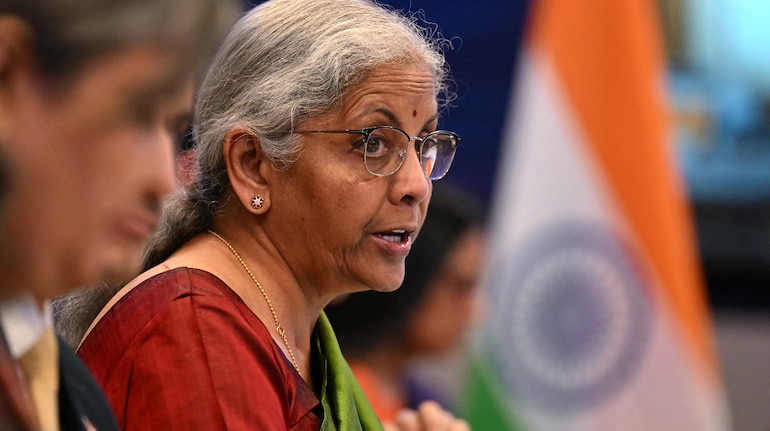
On February 1, 2026, the Indian Finance Minister, Nirmala Sitharaman, announced the country's budget for the next financial year. This budget includes detailed plans for government spending, development projects, and economic reforms. It is an important document that shows how the government aims to manage the economy and support growth over the coming year.
The key highlights of this budget include the total planned government expenditure, specific areas of investment, and the overall fiscal strategy. The total expenditure for the financial year 2026-27 is estimated at 53.5 lakh crore rupees. Of this amount, 12.2 lakh crore rupees are allocated for capital expenditure, which includes investments in infrastructure, technology, and development projects. The budget also sets a target for the country's fiscal deficit at 4.3% of the gross domestic product (GDP). This target is slightly lower than the previous year's deficit of 4.4%. The debt-to-GDP ratio is projected at 55.6%, indicating the level of government debt compared to the country's economic output.
The budget also introduces new policies and projects aimed at boosting various sectors. One significant change is the implementation of the Income Tax Act, 2025, which will come into effect from April 1, 2026. This new tax law is expected to bring changes to income tax rules and procedures.
India plans to develop infrastructure further with the launch of seven new high-speed rail corridors. These corridors will connect cities such as Mumbai and Pune, Pune and Hyderabad, Hyderabad and Bengaluru, Hyderabad and Chennai, Chennai and Bengaluru, Delhi and Varanasi, and Varanasi and Siliguri. These projects aim to improve transportation and connectivity across different regions.
In addition, the government intends to establish dedicated corridors for rare earth elements. This initiative is designed to strengthen India’s capabilities in mining, processing, research, and manufacturing related to rare earth minerals, which are critical for many modern technologies.
Agricultural and rural development are also priorities. A new coconut promotion scheme is proposed to increase coconut production and improve productivity, especially in major coconut-growing states like Tamil Nadu.
The budget allocates 40,000 crore rupees over five years for the semiconductor sector. These funds will support research centers and training programs to enhance India’s electronics manufacturing capabilities.
Defense spending is significantly increased, with the budget for FY27 rising to 7.85 lakh crore rupees. This amount accounts for about 11% of the country's GDP. The increase in defense budget reflects the government’s focus on strengthening security and military capabilities.
Financial reforms are also part of the budget. A comprehensive review of the Foreign Exchange Management (Non-debt Instruments) Rules is planned. The goal is to create a more modern and user-friendly framework to encourage foreign investments.
To reduce risks for private sector developers, the government proposes setting up an Infrastructure Risk Guarantee Fund. Additionally, to recycle assets from public sector enterprises, the budget mentions the creation of dedicated Real Estate Investment Trusts, or REITs.
New infrastructure projects include the East Coast Industrial Corridor, with a node in Durgapur. This project aims to boost industrial growth and development in the eastern region of India.
The budget also emphasizes environmental sustainability by allocating 20,000 crore rupees over five years for carbon capture, utilization, and storage initiatives. This effort aims to address climate change and promote green energy.
In the transportation sector, the government plans to deploy 4,000 electric buses, supporting the shift toward cleaner public transportation. These initiatives are part of India’s broader efforts to promote sustainable development.
Overall, this budget reflects India’s focus on infrastructure, technological advancement, environmental sustainability, and financial reforms. It aims to set the country on a path of steady economic growth and increased global competitiveness.
Important dates include the implementation of the new Income Tax Act starting from April 1, 2026. The planned development projects and reforms are scheduled to unfold over the coming year, shaping India’s economic landscape for 2026-27.