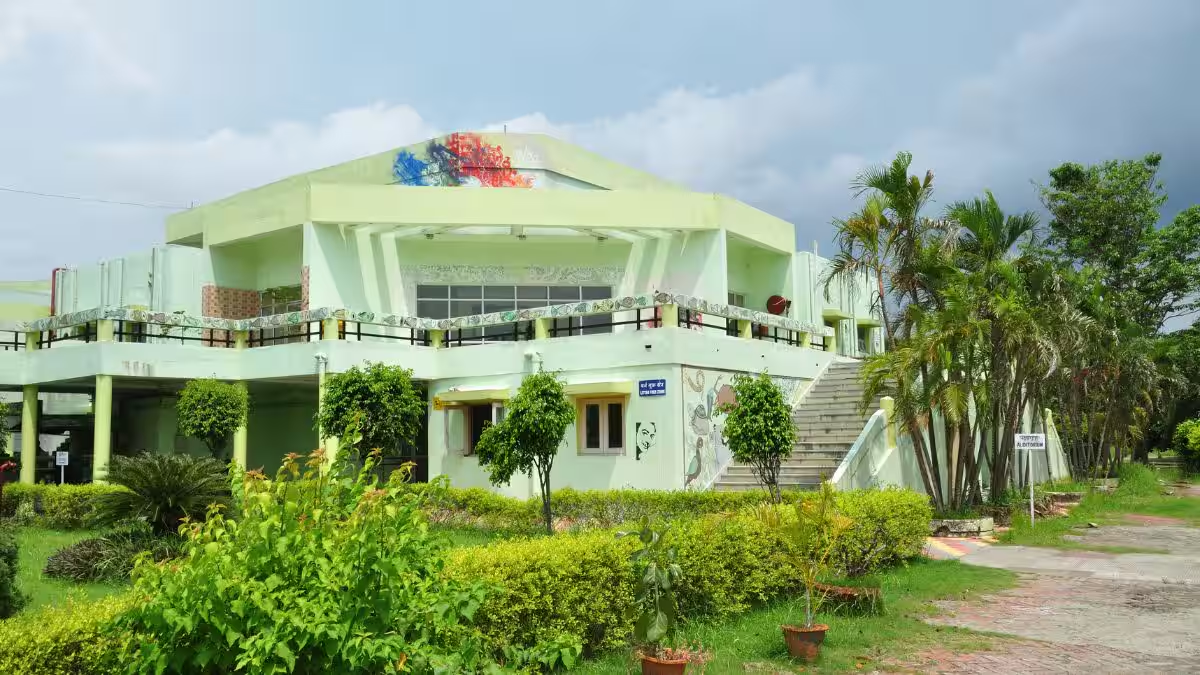
The Satyajit Ray Film and Television Institute (SRFTI) has rusticated six students for allegedly assaulting the vice-chancellor (VC) and staff members, as well as violating campus discipline. This action comes amid an ongoing student agitation over campus security that has lasted for 18 days.
- Six students were rusticated for assaulting the VC and vandalising his office.
- Charges include writing obscene graffiti on campus walls.
- The students' union disputes the rustication and plans legal action.
- Dispute centers on CCTV camera installation without union consent.
- Students allege police were called to intimidate protesters.
Why were the six SRFTI students rusticated?
According to a senior SRFTI official, six students were rusticated by the deans and heads of various departments, including cinematography, editing, and filmmaking. The students were accused of vandalising the VC's office, assaulting him, and writing obscene graffiti on campus walls and grounds. The official stated that a section of students politicised the situation to further their interests but emphasised that the rustication was necessary despite not wanting to harm anyone's career.
What is the students' union response to the rustication?
The SRFTI Students' Union spokesperson, Sudip Chakraborty, claimed that five members were unfairly sent rustication mails and that they are pursuing legal action. The union also accused Vice-Chancellor Santosh Ajmera of violating a prior agreement regarding the installation of CCTV cameras on campus. They alleged that police were called in to intimidate protesters who were demanding the VC's resignation.
What led to the ongoing student protest at SRFTI?
The protest began over campus security concerns and entered its 18th day when students discovered CCTV cameras being installed on the first floor of the administrative building without prior notice to the students' union. The union stated that an agreement reached after a 16-day protest in 2024 required the administration to inform the union and involve it in deciding CCTV camera locations. The VC had assured the union on September 30 that they would receive three days' advance notice before any future installations, but no such communication was given.
How did the students express their dissent?
In response to the unnotified CCTV installation, students peacefully occupied the first floor of the administrative building. They described this as a peaceful expression of dissent and a reminder to the administration of its earlier commitment to involve the union in security decisions.
What allegations did the vice-chancellor make?
The VC claimed that stones were thrown at his office, shattering a window, and that his office was vandalised. He also alleged that pipes supplying air conditioning and water were cut. However, the students' union rejected these allegations as fabricated and denied any student involvement. They maintained that the agitation remained peaceful, involving sit-ins, rallies, demonstrations, artistic expression, and slogan-shouting without violence.
What role did the police play during the protest?
The students alleged that the VC called the police to the campus and that a general diary entry was made mentioning the names of the union's president and general secretary (Film). The campus security in-charge reportedly informed the police that security personnel neither noticed nor witnessed any violent incident. The students accused the administration of using the police to intimidate protesters.
What are the students' current demands?
The students continue to demand the resignation of Vice-Chancellor Santosh Ajmera. They also seek proper communication and involvement in decisions regarding campus security measures such as CCTV camera installations.