Understanding a Black Hole 'Wake-up'
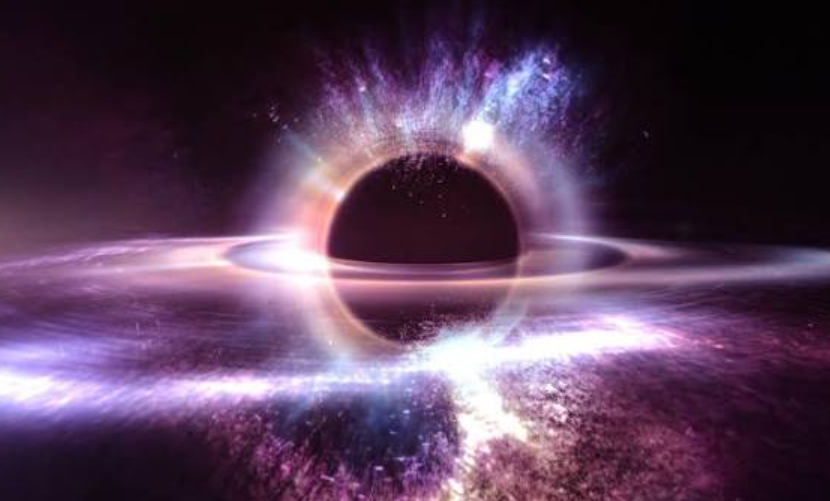
Black holes are not always active. They stay dormant for long periods when there is no matter like gas, dust, or stars nearby to feed on. When these materials enter their gravitational sphere, black holes become active again, releasing powerful energy and radiation. This change marks their shift from inactive to active state.
The Nature of the Phenomenon
The sudden burst of energy is compared to a volcanic eruption in space. Instead of lava, black holes emit high-speed jets of particles and radiation into space. These outbursts are extremely energetic and can sometimes surpass the total energy output of all stars in a galaxy, affecting their surroundings significantly.
Effects on Galaxies and Space
Such eruptions influence the formation of stars within galaxies by redistributing gas and energy. The interactions between black holes and their host galaxies are key to understanding how galaxies grow and change over millions of years. Observing these events helps scientists learn more about galaxy evolution.
Important Facts for Exams
- Supermassive black holes are found at the centers of most galaxies.
- Active galactic nuclei (AGN) emit huge amounts of energy when black holes are active.
- Black holes can switch between active and dormant states.
- Relativistic jets from black holes impact star formation in galaxies.
Scientific Importance of the Discovery
This event highlights that black holes have cycles of activity and inactivity, reflecting the unpredictable nature of the universe. Such rare observations are valuable for astronomers to improve models of how galaxies and black holes evolve. They also remind us that much about space remains unknown, encouraging ongoing space research.