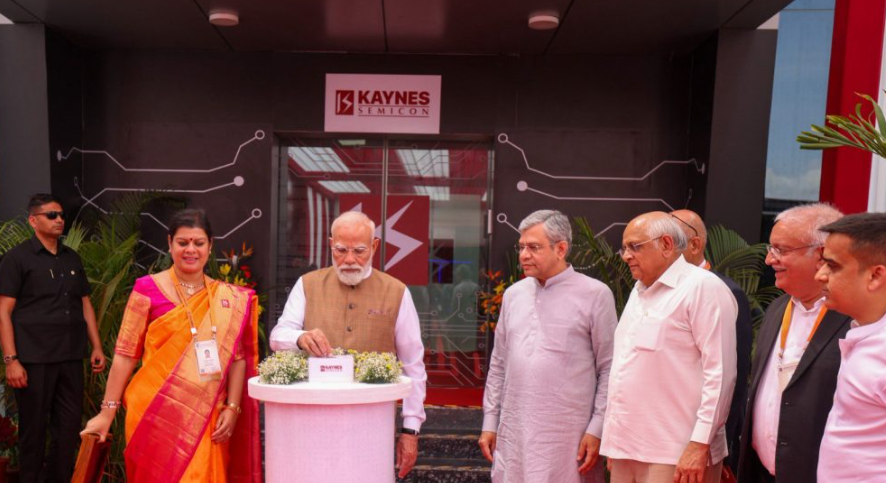
Sanand Becoming a Key Semiconductor Center
The new Kaynes Technology plant in Sanand has started manufacturing, boosting Gujarat’s status as a prominent semiconductor production area. Prime Minister Modi highlighted this achievement as part of India's rapid progress in semiconductor manufacturing, especially after the launch of another major facility nearby.
Focus on Power Modules and Export Goals
The plant will produce Intelligent Power Modules, vital for electric vehicles and industrial use. A large part of the produced modules is expected to be exported, helping India become a part of global supply chains and increasing its role in international markets.
Supporting Initiatives and Investments
India’s push into semiconductors is driven by the India Semiconductor Mission, launched in 2021. Currently, about 10 projects worth over Rs 1.6 lakh crore are underway in six states. These efforts aim to reduce dependence on imports and position India as a dependable global supplier despite ongoing supply chain issues.
Key Facts for UPSC/PSC Exams
- India Semiconductor Mission was launched in 2021 to boost chip manufacturing.
- Semiconductors are essential for electronics, electric vehicles, and advanced technologies.
- Sanand in Gujarat is emerging as a major semiconductor hub.
- National Critical Minerals Mission focuses on securing raw materials for technology sectors.
Future Outlook and Strategic Goals
India’s semiconductor sector, valued at about $50 billion now, is expected to surpass $100 billion by 2030. The government emphasizes developing local skills and capabilities, including chip design and raw material development, with projects like the ‘Dhruv 64’ microprocessor. Training thousands of professionals is also a priority to support growth in sectors such as electric vehicles, clean energy, and electronics.