About the Indian Softshell Turtle
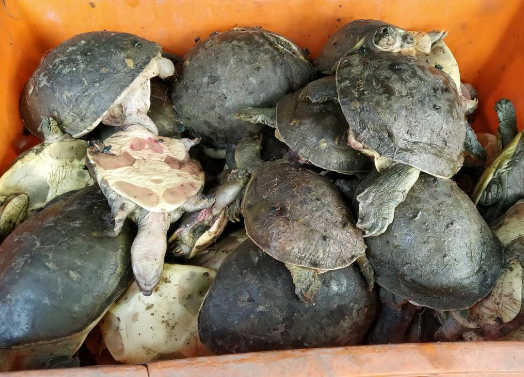
The Indian Softshell Turtle, scientifically known as Nilssonia gangetica, is one of the largest freshwater turtles globally. It has a round to oval-shaped green shell with a yellow border. The turtle features a long neck and a tube-like snout, which helps it breathe while mostly submerged. Its soft shell allows for quick movement, making it a good swimmer.
Habitat and Distribution
This species lives in various freshwater environments such as deep rivers, streams, canals, lakes, and ponds with sandy or muddy bottoms. It prefers murky waters where it can stay hidden under sand for long periods. Geographically, it is found across Afghanistan, India, Bangladesh, and Pakistan. In India, it is commonly seen in major rivers like the Indus, Ganges, Brahmaputra, Yamuna, Narmada, and Mahanadi.
Diet and Behaviour
The Indian Softshell Turtle is omnivorous, feeding on fish, amphibians, molluscs, insects, dead animals, and aquatic plants. It plays a vital role in maintaining the balance of aquatic ecosystems. The breeding season occurs from February to April. In some regions like Odisha, these turtles are considered sacred and are protected in temple ponds.
Important Facts for Exams
- The turtle is scientifically called Nilssonia gangetica.
- It is classified as Endangered on the IUCN Red List.
- Protected under Schedule I of the Wildlife Protection Act, 1972.
- It inhabits major river basins such as the Ganga, Brahmaputra, and Indus.
Threats and Conservation Status
The species faces threats like habitat loss, pollution of rivers, expansion of agricultural land, and illegal hunting for meat and traditional medicine. Despite being legally protected as Endangered and under Schedule I of the Wildlife Protection Act, enforcement issues and ongoing illegal trade continue to threaten its survival. Conservation efforts are vital to prevent its extinction.