Key Highlights of the Finance Bill 2026
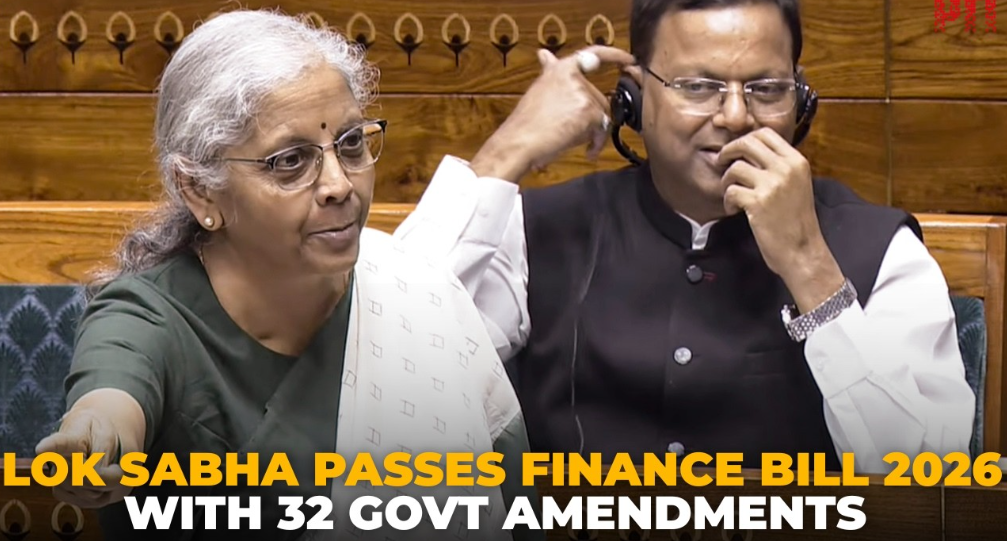
The Lok Sabha approved the Finance Bill 2026 through a voice vote. The bill included 33 amendments proposed by the government, which were accepted, while opposition attempts at amendments were rejected. The bill now moves to the Rajya Sabha for final approval, completing the budget process for 2026–27.
Budget Provisions and Fiscal Goals
The Union Budget 2026–27 estimates total expenditure at ₹53.47 lakh crore, showing a 7.7% increase from the current year. The projected fiscal deficit for FY27 is 4.3% of GDP, slightly below the revised estimate of 4.4% for FY26. The government aims to manage fiscal health while supporting economic growth and infrastructure development.
Government’s Defense on Fiscal Management
Finance Minister Nirmala Sitharaman defended the government's fiscal track record. She highlighted that the fiscal deficit was reduced from 9.3% during the COVID-19 pandemic to current levels. She pointed out that previous estimates during 2008–09 were understated by shifting liabilities to oil marketing firms.
Oil Bonds and Debt Repayment
The minister emphasized that the current government is repaying liabilities from oil bonds issued earlier. Official data shows an inherited debt of ₹1.3 lakh crore, with repayments of ₹1.43 lakh crore made between 2014 and 2024, including ₹44,650 crore principal. These repayments have affected funds available for developmental projects.
Important Facts for Exams
- Finance Bill is needed to implement taxation proposals of the Union Budget.
- Fiscal deficit is the gap between government expenditure and revenue.
- Oil bonds were issued to compensate oil companies without increasing fuel prices.
- Parliament’s approval is necessary to complete the Budget process.
Debate on Public Debt and Economic Growth
The government explained that public debt should be viewed relative to GDP growth. India’s nominal GDP grew from ₹113 lakh crore in 2013–14 to ₹345 lakh crore in 2025–26. Political debates also covered welfare programs, GST reforms, and implementation of central policies by states, indicating differing fiscal priorities and governance views.