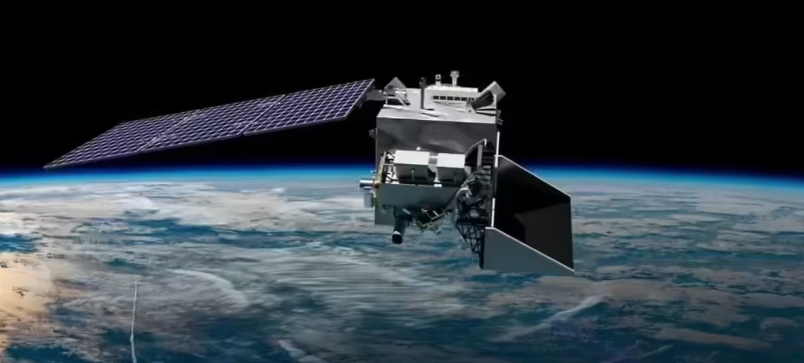
PACE Satellite Mission and Its Capabilities
The PACE satellite, launched by NASA in February 2024, studies ocean life, atmospheric particles, and cloud behavior. It orbits the Earth in a Sun-synchronous path, ensuring consistent global observations under similar sunlight conditions. The satellite captures detailed images of Earth every one or two days, providing high-resolution data.
Key Equipment and Technologies
PACE is equipped with the Ocean Color Instrument (OCI), a high-tech device that measures ocean color across ultraviolet to infrared light. This helps track marine biological activity over time. The satellite also has two polarimeters — SPEXone and HARP2 — which analyze how sunlight’s polarization changes when passing through clouds, aerosols, and ocean particles. This improves understanding of atmospheric composition.
Improved Pollution Monitoring
PACE’s ability to identify nitrogen dioxide emissions at a small scale is a major breakthrough. Scientists can now locate pollution sources such as factories or highways more accurately. This advancement enhances urban air quality monitoring and allows policymakers to create targeted environmental regulations.
Important Facts for Exams
- PACE stands for Plankton, Aerosol, Cloud, and Ocean Ecosystem.
- Launched in February 2024 into Sun-synchronous orbit.
- Main instrument is Ocean Color Instrument (OCI).
- Includes polarimeters SPEXone and HARP2 for studying light polarization.
Scientific and Environmental Importance
The data from PACE helps scientists study tiny marine organisms, aerosols, and cloud interactions in detail. It is crucial for understanding fisheries, harmful algae, wildfire smoke, and pollution patterns. Additionally, PACE provides insights into how the ocean and atmosphere interact, helping us understand climate change and its worldwide effects.