Red Skies and Dust Storms in Australia
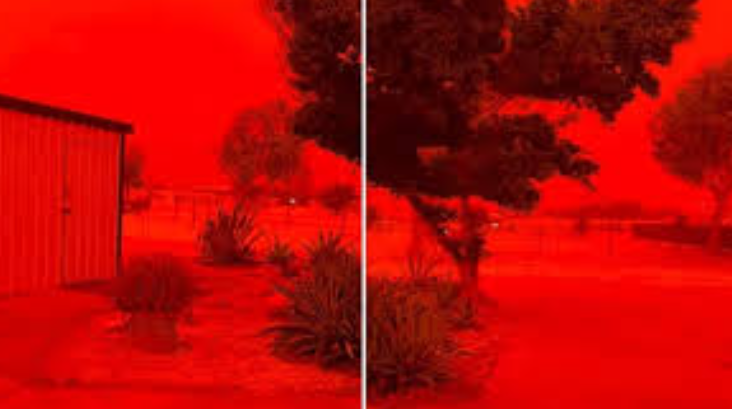
Parts of Western Australia experienced striking red skies when a powerful dust storm swept through the region. This happened just before Cyclone Narelle approached a nearby area. The unusual red colour turned daytime into an eerie, crimson landscape and reduced visibility sharply, attracting global attention for its dramatic appearance.
Reasons for the Red Sky Effect
The intense winds from Cyclone Narelle lifted fine, iron-rich soil and dust high into the air. These particles scattered the shorter blue wavelengths of sunlight, allowing the longer red wavelengths to dominate. This optical change caused the sky to glow red, creating an apocalyptic look and making it difficult to see far.
Effects on the Regions
The strongest impact was seen in the Gascoyne region, especially Shark Bay. Other nearby areas like Exmouth and Karratha also experienced the dust storm. People reported almost no visibility, thick dusty air, and darkness during daytime, which disrupted normal activities and raised safety issues as the cyclone moved closer.
Details About Cyclone Narelle
Cyclone Narelle has been described as a rare and long-lasting system moving across multiple parts of Australia. It first hit Queensland, then passed through the Northern Territory. Later, it intensified over the Indian Ocean before reaching Western Australia. The cyclone reached a Category 4 level with wind speeds over 200 km/h, causing damage along the coast before weakening to Category 3.
Important Facts for Exams
- Dust storms can change the colour of the sky due to light scattering.
- Soil rich in iron causes red or orange atmospheric effects.
- Tropical cyclones are classified based on wind speed.
- The Gascoyne region is located in Western Australia.
Scientific and Environmental Significance
Experts say that although such intense events are rare, similar red or orange skies have been seen during severe dust storms elsewhere. Factors like dry conditions, loose soil, and strong winds contribute to these phenomena. Authorities continue to monitor Cyclone Narelle as hazardous weather persists in the region.