Significance of Rongali Bihu
Rongali Bihu, also called Bohag Bihu, is the most important of the three Bihu festivals. It stands for happiness, renewal, and agricultural growth. The name ‘Rongali’ comes from 'Rong', meaning joy and celebration, emphasizing the lively spirit of this festival. It coincides with the planting season, making it important for farming communities.
Customs and Traditional Practices
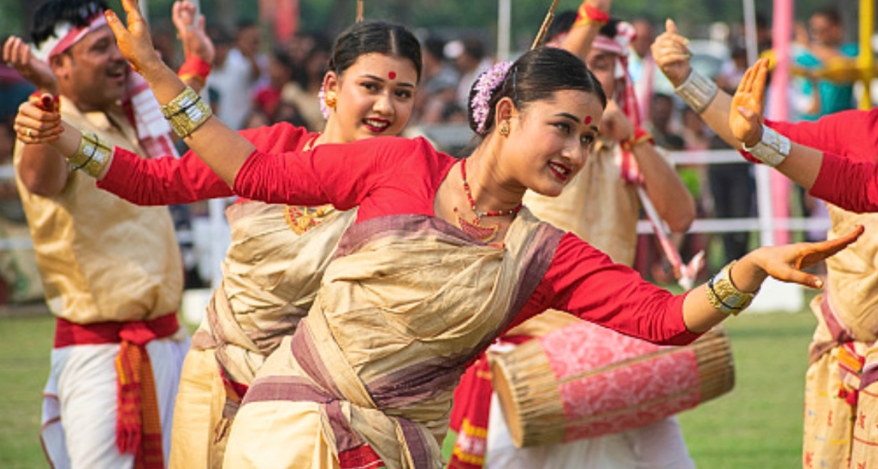
The festival involves traditional dances, singing Bihu songs, and community meals. Women wear traditional clothes such as mekhela chadors made from pat, muga silk, or cotton. A key custom is exchanging ‘gamocha’, also called Bihuwaan, as a sign of respect and affection. These customs help strengthen social bonds and maintain Assamese cultural heritage.
The Three Bihu Festivals
Bihu is celebrated in three different forms throughout the year, each related to a different stage of agriculture:
- Rongali or Bohag Bihu occurs in April and marks the New Year.
- Kati Bihu, also known as Kongali Bihu, takes place in October and is more solemn, linked to a less active farming phase.
- Magh Bihu is celebrated in January, associated with harvest time, featuring feasts and bonfires.
Important Facts for Exams
- Rongali Bihu marks the Assamese New Year and spring season.
- It is also called Bohag Bihu and observed in April.
- The Gamocha (Bihuwaan) is exchanged as a mark of respect.
- Other Bihu festivals are Kati Bihu in October and Magh Bihu in January.
Cultural Importance and Social Unity
Rongali Bihu is celebrated by people from all communities in Assam, regardless of caste, creed, or religion. It is a symbol of unity and inclusivity. The festival highlights Assam’s rich culture through folk music, traditional attire, and community participation, fostering a shared sense of belonging among its people.