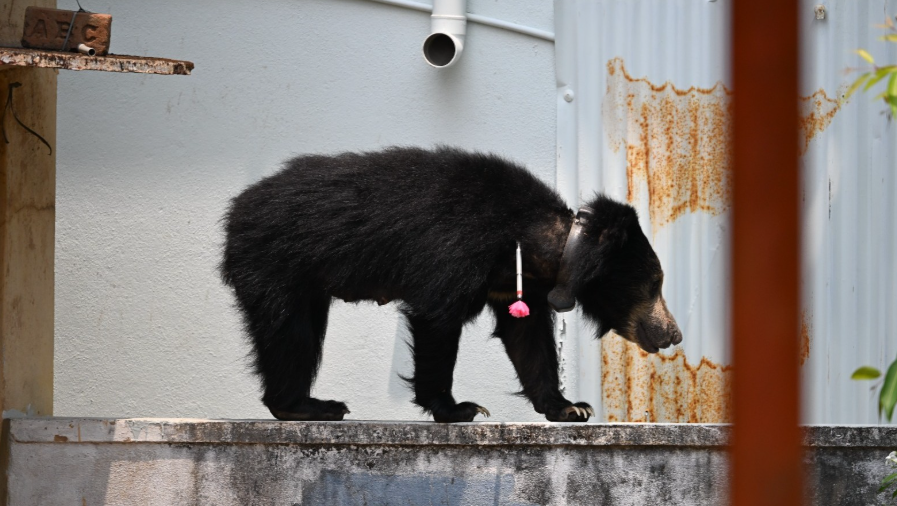
About the Sloth Bear
The sloth bear is one of eight bear species worldwide, mainly feeding on insects like ants and termites. It is native to the Indian subcontinent and plays a vital role in controlling insect populations around its habitat.
Physical Features and Behaviour
Sloth bears have long, shaggy dark brown or black fur and possess distinctive curved claws, among the longest of any bear species. They are called "labiated bears" because of their long lower lips that help in sucking insects. These bears are mainly active at night and rest during the day in secluded spots.
Habitat and Distribution
They live in different ecosystems such as dry forests, moist forests, and tall grasslands. They prefer environments with boulders, shrubs, and trees for shelter. Geographically, they are found mainly in India, Nepal, Sri Lanka, and possibly Bhutan. Notable Indian conservation areas include the Daroji Sloth Bear Sanctuary in Karnataka and the Jessore Sloth Bear Sanctuary in Gujarat.
Important Facts for Exams
- Sloth bear mainly feeds on termites and ants.
- It is listed as Vulnerable on the IUCN Red List.
- Included in Appendix I of CITES.
- Protected under Schedule I of the Wildlife Protection Act, 1972.
Conservation Status and Challenges
The sloth bear is classified as Vulnerable by the IUCN and enjoys the highest level of legal protection in India. Despite these protections, habitat destruction, human-wildlife conflicts, and poaching still threaten its population. The recent capture near Shivamogga highlights the urgent need for conservation initiatives and community awareness to reduce conflicts and help the species survive.